Candidates will have to advertise criminal records from poll expenses: Election Commission
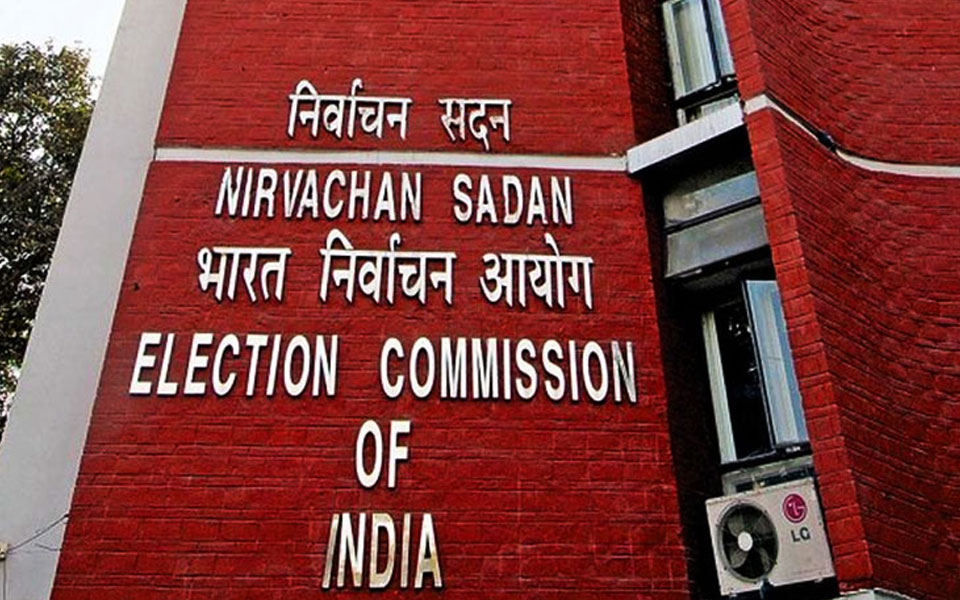
New Delhi: The Election Commission has made it clear that candidates will have to bear the cost of advertising their criminal antecedents in TV and newspapers as it comes in the category of 'poll expenses', a senior functionary said Thursday.
The poll panel has made it compulsory for candidates contesting elections to advertise their criminal antecedents in TV and newspapers at least thrice during electioneering.
Though directions in this regard were issued on October 10, 2018, the rule is being used for the first time in the ongoing Lok Sabha elections.
The functionary said political parties have been informed that candidates will have to bear the cost of the advertisement from their poll expenses.
Some parties had approached the poll panel urging it to allow the advertisement expenditure be borne by them and not the candidates.
The parties too will have to advertise the criminal records of the candidates they have fielded. The expenditure of advertisement by the parties will be borne by them.
This means that candidates and parties contesting the elections will have to publicise their criminal records at least on three different dates in widely circulated newspapers and popular TV channels during the campaign period.
Candidates who do not have records have to mention that. The candidates will now have to fill up an amended form (number 26). They will have to inform parties about their antecedents such as cases in which they have been convicted and cases pending against them.
The parties, the EC said, will be "obliged" to put the information about the candidates on their websites. The EC direction of October, 2018 was silent on whether the candidates will have to pay from their pocket for the publicity.
Parties which fail to comply, face the prospects of getting their recognition withdrawn or suspended.
Candidates have to submit clippings of their declaration published in papers and parties have to submit details about the number of such candidates in a state.
While there is a ceiling on expenditure of candidates, the parties have no such limit. Candidates in Lok Sabha polls can spend up to Rs 70 lakh.
All registered political parties have to submit a statement of their election expenditure to the election commission within 90 days of the completion of the Lok Sabha elections.
All candidates are required to submit their expenditure statement to the poll panel within 30 days of the completion of the elections.
Let the Truth be known. If you read VB and like VB, please be a VB Supporter and Help us deliver the Truth to one and all.
Gold, silver soar as US-Iran deal hopes lift bullion demand

New Delhi (PTI): Gold prices rebounded by Rs 2,900 to Rs 1.55 lakh per 10 grams in the national capital on Wednesday, while silver climbed to Rs 2.54 lakh per kilogram as easing geopolitical tensions triggered a pullback in oil rates, boosting demand for precious metals.
According to the All India Sarafa Association, the yellow metal of 99.9 per cent purity jumped by Rs 2,900, or nearly 2 per cent, to Rs 1,55,400 per 10 grams (inclusive of all taxes) from Tuesday's closing level of Rs 1,52,500 per 10 grams.
Traders attributed the surge in bullion prices to reports that Washington and Tehran are close to finalising a framework agreement to end months of conflict, raising the prospects of smoother flows through the Strait of Hormuz and easing inflation concerns tied to energy markets.
"Gold rallied strongly on Wednesday as easing geopolitical tensions triggered a sharp reversal in key macro drivers that had recently pressured precious metals," Saumil Gandhi, Senior Analyst - Commodities at HDFC Securities, said.
Silver prices also advanced for the third straight session by rising Rs 3,500, or 1.4 per cent, to Rs 2,54,500 per kg (inclusive of all taxes). The metal had settled at Rs 2,51,000 per kg in the previous session, as per the Association.
"The prospect of a diplomatic breakthrough triggered a steep decline in oil prices and the US dollar, easing concerns about inflation while boosting demand for precious metals," Gandhi said.
Globally, spot gold increased by USD 106.15, or 2.33 per cent, to USD 4,663.70 per ounce while silver gained USD 3.40, or 4.68 per cent, to USD 76.24 per ounce.
"Gold witnessed a sharp rally as markets reacted positively to reports that the US and Iran are moving closer to a one-page agreement framework aimed at ending the conflict," Jateen Trivedi, VP Research Analyst - Commodity and Currency, LKP Securities, said.
Despite strong international gains, rupee strength limited the upside in domestic gold prices. The market is now highly focused on final confirmation and execution of the proposed deal, he added.
Any negative surprise or breakdown in negotiations could trigger a sharp sell-off in gold, while a successful agreement and sustained ceasefire could push the bullion prices higher in the near-term, Trivedi said.