Can't bring hammer to kill ant; Centre's IT Rules against fake news may be excessive: HC
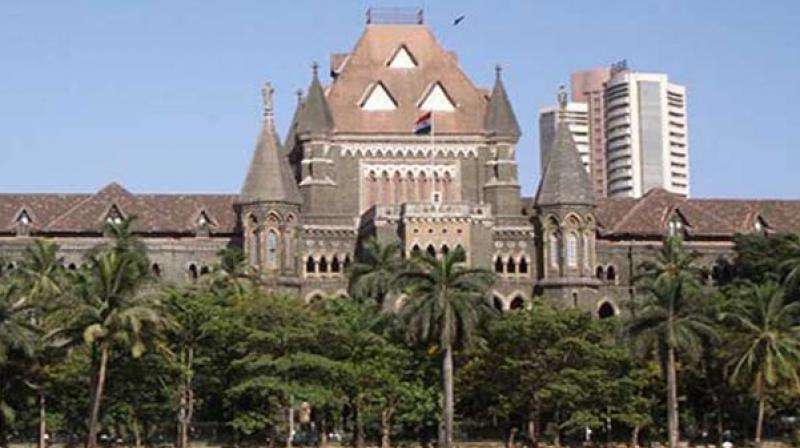
Mumbai(PTI): The Bombay High Court on Friday said the recently amended Information Technology (IT) Rules regarding fake content on social media against the government "may be excessive", and one should not "bring a hammer to kill an ant."
A division bench of Justices Gautam Patel and Neela Gokhale also said it did not understand the need for the amendment to the IT Rules, and "found it difficult" that one authority of the government is given absolute power to decide what is fake, false or misleading.
In a democratic process, the court said, the government is as much a participant as a citizen and hence a citizen has the fundamental right to question and demand answers and the government is duty-bound to respond.
The court also raised questions on what is the boundary set in the IT Rules on the basis of which some content or information will be held as fake, false and misleading.
"I am struggling because I don't know what the boundary is. I have gone through the Centre's affidavit twice and I could not find out what the boundary is," Justice Patel said.
The bench was hearing a bunch of petitions challenging the amended IT Rules. Stand-up comedian Kunal Kamra, the Editors Guild of India and the Association of Indian Magazines have filed petitions in the HC against the Rules, terming them arbitrary and unconstitutional and claiming that they would have a chilling effect on the fundamental rights of citizens.
The court also questioned who will fact-check the Fact Checking Unit (FCU) that is to be set up under the amended Rules.
There is an assumption that what the FCU says is undeniably the ultimate truth, Justice Patel said.
Advocate Gautam Bhatia, appearing for the Association of Indian Magazines, started his arguments against the Rules on Friday. There are less restrictive options available to keep a check on fake content on social media, he argued.
The bench noted that offline content has some filtration but there is no such fact-checking for social media intermediaries as of now.
"There should be some fact checking. At some level, someone must do fact checking of content on social media. But you (petitioners) may be right to say that this (Rules) are excessive. You cannot bring a hammer to kill an ant," the court said.
Besides the issue of excessiveness, they were also not yet able to understand what was the need for the amendment to the IT Rules, the judges said.
"What is the concern that necessitates this amendment? What is the anxiety behind it? I still do not know," Justice Patel said.
The bench said no person is claiming a fundamental right to lie and all that a citizen is saying is that they have a right to defend the correctness of their statement.
On the Internet everything and everyone is "data and binary" and a person can be anything they want and this was not necessarily impersonation, the high court said.
The Rules were also silent on the boundaries of what is fake, false, and misleading, it noted.
Talking about the implications of the Rules, the court referred to the Citizenship Act and posed a hypothetical question: "If someone writes an opinion that the effect of the provisions of the Act is such and such, then could such an opposing view be ordered to be taken down as fake, false, and misleading? Because statute comes under government business."
"Is there nothing in the Rules that gives us a clue as to what the limit is? That this is the limit to what would be considered as fake, false, and misleading. Does speculation make it fake, false, and misleading," the bench further said.
The court also asked how an authority set up by the government can decide with finality what is true and what is fake.
"I find it difficult that the Rules give the Fact Checking Unit absolute power to decide that this is fake and this is misleading. This is completely binary. According to me, except a court of law, nobody has the authority to pronounce what is true and false. Even a court only says probably this may be the truth and probably this is false," the bench said.
The court added that even without the amendment, the government has the Press Information Bureau (PIB) that regularly posts on social media when there is any false or fake content.
Is it the government's case that if not for the amendment the social media intermediaries will run amok, the court said.
The petitioners' advocates concluded their arguments on Friday.
The court posted the next hearing for July 27 when Solicitor General of India Tushar Mehta would start his arguments on behalf of the Union government.
Its earlier statement that the Union government would not notify the Fact Checking Unit under the Rules till July 14 stands extended till July 28, the HC said.
On April 6 this year, the Union government promulgated amendments to the Information Technology (Intermediary Guidelines and Digital Media Ethics Code) Rules, 2021, including a provision for a fact-checking unit.
The three petitions sought that the court declare the amended Rules as unconstitutional and restrain the government from acting against any individual under the Rules.
Let the Truth be known. If you read VB and like VB, please be a VB Supporter and Help us deliver the Truth to one and all.
NIA registers case to probe recovery of 79 crude bombs in poll-bound West Bengal
New Delhi (PTI): The National Investigation Agency (NIA) on Sunday registered a case to probe recovery of 79 crude bombs in poll-bound West Bengal, officials said.
The move came following a directive by the Union Home Ministry in this regard, they said.
In pursuance to the home ministry's order, the anti-terror agency on Sunday registered a case, which was originally filed at Uttar Kashi police station, Bhangar division, Kolkata on Saturday, and took up the investigation, an NIA spokesperson said in a late night statement.
"The case pertains to recovery of 79 crude bombs and other incriminating materials by Kolkata police, which were being stored at a spot, thereby endangering human life and property," the spokesperson said.
Earlier in the day, the Election Commission had directed the West Bengal Police to launch a special drive to arrest those involved in illegal manufacturing of crude bombs in the poll-bound state, an official said.
It asserted that all cases related to the making of any such explosive would be probed by the National Investigation Agency, the official said.
The directive came after the police recovered a large number of crude bombs from the house of a person, allegedly a TMC worker, at Bhangar in South 24 Parganas district, days ahead of the second and final phase of the assembly polls in the state.
The explosives were recovered during a search at the residence of Rafikul Islam following specific inputs, the official said.
The poll panel also issued a warning to senior police officers across the state over any lapse in maintaining law and order before the April 29 polling.
The first phase of the assembly elections in West Bengal was held on April 23, while the second phase will take place on April 29. Votes will be counted on May 4.
A record 93.19 per cent turnout has been recorded in the first round of polling. Bhangar will vote in the second phase.