Can't disclose black money reports as Parliamentary Panel examining them: Finance Ministry
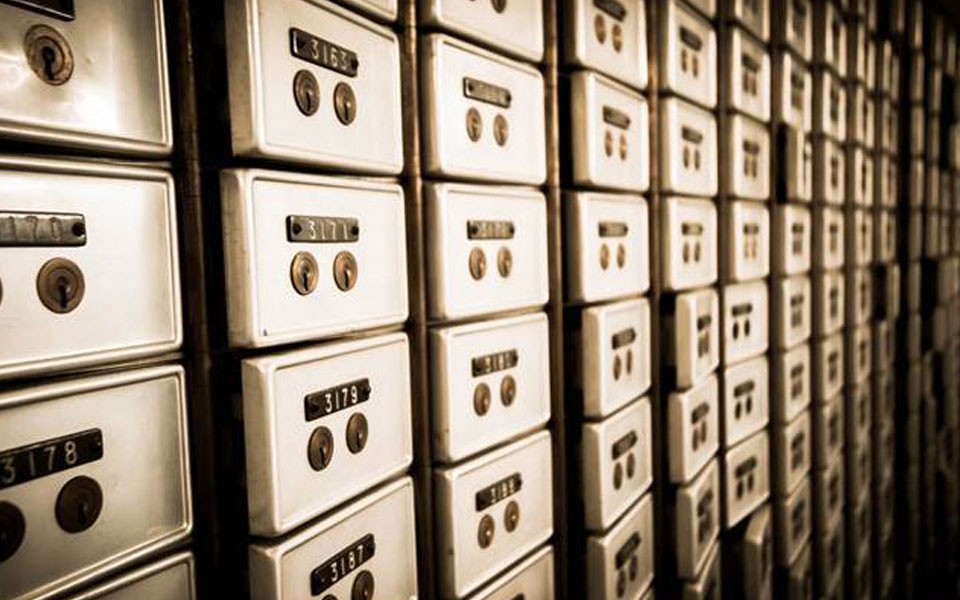
New Delhi, Feb 4: The Finance Ministry has declined to share copies of three reports on the quantum of black money held by Indians inside the country and abroad, saying they were being examined by a Parliamentary panel and disclosing details will cause a breach of privilege of the House.
These reports were submitted to the government more than four years ago.
The UPA government had commissioned in 2011 the studies by the Delhi-based National Institute of Public Finance and Policy (NIPFP) and the National Council of Applied Economic Research (NCAER), and the National Institute of Financial Management (NIFM) in Faridabad.
Replying to an RTI query, it said the study reports of the NIPFP, NCAER and NIFM were received by the government on December 30, 2013, July 18, 2014, and August 21, 2014, respectively.
"The reports and government's response to it have been forwarded to Lok Sabha secretariat for placing them before the Standing Committee on Finance," the ministry said.
The Lok Sabha secretariat has informed that the same has been placed before the committee which will examine it, it said in a reply to an RTI application filed by this PTI correspondent.
It denied to share the copies of these reports, saying the disclosure would cause breach of privilege of Parliament and, therefore, the information sought is exempt from disclosure under Section 8 (1) (c) of the Right to Information (RTI) Act.
The section bars information, "the disclosure of which would cause a breach of privilege of Parliament". The reports were submitted to the panel on July 21, 2017.
There is, at present, no official assessment on the quantum of black money in India and abroad.
According to a study by US-based think-tank Global Financial Integrity (GFI), an estimated USD 770 billion in black money entered India during 2005-2014.
Nearly USD 165 billion in illicit money exited the country during the same period, the latest report by the global financial watchdog said.
"The issue of black money has attracted a lot of public and media attention in the recent past. So far, there are no reliable estimates of black money generated and held within and outside the country," the Finance Ministry had said while ordering the studies in 2011.
These estimates were based on various unverifiable assumptions and approximations, it had said.
The Terms of Reference (ToR) for the studies included the assessment or survey of unaccounted income and wealth, and profiling the nature of activities engendering money laundering both within and outside the country.
The studies were to identify, among other issues, important sectors of the economy in which unaccounted money was generated and examine the causes and conditions that resulted in the generation.
Let the Truth be known. If you read VB and like VB, please be a VB Supporter and Help us deliver the Truth to one and all.
Karnataka launches India’s first digital grievance system for gig workers
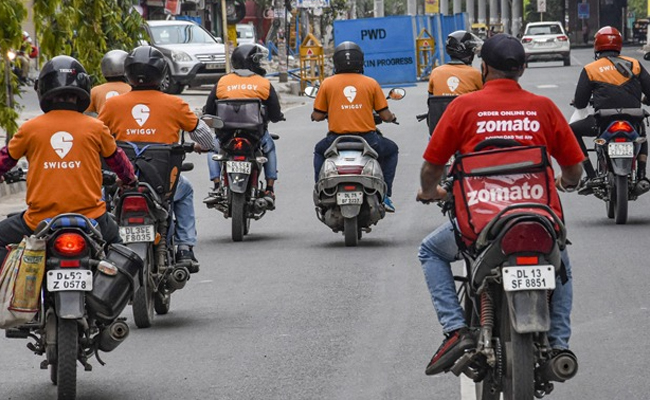
Bengaluru: In a first-of-its-kind initiative in India, the Karnataka government has launched a digital grievance redressal system for gig workers to provide structured support and protection to platform-based workers.
According to The Hindu, the system, developed by the Karnataka Platform-based Gig Workers’ Board in collaboration with the Department of e-Governance, allows workers to file complaints through the Integrated Public Grievance Redressal System (IPGRS).
Gig workers can raise issues related to pay, working conditions, and platform-specific disputes. Complaints will be routed to the Internal Dispute Resolution Committees (IDRCs) of respective platforms and are expected to be resolved within a defined timeframe. This is expected to bring transparency and legal recourse for a workforce that has so far operated without a formal dispute resolution framework.
Under The Karnataka Platform-Based Gig Workers (Social Security and Welfare) Act and Rules, every aggregator platform must constitute an Internal Dispute Resolution Committee (IDRC). Platforms such as Namma Yatri and Yulu have already integrated their IDRC contact details with the government portal.
Around 12 lakh gig workers have been identified in the state, and a unique identification system is being developed to remove duplicate entries. Officials said welfare schemes are also being designed based on type of work, working hours, and contribution.
Labour Minister Santosh Lad said that Karnataka, technology capital of the country, is leveraging this potential for worker welfare as well. “By launching this system, we are ensuring that the gig economy is no longer an informal space, but a structured one where every worker’s voice is heard,” he said.
“The schemes will vary based on the type of platforms. For example, cab rides are mostly undertaken by men whereas urban domestic activity is undertaken mostly by women. It may also be based on the contribution made, and the quantum of gig work done by a gig worker. Some gig workers work for more than eight hours while some may work on a few gigs. So, work load, nature of work, and time period of work could vary,” TH quoted G. Manjunath, Additional Labour Commissioner and CEO of the Board as saying.
“It has to be scientifically structured based on their effort and labour. We are working with experts, including academicians from Briston University, King’s College, and IISc, and other stake holders, including board members,” he said.
Officials added that aggregator platforms will be required to contribute 1 per cent towards worker welfare, with implementation beginning July 5.