CAQM flags delays, enforcement gaps in waste management across NCR
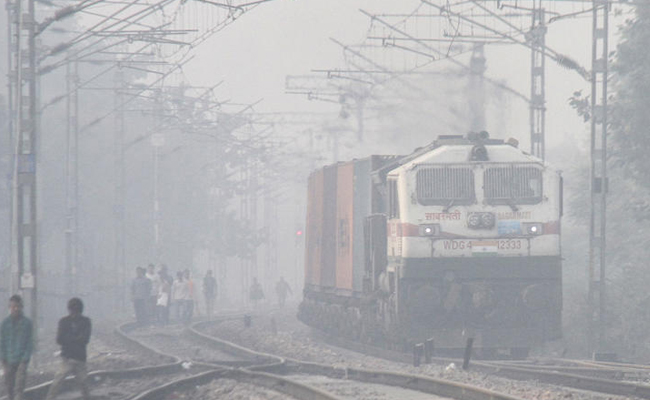
New Delhi (PTI): The Commission for Air Quality Management has directed civic bodies and state agencies across the National Capital Region to urgently strengthen municipal solid waste management, flagging persistent open burning of waste, delays in clearing legacy dumps and gaps in enforcement.
The directions came after a detailed review of waste management systems in Delhi and NCR states, conducted through a series of meetings with state governments, municipal bodies and pollution control boards.
The Commission for Air Quality Management (CAQM) said waste management remains a critical area requiring sustained attention because of its direct impact on air pollution.
In Delhi, the CAQM noted continued incidents of open municipal solid waste and biomass burning despite the availability of infrastructure.
It directed the Municipal Corporation of Delhi to complete remediation of 143.09 lakh metric tonnes of legacy waste by December 2027, at a processing rate of about 3.5 lakh metric tonnes per month, and to submit monthly progress reports.
The commission also ordered immediate augmentation of waste-processing facilities without extending timelines and asked for stronger surveillance of garbage-vulnerable points, spill-free transportation of waste and intensified door-to-door segregation drives.
Bulk waste generators in Delhi have been asked to ensure on-site wet waste processing within one month, while the rollout of the zero-waste colonies is to be accelerated.
The Delhi Pollution Control Committee has been tasked with strict monitoring of waste-to-energy plants, fly ash disposal, verification of municipal data and monthly compliance reporting to the CAQM.
In Haryana, the commission flagged significant delays in legacy waste remediation and processing infrastructure, particularly in Gurugram, Faridabad and Sonipat.
Gurugram's municipal corporation has been directed to complete tendering for the remediation of 14 lakh metric tonnes of legacy waste by January 20, 2026, and to start biomining by March 31, 2026.
Faridabad has been asked to identify land for decentralised processing facilities within two months and make them operational by April 2026.
In Uttar Pradesh's NCR areas, the CAQM observed delays in legacy waste remediation, uneven segregation and coordination gaps.
Authorities in Noida, Greater Noida and Ghaziabad have been told to complete remediation within committed timelines and not to seek further extensions for commissioning processing facilities.
In Rajasthan's NCR districts, including Bharatpur, Alwar and Bhiwadi, progress on waste remediation and segregation was found inadequate.
Urban local bodies have been directed to complete remediation within timelines and strengthen segregation, surveillance and complaint redressal.
The commission said it will closely monitor compliance, carry out follow-up reviews and take action wherever required.
Let the Truth be known. If you read VB and like VB, please be a VB Supporter and Help us deliver the Truth to one and all.
Maharashtra sets up state vaccination task force to strengthen immunisation programme

Mumbai (PTI): The Maharashtra government has set up a State Vaccination Task Force to strengthen the regular immunisation programme and review the progress of related campaigns, a health department official said on Monday.
The State Vaccination Task Force will comprise at least 29 members and will be headed by the administrative head of the health department, he informed.
The government has also constituted separate district-level and municipal vaccination task forces to improve implementation and address challenges at the grassroots level, he said.
Municipal task forces, chaired by respective civic commissioners, have been constituted in view of the vast urban population in Maharashtra and the role of civic bodies in implementing different health programmes.
The district-level task forces will function under the chairmanship of collectors.
"Complete immunisation of children at the appropriate age is an extremely simple, cost-effective and highly effective measure to reduce child mortality and the prevalence of diseases among kids. Immunisation is a powerful tool for reducing illness in children," maintained the official.
To ensure full vaccination of all children, the state government implements various campaigns from time to time as per the central government guidelines, he pointed out.
"Active participation and cooperation of other relevant government departments are essential (in making these campaigns successful)," according to the official.
The state-level body will review the regular immunisation programme, associated campaigns and vaccine-preventable diseases in detail. It will also conduct focused assessments of high-risk districts and municipal corporations, including vacancies at district, municipal and sub-district levels, availability of cold chain equipment, resource gaps and training requirements, he noted.
The state task force will review allocation and utilisation of funds for immunisation and ensure timely action by officers concerned based on reports from district and municipal task forces and state-level monitoring mechanisms, the official said.
It will also ensure active coordination and participation of other government departments in immunisation drives, while district and municipal task forces will carry out similar functions at their respective levels, the official added.