'Carnage' of India's public education system must end: Sonia
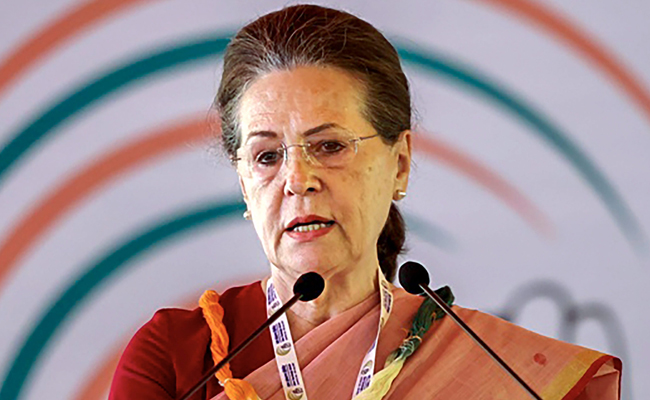
New Delhi (PTI): Congress leader Sonia Gandhi on Monday slammed the Modi government's education policy, charging its core agenda is centralisation of power, commercialisation and outsourcing of investments to the private sector, and communalisation of textbooks.
Noting that these three Cs haunt Indian education today, the Congress Parliamentary Party chairperson said in an article that this "carnage" of India's public education system must end.
In the article "The '3Cs' that haunt Indian education today" in The Hindu, Gandhi said the introduction of the high-profile National Education Policy (NEP) 2020, has hidden the reality of a government that is profoundly indifferent to the education of India's children and youth.
"The Union Government's track record over the last decade has convincingly demonstrated that in education, it is concerned only with the successful implementation of three core agenda items -- the centralisation of power with the Union Government; the commercialisation and outsourcing of investments in education to the private sector, and the communalisation of textbooks, curriculum, and institutions," she said.
Gandhi charged that "unchecked centralisation" has been the hallmark of this government's functioning over the last 11 years, but its most damaging consequences have been in the domain of education.
She noted that the Central Advisory Board of Education (CABE), comprising ministers for education in both the Union and state governments, has not been convened since September 2019.
Even while adopting and implementing a paradigm shift in education through the NEP 2020, the government has not seen it fit to consult state governments on the implementation of these policies even once, she noted.
"It is a testament to the Government's singular determination not to heed any voice other than its own, even on a subject that is squarely in the Concurrent List of the Indian Constitution," she claimed in the article.
"The lack of dialogue is accompanied by a 'bullying tendency'. Among the most disgraceful acts committed by this government is the coercion of state governments to implement the PM-SHRI (or PM Schools for Rising India) scheme of model schools by withholding the grants due to them under the Samagra Shiksha Abhiyan (SSA) as leverage," she said.
She also referred to the draft University Grants Commission (UGC) guidelines of 2025 as "draconian", claiming they have fully written out state governments from the appointment of Vice-Chancellors in universities established, funded, and operated by them.
She charged that the Union government has given itself-- through the governors who are typically designated as chancellor of the University -- near-monopoly power in the selection of vice chancellors in state universities.
"This is a back door attempt to convert a subject in the Concurrent List into the sole preserve of the Union government and represents one of the gravest threats to federalism in today's times," she charged.
The former Congress president also alleged that the Narendra Modi government's commercialisation of the education system has been happening in plain sight, in full compliance with the NEP.
She claimed the country's poor have been forced out of public education, and into the hands of a prohibitively expensive and under-regulated private school system.
In higher education, the government has introduced the Higher Education Financing Agency (HEFA) as a replacement to the University Grants Commission's erstwhile system of block-grants, she said.
"The Union government's third thrust is on communalisation, the fulfilment of the long-standing ideological project of the Rashtriya Swayamsevak Sangh and the Bharatiya Janata Party, of indoctrinating and cultivating hatred through the education system," the Rajya Sabha MP said.
She alleged that textbooks of the National Council of Educational Research and Training (NCERT), the backbone of the school curriculum, have been revised with the intention of sanitising Indian history.
"Mahatma Gandhi's assassination and the sections on Mughal India have been dropped from curricula. In addition, the Preamble to the Indian Constitution was dropped from textbooks, until public backlash forced the Government to commit to mandatory inclusion once again," she said.
"In our universities, we have seen the large-scale hiring of professors from regime-friendly ideologically backgrounds, no matter the comically poor quality of their teaching and scholarships," she said, claiming that leadership positions in key institutions even in IITs and IIMs have been reserved for "pliant ideologues".
Over the last decade, she said, the education systems have been systematically cleansed of the spirit of public service and education policy has been sanitised of any concerns about access to and the quality of education.
"The consequences of this single-minded push for centralisation, commercialisation, and communalisation have fallen squarely on our students. This carnage of India's public education system must end," Gandhi said in the article.
Let the Truth be known. If you read VB and like VB, please be a VB Supporter and Help us deliver the Truth to one and all.
SP has ended contract with I-PAC due to fund constraints: Akhilesh Yadav
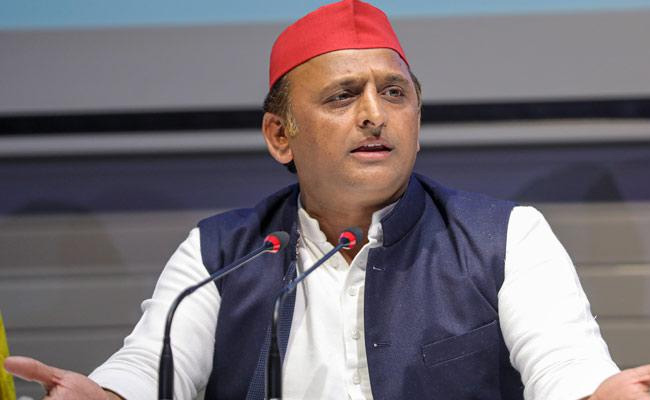
Lucknow (PTI): Samajwadi Party president Akhilesh Yadav on Wednesday said his party has severed its association with the Indian Political Action Committee (I-PAC) due to a lack of funds.
He dismissed speculations that the termination of contract was because of recent election results.
Addressing a press conference here, Yadav said the party had engaged I-PAC for a brief period ahead of the 2027 Uttar Pradesh Assembly elections but could not continue the arrangement.
"Yes, we had an association. They worked with us for a few months, but we are not able to continue because we do not have that kind of funding," he said.
The I-PAC is a political consultancy firm known for managing major election campaigns across the country.
Election strategist-turned-politician Prashant Kishor has also been associated with the organisation in the past and has worked with multiple parties, including the BJP and the Congress.
In a lighter vein, Yadav took a swipe at the ecosystem of political consultancies. "We thought that if we have to work with a 'winning agency', then there are several big companies."
He said that some people suggested conducting surveys, hiring another firm, keeping a social media company, and even engaging agencies for negative campaigning against other parties.
"There are one or two more companies whose names are not yet known. I can get those for you as well," Yadav said.
Yadav rejected the suggestion that the decision to end the deal was influenced by recent election outcomes in states such as West Bengal.
"There is no such thing. Do not ask questions based on baseless reports. That is not true," he said.
"This is not the reason for ending the agreement. We simply do not have enough funds. If you (the media) give us funds, we can hire another company," the former Uttar Pradesh chief minister said.