Cash discovery row: SC grills Justice Yashwant Varma over his petition
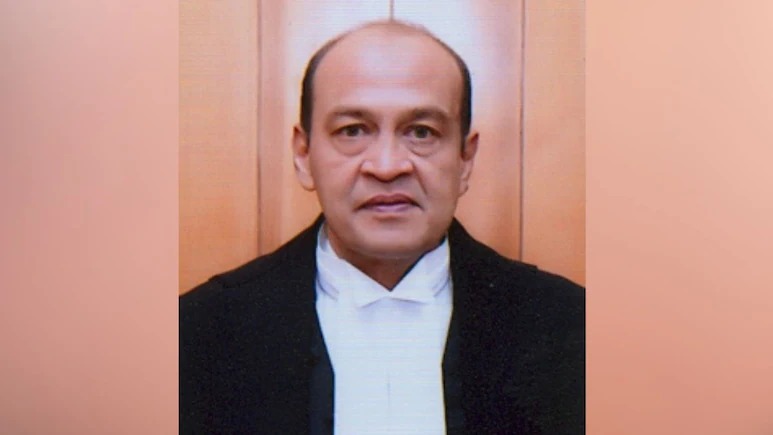
New Delhi (PTI): The Supreme Court on Monday questioned Justice Yashwant Varma over his plea to invalidate an in-house inquiry panel report indicting him over the discovery of huge cache of burnt cash from his official residence during his tenure as a Delhi High Court judge.
"Why did you appear before the inquiry committee? Did you come to the court that the video be removed? Why did you wait for the inquiry to be completed and the report be released? Did you take a chance of a favourable order there first," a bench of Justices Dipankar Datta and A G Masih asked senior advocate Kapil Sibal, who was representing Justice Varma.
The top court further quizzed Justice Varma over the parties he had made in his plea and said he should have filed the in-house inquiry report with his plea.
Sibal submitted there was a process under Article 124 (the Establishment and constitution of the Supreme Court), and a judge couldn't be a subject matter of public debate.
"The release of video on SC website, public furore, media accusations against judges are prohibited as per constitutional scheme," Sibal added.
The top court asked Sibal to come with one page bullet points and correct the memo of parties.
The matter was posted for July 30.
Justice Varma has sought quashing of the May 8 recommendation by then chief justice of India Sanjiv Khanna, urging Parliament to initiate impeachment proceedings against him.
His plea said the inquiry "reversed the burden of proof", requiring him to investigate and disprove the charges levelled against him.
Alleging that the panel's findings were based on a preconceived narrative, Justice Varma said the inquiry timelines were driven solely by the urge to conclude proceedings swiftly, even at the expense of "procedural fairness".
The petition contended that the inquiry panel drew adverse findings without affording him a full and fair hearing.
A report of the inquiry panel probing the incident had said Justice Varma and his family members had covert or active control over the store room where a huge cache of half-burnt cash was found following a fire incident, proving his misconduct which is serious enough to seek his removal.
The three-judge panel headed by Chief Justice Sheel Nagu of the Punjab and Haryana High Court conducted the inquiry for 10 days, examined 55 witnesses and visited the scene of the accidental fire that started at around 11.35 pm on March 14 at the official residence of Justice Varma, then a sitting judge of the Delhi High Court and now in the Allahabad High Court.
Acting on the report, then CJI Khanna wrote to President Droupadi Murmu and Prime Minister Narendra Modi recommending the judge's impeachment.
Let the Truth be known. If you read VB and like VB, please be a VB Supporter and Help us deliver the Truth to one and all.
AIITA welcomes Karnataka’s ban on obscene songs in school events
Bhatkal: The Karnataka unit of the All India Ideal Teachers Association (AIITA) has welcomed the Karnataka government’s decision to strictly ban school children from dancing to obscene songs during educational and cultural programmes in government, aided, and private schools across the state.
AIITA Karnataka State President M. R. Manvi congratulated the government for taking what he termed an important step to preserve the sanctity of education.
“Such decisions to safeguard the dignity of school children and uphold the values of education are the need of the hour. This rule should not be limited to government schools alone but must be strictly implemented in all private educational institutions as well,” he said.
He further urged the government to address other concerns within school programmes.
“The government should not only prohibit obscene dances in the name of school anniversaries, but also ensure that plays and dialogues that incite religious hatred are avoided. Schools should be centres of harmony, not platforms for spreading hatred,” he added.
According to a recent circular issued by the Department of School Education and Literacy, obscene dances are adversely affecting the mental health and moral values of students.
In this regard, schools have been advised to use songs that promote nationalism, positive thinking, the greatness of Kannada culture, and value-based traditions instead of inappropriate content during programmes.
The circular also emphasises that students should be dressed in decent attire.
AIITA also backed the department’s warning that disciplinary action would be taken against head teachers if such guidelines are violated. The association has further demanded that district Deputy Directors of Public Instruction strictly monitor the implementation of these rules.