CBI arrests former NSE CEO Chitra Ramkrishna in co-location scam case

New Delhi, Mar 6: The CBI arrested former National Stock Exchange CEO Chitra Ramkrishna in the co-location scam case on Sunday, officials said.
Ramkrishna was arrested in Delhi and was taken for medical checkup, they said.
She was later lodged in lockup at the CBI headquarters, they said.
The CBI had grilled Ramkrishna for three consecutive days and carried out searches at her residence, officials said, adding that she was not giving proper responses.
The central probe agency had also used services of a senior psychologist of the Central Forensic Science Laboratory who also questioned her, they said.
The officials said the psychologist had also come to the conclusion that she was evasive in responses leaving no option for the agency but to arrest her.
A special CBI court had on Saturday rejected her anticipatory bail application, they said.
The CBI, which was probing the co-location scam since 2018 against a Delhi-based stock broker, swung into action after a Sebi report showed alleged abuse of power by the then top brass of the NSE, the officials said.
On February 25, the CBI had arrested former NSE group operating officer Anand Subramanian after expanding its probe into the co-location scam in the exchange following "fresh facts" in the Sebi report that referred to a mysterious yogi guiding the actions of Ramkrishna.
The Securities and Exchange Board of India (Sebi) on February 11 had charged Ramkrishna and others with alleged governance lapses in the appointment of Subramanian as the chief strategic advisor and his re-designation as group operating officer and advisor to MD.
Subramanian was allegedly referred to as the "yogi" in the forensic audit but Sebi in its final report had rejected the claim.
Ramkrishna, who succeeded former CEO Ravi Narain in 2013, had appointed Subramanian as her advisor who was later elevated as group operating officer (GOO) at a fat pay cheque of Rs 4.21 crore annually.
Subramanian's controversial appointment and subsequent elevation, besides crucial decisions, were guided by an unidentified person who Ramkrishna claimed was a formless mysterious yogi dwelling in the Himalayas, a probe into Ramkrishna's email exchanges during the Sebi-ordered audit showed.
Sebi has levied a fine of Rs 3 crore on Ramkrishna, Rs 2 crore each on NSE, Subramanian, former NSE MD and CEO Ravi Narain, and Rs 6 lakh on V R Narasimhan, who was the chief regulatory officer and compliance officer.
Ramkrishna had left NSE in 2016.
Let the Truth be known. If you read VB and like VB, please be a VB Supporter and Help us deliver the Truth to one and all.
Congress using hijab issue to pacify minority anger, alleges Karnataka LoP R Ashoka
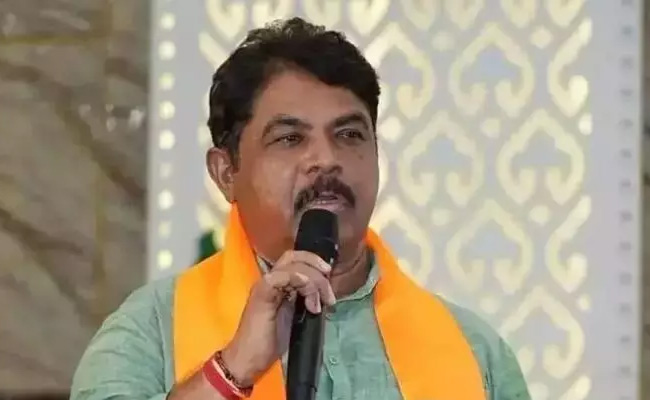
Bengaluru: Leader of Opposition in the Assembly R. Ashoka has accused the Congress government of using the hijab issue to placate what he described as discontent among minority voters after the Davanagere by-election.
In a post on X on Wednesday, Ashoka alleged that the state government, instead of addressing issues such as price rise, corruption, farmers’ distress and law and order, was attempting to retain its minority vote base by reviving the hijab issue.
Referring to the 2022 dress code introduced by the BJP government, which prohibited hijab in schools and colleges, Ashoka said the Karnataka High Court had upheld the policy and emphasised the importance of discipline in educational institutions.
He questioned the Congress government’s move to revisit the issue and asked whether setting aside the court-backed policy to benefit one community could be described as secularism.
Ashoka further alleged that while the government was willing to permit hijab, it continued to prohibit saffron shawls.
He accused the government of dividing students on religious lines rather than treating schools and colleges as spaces of equality.
Drawing a comparison with Mamata Banerjee’s government in West Bengal, Ashoka claimed that excessive appeasement politics had harmed the state and warned that the Congress in Karnataka could face a similar political response.
He said voters in Karnataka would teach the Congress a lesson for what he termed “vote-bank politics” and for compromising constitutional and judicial principles.