CBI grilling of Kolkata top cop Rajeev Kumar likely to continue till 9 pm
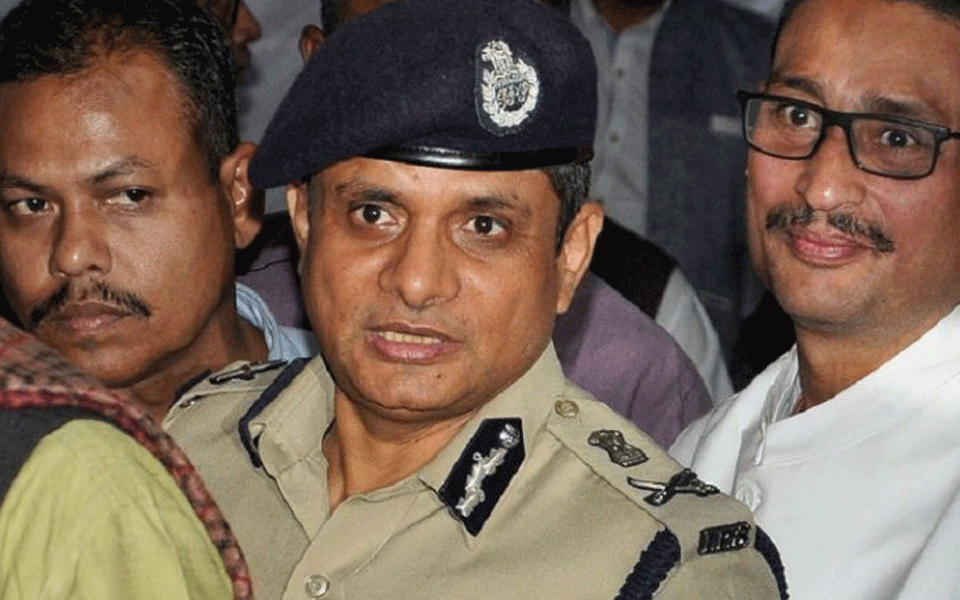
Kolkata, Feb 09: The questioning of Kolkata Police Commissioner Rajeev Kumar in connection with the Saradha chit fund scam by a CBI team in Shillong is likely to continue till 9 pm, a senior official of the agency said on Saturday.
The marathon questioning began at 11 am this morning at the highly secured CBI office at Oakland in Shillong as per the directions of the Supreme Court, the official said.
Kumar was the functional head of the special investigation team (SIT) formed by West Bengal Chief Minister Mamata Banerjee to probe the case before it was handed over to the CBI by the apex court.
Three senior CBI sleuths reached Shillong from Delhi on Friday for the questioning.
The Supreme Court had on Tuesday directed the Kolkata Police chief to appear before the CBI and "faithfully" cooperate in the investigation of cases arising out of the Saradha chit fund scam.
It chose Shillong as the neutral meeting place "to avoid all unnecessary controversy", while making it clear that Kumar will not be arrested.
On February 3, a team of CBI officials had gone to Kumar's residence in Kolkata to question him, but their attempt was thwarted by the police, following which Banerjee had staged a three-day sit-in.
The central investigating agency had said that its officials had wanted to question Kumar to plug the holes in the Saradha scam probe as he was allegedly in possession of certain key documents as a member of the SIT.
Let the Truth be known. If you read VB and like VB, please be a VB Supporter and Help us deliver the Truth to one and all.
Man arrested with Rs 2.54-crore heroin in Mumbai

Mumbai (PTI): Police have arrested a man and seized over 500 grams of heroin worth Rs 2.54 crore in the illicit market from him in Mumbai, officials said on Friday.
The police's Anti-Narcotics Cell (ANC) made the drug seizure in Santacruz in the western suburbs. The operation was conducted by the Kandivali unit of the ANC on Thursday as part of a special crackdown against drug trafficking in the area, they said.
Acting on specific inputs, an ANC team conducted a raid in Santacruz (East) and intercepted a man. During a search, the team recovered 508 grams of high-grade heroin from his possession, an official said.
The seized contraband, a highly addictive, opioid drug derived from morphine, is estimated to be worth Rs 2.54 crore in the international market, he informed.
Following the seizure, a case was registered against the man under relevant sections of the Narcotic Drugs and Psychotropic Substances (NDPS) Act, 1985, and he was formally placed under arrest in the early hours of Friday.
The police are currently investigating the source of the drug and trying to identify the intended recipients of the consignment, he said.