CBI not under control of Union of India, Centre tells SC on West Bengal govt's suit
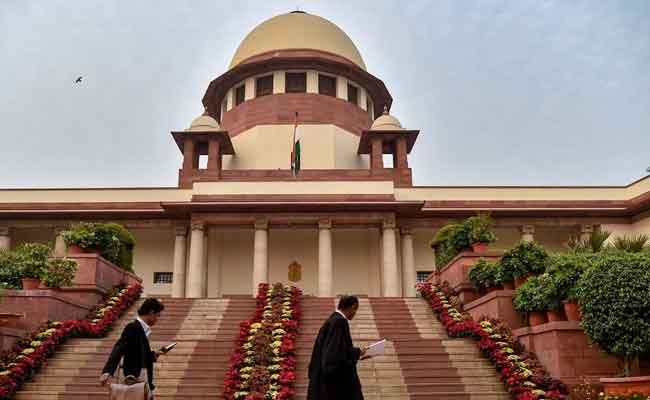
New Delhi (PTI): The CBI is not under the "control" of the Union, the Centre on Thursday told the Supreme Court while raising preliminary objections on a lawsuit filed by the West Bengal government on the agency going ahead with its probe in several cases without the prerequisite nod from the state.
The West Bengal government has filed an original suit in the apex court against the Centre under Article 131 of the Constitution, alleging that the CBI has been filing FIRs and proceeding with its investigation, despite the state having withdrawn the general consent to the federal agency to probe cases within its territorial jurisdiction.
Article 131 deals with the Supreme Court's original jurisdiction in a dispute between the Centre and one or more states.
Solicitor General Tushar Mehta, appearing for the Centre, told a bench of Justices B R Gavai and Sandeep Mehta that Article 131 of the Constitution is "one of the most sacred" jurisdiction conferred upon the apex court and this provision can't be allowed to be misused and abused.
He said the cases referred to in the state's suit have not been filed by the Union of India.
"The Union of India has not registered any case. CBI has registered it," Mehta said, adding, "CBI is not under the control of the Union of India".
The hearing in the matter is underway.
On November 16, 2018, the West Bengal government withdrew the "general consent" accorded to the Central Bureau of Investigation (CBI) to conduct a probe or carry out raids in the state.
Let the Truth be known. If you read VB and like VB, please be a VB Supporter and Help us deliver the Truth to one and all.
Mizoram class 12 results out, pass percentage at 87.67

Aizawl (PTI): Mizoram recorded a pass percentage of 87.67 in the class 12 board examinations on Wednesday, with boys scoring marginally higher than girls,
Across the Arts, Science, and Commerce streams, boys secured an 87.7 per cent success rate, while girls followed closely at 87.66 per cent, according to the results published by the Mizoram Board of School Education (MBSE).
Of the 12,243 students who sat for the examinations held between February and March, 10,734 passed, 1,394 could not, and 115 qualified for compartmental examinations.
Academic performance was strongest in the Commerce stream, which saw a 90.51 per cent success rate among 759 candidates.
The Science stream followed with 89.24 per cent pass rate out of 2,770 students who appeared for the exam, while the Arts stream, with 87,14 students, recorded a pass percentage of 86.93.
In terms of institutional performance, the results revealed that deficit schools, which receive regular government grants, maintained their status as top performers with an average 93.80 per cent pass rate across all streams, followed by private schools at 91.55 per cent, while state-run schools recorded a success rate 83.13 per cent.