CBI officer investigating corruption case against Rakesh Asthana applies for voluntary retirement
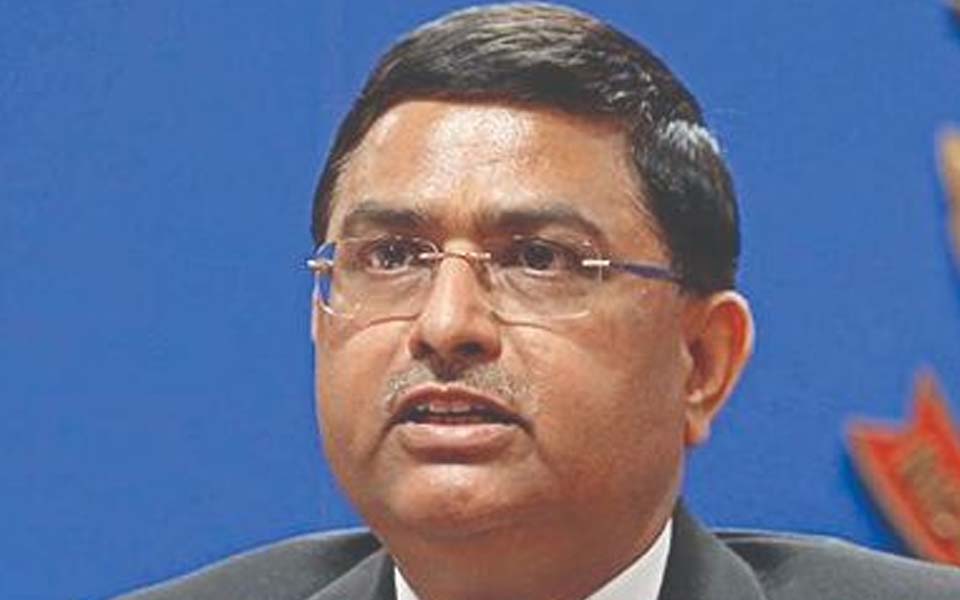
New Delhi, Sep 26: CBI officer Satish Dagar, who was probing the corruption case against the agency's former special director Rakesh Asthana, has applied for voluntary retirement, an official said on Wednesday.
"Satish Dagar, SP, CBI has submitted application for voluntary retirement on personal grounds," CBI's spokesperson said.
The CBI on October 15 last year had registered an FIR against Asthana for allegedly taking a bribe from an accused probed by him in return of ensuring relief and a clean chit in the case.
Asthana has strongly refuted these allegations.
The then CBI director Alok Verma and his deputy Asthana were sent on leave by the Centre through a midnight order on October 23 as both levelled allegations of corruption against each other.

Satish Dagar
Dagar was brought in to probe the case by M Nageswar Rao, a 1986-batch Odisha cadre IPS officer, who took over the duties and functions of CBI director on October 23, 2018 in dramatic midnight change in agency's leadership made by Centre.
The case was earlier being probed by Superintendent of Police A K Bassi who was transferred to Port Blair by Rao.
Dagar is understood to have sent his letter seeking voluntary retirement last month, sources said.
He is scheduled to retire two years from now.
Let the Truth be known. If you read VB and like VB, please be a VB Supporter and Help us deliver the Truth to one and all.
Cong slams Modi govt as 'anti-worker', calls for review of new Labour code
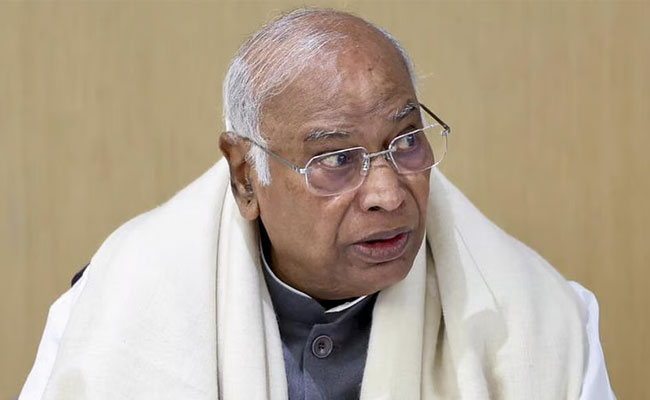
New Delhi (PTI): The Congress on Friday accused the Modi government of being "anti-worker" and demanded that the new labour code be reviewed, MGNREGA be revived as well as a national minimum wage of Rs 400 per day be established.
On International Labour Day, Congress president Mallikarjun Kharge took a swipe at the government and said unemployment in India today is a direct consequence of the 'Hum Do, Hamare Do' policies.
"Driven by the 'Hum Do, Hamare Do' policy, the Modi government implemented an anti-worker Labour Code. As a result, unrest has erupted everywhere - be it in Noida, at the IOCL facility in Panipat, Adani's factory in Raikheda, NTPC Patratu, or the Samsung factory in Sriperumbudur," Kharge said in a post in Hindi on X.
Instead of ensuring job security, this Code promotes policies such as contract labour and 'Hire & Fire' practices, Kharge said and called for a review of the new Labour Code.
The Modi government has effectively dismantled MGNREGA by forcibly pushing legislation through Parliament, he alleged.
"Mr. Modi has shifted 40% of the wage burden onto the State governments. State governments are unable to bear this financial strain and will eventually be forced to stop providing work," he claimed.
The Modi government has compelled workers into a state of unemployment and pushed them towards 'gig work', Kharge said.
Currently, 69% of the workforce is working for wages below the statutory minimum wage, he said.
The Modi government has engineered a crisis of stagnant wages, Kharge alleged.
"When adjusted for inflation, the wages of the majority of India's workers have grown by less than 1% annually over the last decade (from 2014-15 to 2022-23)," he said.
The Modi government has created a massive unemployment crisis among the educated workforce, specifically, among graduates, Kharge claimed and added that jobs have been eliminated through the sale of Public Sector Undertakings (PSUs).
"The government has refused to fill approximately 30 lakh vacant government positions. Furthermore, the government's policy blunders have led to the decimation of Micro, Small, and Medium Enterprises (MSMEs)," the Congress chief said.
The Congress reiterates its five demands for India's workers including revival of MGNREGA and its expansion to urban areas, Kharge said.
He said a national minimum wage of Rs 400 per day should be established, with MNREGA included within its scope.
Kharged demanded that a 'Right to Health' law must be enacted, providing Universal Health Coverage of up to Rs 25 lakh for laborers and workers.
"'Life Insurance and Accident Insurance' coverage must be provided for all unorganized workers. Preventing the contractualization of employment must be made a core priority of the government, and the new Labour Codes must be reviewed," Kharge asserted.