CBSE drops chapters on Islamic empires, Cold War from syllabus; verses of Faiz also excluded
New Delhi (PTI): The CBSE has dropped chapters about the Non-Aligned Movement, the Cold War era, the rise of Islamic empires in Afro-Asian territories, the chronicles of Mughal courts and the industrial revolution from the history and political science syllabi of classes 11 and 12.
Similarly, in the class 10 syllabus, the topic "impact of globalisation on agriculture from a chapter on 'Food Security' has been dropped. The translated excerpts from two poems in Urdu by Faiz Ahmed Faiz in the 'Religion, Communalism and Politics Communalism, Secular State' section have also been excluded this year.
The Central Board of Secondary Education (CBSE) has also dropped from the course content chapters on 'democracy and diversity'.
Asked about the rationale behind the choice of topics or chapters being dropped, officials maintained that the changes are part of rationalisation of syllabus and are in alignment with recommendations by the National Council of Educational Research and Training (NCERT).
The dropped chapter "Central Islamic Lands" in the class 11 history syllabus talks about the rise of Islamic empires in the Afro-Asian territories and its implications for economy and society, according to the description in last year's syllabus.
The chapter focused on arenas of Islam in reference to its emergence, the rise of the caliphate and empire building.
Similarly, in the class 12 history syllabus, the dropped chapter titled 'The Mughal Court: Reconstructing Histories through Chronicles' examined the chronicles of Mughal courts to reconstruct the social, religious and cultural history of the Mughals.
The syllabus shared with schools for the 2022-23 academic session also hints at the board's decision to revert to a single-board exam in a session from the two term examination last year.
While the two term exam was announced as a one-time special measure taken in view of the Covid pandemic, the board officials had last week said a final call will be taken in due course of time keeping in mind the situation.
"CBSE annually provides curriculum for classes 9 to 12 containing academic content, syllabus for examinations with learning outcomes, pedagogical practices and assessment guidelines. Considering the feedback of stakeholders and other prevailing conditions, the board is in favour of conducting the annual scheme of assessment at the end of the academic session 2022-23 and the curriculum has been designed accordingly," a senior board official said.
However, this is not the first time the board has dropped from the syllabus certain chapters which have been part of the curriculum for decades.
As part of its decision to rationalise the syllabus, the CBSE in 2020 had announced that chapters on federalism, citizenship, nationalism, and secularism in the class 11 political science textbook will not be considered while assessing students, triggering a major controversy.
The topics were restored in the 2021-22 academic session and remain a part of the curriculum.
Let the Truth be known. If you read VB and like VB, please be a VB Supporter and Help us deliver the Truth to one and all.
Two arrested in K'taka for assaulting minors, uploading CSAM content
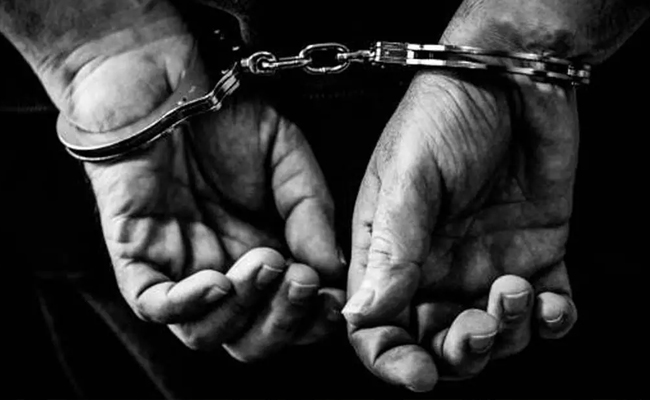
Bengaluru (PTI): Two men were arrested for allegedly sexually assaulting two minor girls, recording the acts on mobile phones and uploading the videos online as child sexual abuse material, police said on Thursday.
The accused have been identified as Kiran Kumar (29), hailing from Chitradurga district, and Aditya M K (20), hailing from Shivamogga district, they said.
A probe was initiated after information was received from the NCRP portal regarding a suspected instance of creation of Child Sexual Abuse Material (CSAM) for online dissemination, police said.
Accordingly, a case was registered at Kaggalipura Police Station under relevant sections of the IT Act on May 10, they added.
Investigation revealed that two minor girl victims were exploited and videos were created and uploaded to the internet. The child victims have subsequently recorded their statements as per procedure and further necessary legal steps have been taken, Pronab Mohanty Director General of Police, Cyber Command, said in a statement.
Based on the statements of the victims, the accused persons, who allegedly assaulted the minors, recorded the acts on mobile phones and uploaded the videos online, were arrested, he said.
Following the probe, sections 65(2) (rape) and 70 (gangrape) of the Bharatiya Nyaya Sanhita, along with relevant sections of the POCSO Act, have been added to the FIR, police said.
Officials collected relevant information and on May 12, arrested the accused persons and seized three mobile phones belonging to them, in which the videos had allegedly been recorded, he said.
The accused were later produced before the court and taken into police custody for further investigation, he added.
According to him, in CSAM cases, police usually apprehend offenders who have downloaded such content or have kept them in their possession after obtaining them from elsewhere, usually the internet.
"The present case is one of the very few instances where content creators and uploaders have been apprehended," Mohanty added.