CCPA issues guidelines to regulate walkie-talkie sales on e-commerce platforms
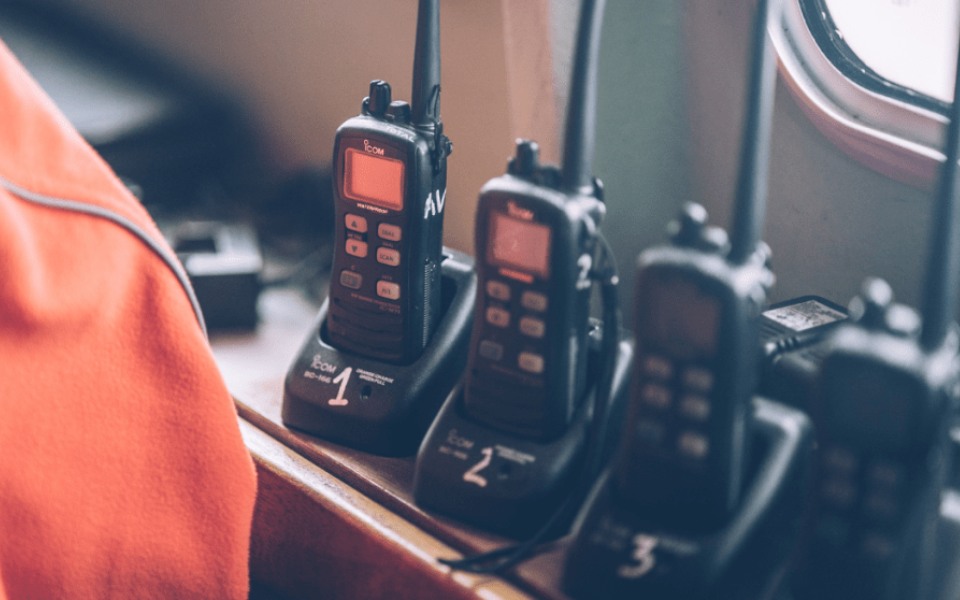
New Delhi, May 31 (PTI): The Central Consumer Protection Authority (CCPA) on Friday released comprehensive guidelines to prevent the illegal listing and sale of radio equipment, including walkie-talkies, on e-commerce platforms.
The new framework aims to check the sale of walkie-talkies without proper frequency disclosure, licensing information, or Equipment Type Approval (ETA) — practices that violate the Consumer Protection Act, 2019.
The guidelines were developed after extensive inter-ministerial consultations with the Department of Telecommunications (DoT) and the Ministry of Home Affairs (MHA). Key regulatory and security considerations from both departments have been incorporated to ensure a coordinated approach.
"It was observed that walkie-talkies are being sold on e-commerce platforms without mandatory and clear disclosures regarding the requirement of a wireless operating license or compliance with applicable laws," the CCPA said in a statement.
Product listings for walkie-talkies currently fail to specify whether devices require licences from concerned authorities. Critical details such as frequency ranges, licensing obligations under the Indian Telegraph Act, 1885, the Wireless Telegraphy Act, 1933, and the Use of Low Power, Very Low Power Short Range Radio Frequency Devices (Exemption from Licensing Requirement) Rules, 2018, are often omitted.
This lack of disclosure misleads consumers into believing the devices can be freely operated by the general public, the CCPA noted.
The new guidelines mandate that only authorised and compliant walkie-talkie devices operating on permitted frequencies be listed for sale on online platforms.
Product listings must specify frequency ranges and technical parameters, and include proof of regulatory approval through Equipment Type Approval.
E-commerce entities are required to undertake due diligence and verify regulatory compliance, including licensing where applicable. Listings lacking frequency information or necessary certification must be removed.
The guidelines also prohibit misleading advertisements or product descriptions that may misinform consumers about legal usage of such devices.
Sellers must ensure equipment listed for sale does not operate on frequencies that require frequency assignment and authorisation by DoT. Frequency bands must be clearly labelled in product descriptions.
The framework outlines penalties and enforcement mechanisms for violations in accordance with the Consumer Protection Act, 2019.
The CCPA aims to ensure due diligence by platforms before listing products, mandate verification of seller credentials and certification, introduce automated monitoring and takedown mechanisms for unauthorised listings, promote consumer awareness through proper disclosures, and enforce penalties and platform liability for non-compliance.
The CCPA had earlier issued 13 notices against 16,970 product listings to leading digital marketplaces for listing and selling walkie-talkies without proper frequency disclosure, licensing information, or Equipment Type Approval.
These platforms remain under constant monitoring and examination alongside the notification of the new guidelines, the statement added.
Let the Truth be known. If you read VB and like VB, please be a VB Supporter and Help us deliver the Truth to one and all.
Two injuries, one DNF, a DQ as India end messy World Relays campaign
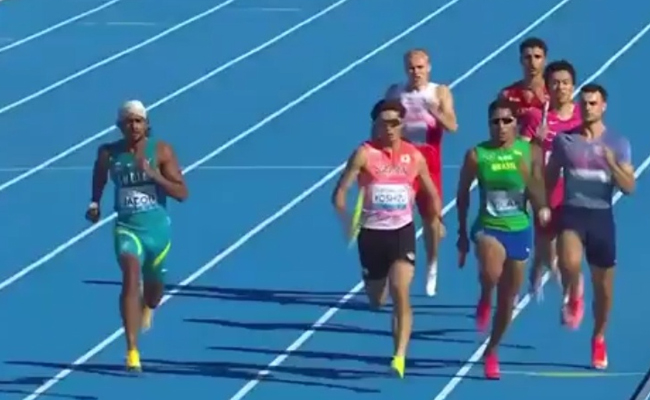
Gaborone (Botswana) (PTI): Amoj Jacob and Ragul Kumar got injured during the men's 4x400m and 4x100 races respectively as India ended their World Athletics Relays campaign in disappointment on the second day of competitions here on Sunday.
The Indian camp had high hopes of making the 2027 World Championships in the men's 4x400m relay but the team did not finish (DNF) the race as Jacob suffered cramps and pulled out of the race after taking the baton from the first leg runner Dharamveer Choudhary. Rajesh Ramesh and Vishal TK were to run in the third and fourth legs.
Those teams which could not qualify for the 2027 Beijing World Championships by reaching the final round of each of the six relay events on Saturday were given another chance in the second qualification round on Sunday.
The top two teams in each of the two heats (in all six relay events) booked the Beijing ticket on Sunday.
India will now have to try and qualify for the World Championships through the Top Lists of the World Athletics, which is a long and tedious process.
In the men's 4x100m race, third leg runner Ragul Kumar fell down the track after failing to hand over the baton inside the exchange zone to fourth leg runner Gurindervir Singh, which clearly showed the lack of coordination among the runners.
Harsh Santosh Raut and Animesh Kujur ran the first two legs.
The Indian quartet was disqualified and Kumar was seen being taken away from the Field of Play with the help of the volunteers.
It was a comedy of errors in the case of the women's 4x100m race, which saw the baton being dropped during an exchange between first leg runner Tamanna and second runner Nithya Gandhe, though the Indians finished the race in 53.09 seconds.
Gandhe started running quite a distance, but after realising that the baton was not in her hand, she turned and ran back to pick it up.
The only silver-lining for the Indian contingent was the national record time in the mixed 4x100m relay race, though the quartet of Ragul Kumar, Nithya Gandhe, Animesh Kujur and Sneha SS finished sixth in heat number two with a time of 41.35 seconds, bettering the previous national mark of 42.30 seconds set in March in Chandigarh.
The mixed 4x400m relay quartet of Theerthesh P Shetty, Kumari Saloni, Nihal William and Rashdeep Kaur ended at fifth in heat number one with a time of 3 minutes and 19.40 seconds.
On Saturday, all the five Indian relay teams had failed to make it to the respective final rounds and thus missed out on the 2027 World Championships berths.