Centre allows UPSC to perform Aadhaar-based authentication for candidates' verifications
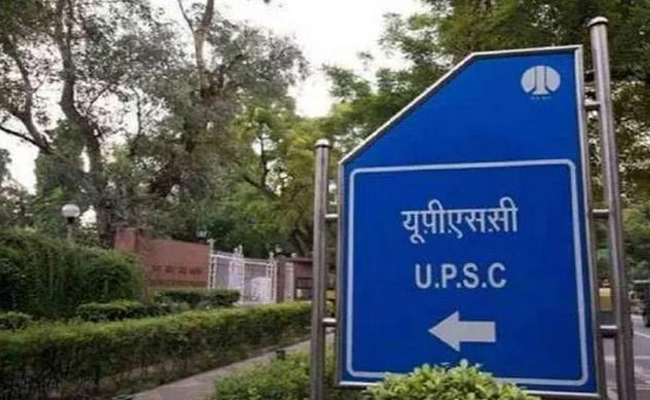
New Delhi (PTI): In a first, the Centre on Wednesday allowed the Union Public Service Commission (UPSC) to perform Aadhaar-based authentication to verify candidates' identity on a voluntary basis, both at the time of registration and during various stages of examinations and recruitment.
The move assumes significance as the commission last month cancelled the provisional candidature of probationary IAS officer Puja Khedkar and debarred her from all future examinations for fraudulently availing attempts in the civil services examination beyond eligibility.
Khedkar has also been accused of misusing disability and Other Backward Classes or OBC (non-creamy layer) quotas, among others.
In a notification, the personnel ministry said the UPSC "is allowed to perform Aadhaar authentication, on voluntary basis, for verification of identity of candidates at the time of registration on 'One Time Registration' portal and various stages of examination/recruitment test, using Yes/No or/and e-KYC authentication facility".
The commission shall adhere to all provisions of the Aadhaar (Targeted Delivery of Financial and Other Subsidies, Benefits and Services) Act, 2016, "the rules and regulations made thereunder" and directions issued by the Unique Identification Authority of India (UIDAI), the notification added.
Aadhaar is a 12-digit number issued by the UIDAI to all eligible citizens on the basis of biometric and demographic data.
The UPSC had, in July, initiated a series of actions against Khedkar, including the registration of a forgery case against her for availing attempts in the civil services exam by faking identity. Subsequently, the Delhi Police registered a case and started its probe.
Khedkar, who was provisionally allotted the Indian Administrative Service (2023 batch, Maharashtra cadre), was accused of misusing power and privileges during her training in Pune.
In June, the UPSC also decided to use facial recognition and artificial intelligence-based CCTV surveillance systems to prevent cheating and impersonation in its various tests.
Through a tender document, it invited bids from experienced public sector undertakings to devise two tech solutions -- "Aadhaar-based fingerprint authentication (else digital fingerprint capturing) and facial recognition of candidates and QR code scanning of e-admit cards" and "Live AI-based CCTV surveillance service" -- to be used during the examination process.
The UPSC conducts 14 major exams annually, including the prestigious civil services examination to select officers of the Indian Administrative Service (IAS), Indian Foreign Service (IFS) and Indian Police Service (IPS), besides a number of recruitment tests and interviews every year for induction to Group 'A' and Group 'B' posts of the central government.
Lakhs of candidates appear in such recruitment conducted across the country.
Let the Truth be known. If you read VB and like VB, please be a VB Supporter and Help us deliver the Truth to one and all.
Rupee falls 20 paise to 95.43 against US dollar in early trade

Mumbai (PTI): The rupee depreciated 20 paise to 95.43 against US dollar in early trade on Tuesday as market sentiments remained fragile after renewed military exchanges between US and Iranian forces in the Gulf region.
Forex traders said investor anxiety due to instability in the Gulf is causing massive capital flight into safe-haven assets, with the US dollar acting as the primary beneficiary.
Moreover, Brent oil prices is hovering near USD 113 per barrel, maintaining pressure on oil-importing economies like India.
At the interbank foreign exchange market the rupee opened at 95.30 then lost ground to touch 95.43 against the US dollar, in initial trade, registering a fall of 20 paise over its previous close.
Rupee fell 39 paise to close at an all-time low of 95.23 against the US dollar on Monday.
"With oil boiling rupee on Monday fell to a closing low of 95.0875 and this morning the opening was still lower as it becomes more and more vulnerable when dollar index rises due to safe-haven buying and oil prices rise due to the continuous fighting in the Gulf Region," Anil Kumar Bhansali, Head of Treasury and Executive Director, Finrex Treasury Advisors LLP, said.
The higher oil prices will keep rupee sold off against the dollar as oil companies and FPIs intensify dollar buying, Bhansali added.
Meanwhile, the dollar index, which gauges the greenback's strength against a basket of six currencies, was trading at 98.51, up 0.15 per cent.
Brent crude, the global oil benchmark, was trading lower by 1.07 per cent at USD 113.22 per barrel in futures trade.
"Market sentiments remained fragile after renewed military exchanges between US and Iranian forces when Iranian forces launched fresh attacks in the Gulf as both sides sought to assert control over the strategic waterway," Bhansali said.
On the domestic equity market front, Sensex declined 361.62 points to 76,907.78 in early trade, while the Nifty dropped 134.90 points to 23,980.60.
Foreign Institutional Investors purchased equities worth Rs 2,835.62 crore on Monday, according to exchange data.