Centre approves Adani Power’s plan to link Godda plant to Indian grid: Report
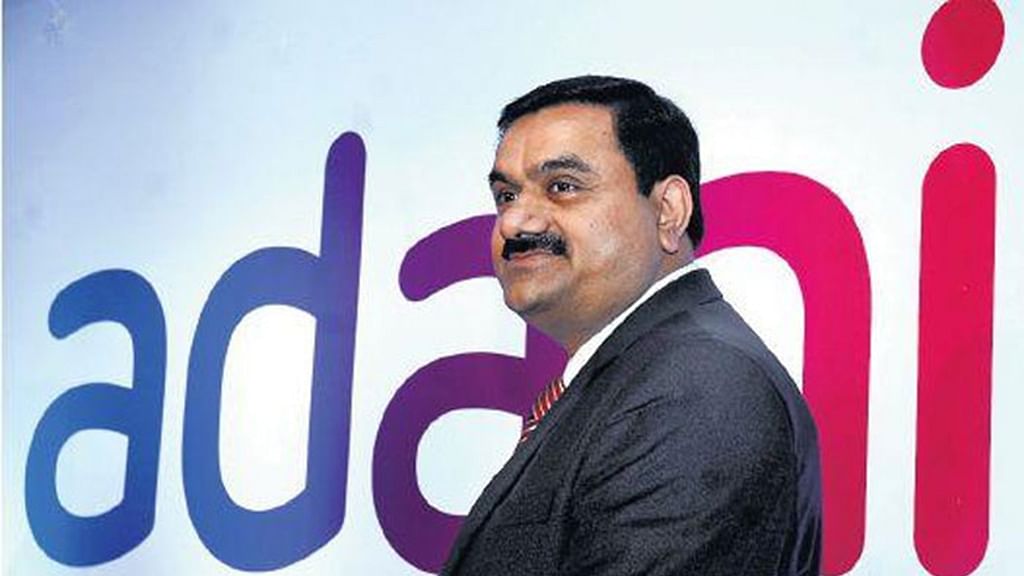
New Delhi: The Centre has approved Adani Power Limited’s (APL) proposal to connect its Godda Ultra Super Critical Thermal Power Plant in Jharkhand to the Indian power grid, The Indian Express reported on Friday.
The plant, which currently supplies electricity exclusively to Bangladesh, will be linked to the domestic grid through a Line-In Line-Out (LILO) connection to the Kahalgaon A–Maithon B 400 KV transmission line.
To lay the proposed transmission line—passing through 56 villages across the Godda and Poreyahat tehsils in Jharkhand’s Godda district—the Centre has granted Adani Power Limited (APL) the same powers as those held by the telegraph authority under the Indian Telegraph Act, 1885. This allows APL to place and maintain transmission lines and posts under, over, along, or across any immovable property as permitted by the Act.
The Power Ministry’s order comes in the wake of several amendments to regulations to enable this transmission connectivity to the APL’s Godda plant, including the ministry’s move to amend the guidelines for import and export of electricity, the Central Electricity Authority’s (CEA) move to amend procedure for facilitating cross border flows, among others, the report added.
Declared a Special Economic Zone (SEZ) in March 2019, APL’s Godda power plant supplies electricity exclusively to Bangladesh. However, following a regime change in Dhaka in August 2024, the Indian government had allowed as an interim arrangement to connect the Godda plant with Inter-State Transmission System (ISTS), a high-voltage network in India that transmits electricity across state borders, enabling power flow from surplus regions to areas with deficits and ensuring grid stability.
APL, earlier called Adani Power Jharkhand Ltd, wrote to the Ministry of Power on August 6, 2024, a day after the ouster of Bangladesh Prime Minister Sheikh Hasina on August 5. In the letter, it informed the government that “given the sustained increase in power demand across India, it would be beneficial if their generating station could cater to such demand in India, when the Bangladesh Power Development Board (BPDB) is not scheduling power from the plant on account of low demand, any default under PPA or any geo-political issue.”
The latest approval by the Power Ministry is granted for 25 years. APL must secure clearances from relevant authorities including local bodies, Railways, and the Civil Aviation and Defence ministries. The transmission line can only be operated after approval from the Centre’s electrical inspector and in compliance with the Electricity Act, 2003.
Let the Truth be known. If you read VB and like VB, please be a VB Supporter and Help us deliver the Truth to one and all.
Engine issue forces SWISS Delhi flight to abort takeoff; six passengers injured

New Delhi (PTI): A Zurich-bound Swiss International Air Lines' flight carrying 232 passengers aborted take off at the Delhi airport early Sunday due to an engine issue, sources said.
Six passengers are undergoing medical evaluation, an airline spokesperson said without elaborating.
Smoke was observed from the port side of one of the landing gears of the A330 aircraft that was operating the flight LX147 to Zurich. The flight crew aborted the take off and full emergency response was initiated, the sources said.
In a detailed statement, an airline spokesperson said there were 228 passengers and four infants on board.
"Shortly after takeoff, just after 1:00 am. local time in India, an issue occurred with one of the engines. The crew rejected the takeoff and, following an assessment of the situation, decided as a precaution to evacuate the aircraft," the spokesperson said.
Six passengers were receiving medical attention, the spokesperson added.
"All passengers and crew evacuated the aircraft via the emergency slides.Six passengers are currently undergoing medical evaluation. For a small number of individuals who were unable to use the slides, stairs were provided," the spokesperson said.
According to the spokesperson, Swiss technical specialists will travel to Delhi to inspect the aircraft and initiate the next steps.
The airline is known as Swiss.
At the same time, the spokesperson said the airline was working intensively to find a swift and suitable onward travel solutions for all passengers.