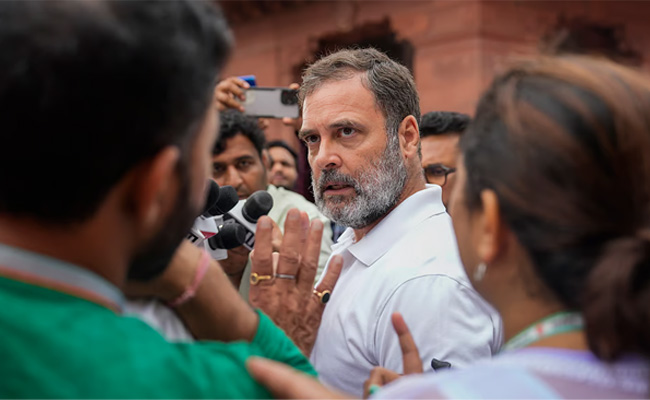
Centre changed policy to ensure Bihar's power plant project goes to a particular firm: Pawan Khera
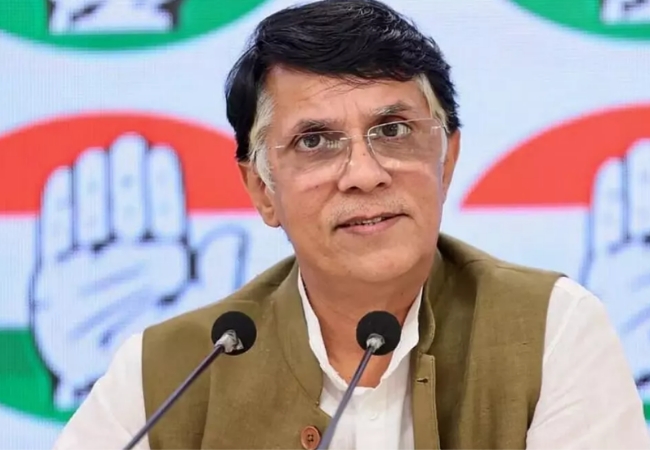
Patna (PTI): The Congress on Friday accused the Centre of changing its SHAKTI policy to ensure that a power plant project in Bihar's Bhagalpur district goes to a particular private firm close to Prime Minister Narendra Modi.
The solar power project was converted into a thermal project, and the group has been given 1,050 acres of land at the rate of Re one per acre, chairman of the party's Media & Publicity wing, Pawan Khera, claimed in a press conference here.
"Senior BJP leader RK Singh, who served as a minister in the Modi government for 10 years, is saying the project is a scam worth Rs 62,000 crore. According to him, the firm will earn Rs 25,000 crore every year from this project," Khera said.
"Changes were made to the SHAKTI policy to ensure that the power project plant in Bhagalpur's Pirpainti goes to a particular firm. These changes were made directly at the level of the Prime Minister, Narendra Modi," Khera alleged.
The SHAKTI (Scheme for Harnessing and Allocating Koyala Transparently in India) policy of 2017, formulated to transparently allocate coal to the power sector, was revised earlier this year to provide "greater flexibility, wider eligibility and better accessibility to coal", according to PIB release of July 28.
"We are also asking from the Central government: why did the Ministry of Energy of the Government of India revise the Bihar government's feasibility report to convert a solar project into a thermal project just to favour a particular group close to the PM," Khera said.
Won't this change have a negative impact on Bihar's Renewable Purchase Obligation, he asked.
The Congress leader also wondered why, despite the absence of coal linkage, was a thermal power plant under Tariff Based Competitive Bidding (TBCB) given under the provisions of SHAKTI policy.
He asked if issuing a tender without finalising details is not violation of rules.
Besides, Khera said, when this project was to be given to a private firm, why a budget of Rs 21,000 crore was allocated for it in the central budget.
He alleged that the tender for the thermal project was issued without approval of the use Ganga river water, and the Bihar government spent Rs 58 crore on this project before it was floated.
Besides, no Environmental Impact Assessment (EIA) and cost-benefit analysis were conducted for this project, he claimed.
Despite opposition of the several engineers and experts for the Pirpainti project, it was handed over to the favoured group, the Congress leader said.
The group has been given 1,050 acres of land at the rate of one rupee per acre, he said.
Let the Truth be known. If you read VB and like VB, please be a VB Supporter and Help us deliver the Truth to one and all.
Lebanon appoints new representative for talks with Israel, rejects linkage to Iran
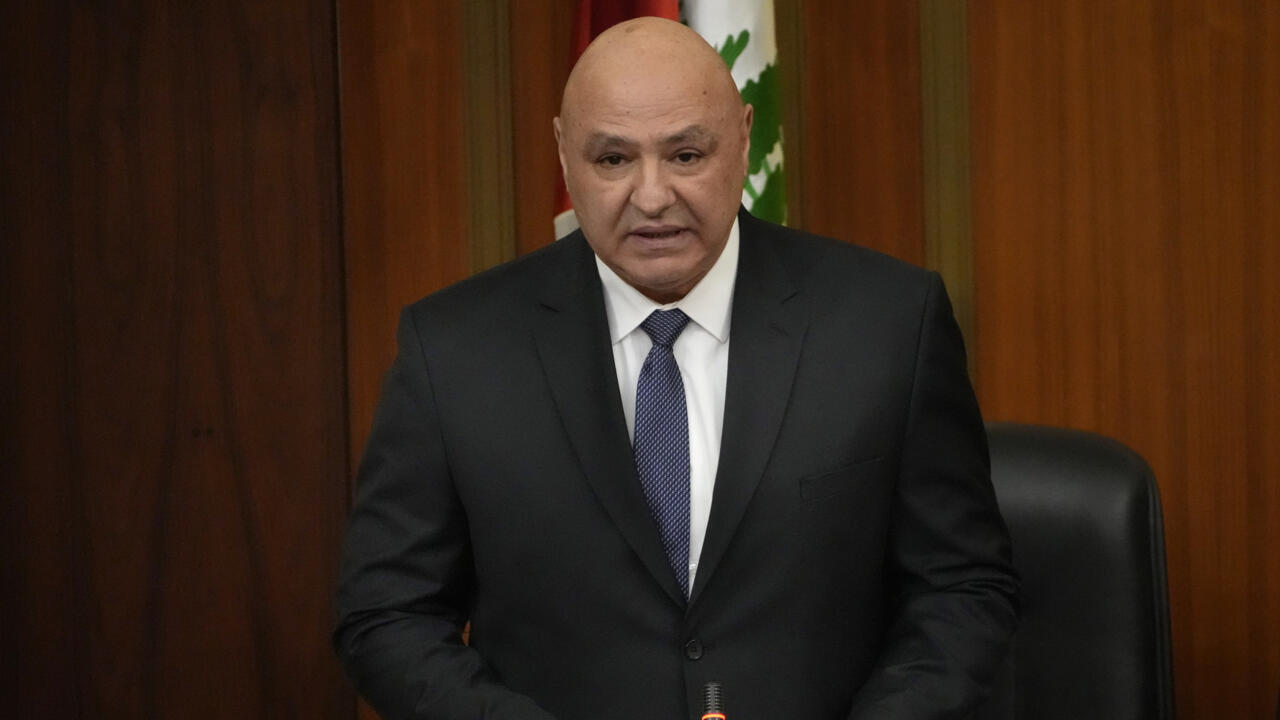
Beirut: Lebanon’s has moved to underline its independent position in ongoing regional developments, amid attempts to link the country to the broader conflict involving Iran, the United States and Israel.
President Joseph Aoun, while announcing the appointment of former US ambassador Simon Karam as Lebanon’s representative in talks with Israel, made it clear that Karam would be the sole representative for Lebanon and that there would be no substitute.
The move comes in response to what the Lebanese officials see as efforts by Iran to tie Lebanon’s situation to the wider regional conflict. Iran had indicated that there would be no ceasefire involving the US, Israel and Iran unless it also included a ceasefire in Lebanon.
Some groups, including Hezbollah and its supporters, had expressed support for linking the situations, citing concerns that the Lebanese government has limited leverage in negotiations with Israel. Lebanon is not formally a party to the conflict, and its army is considered weak.
However, others, including Prime Minister Nawaf Salam, have opposed this approach. They view Iran’s stance as an attempt to influence Lebanon’s internal affairs and see it as undermining the country’s sovereignty.
Officials backing the government’s position say the move is aimed at reaffirming Lebanon’s sovereignty and ensuring that decisions about peace and ceasefire within the country are not dictated externally.
They also see it as a safeguard, so that any breakdown in talks between the US, Israel and Iran does not automatically lead to renewed conflict in Lebanon.