Centre delayed NRC citing law and order problem: Congress

New Delhi, Aug 5 : The Congress on Sunday said the Modi government delayed the preparation and publication of Assam's draft National Register of Citizens (NRC) by claiming in the Supreme Court that the process can spread fear of violence among the people and pose law and order problem.
Addressing a press conference here, Congress leader Pawan Khera said: "The 'Shah' of lies and the 'Shahenshah of jumlas' tried their best to stall the NRC. The Attorney General used the fear of violence to delay the NRC."
He said that the Supreme Court had come down heavily on the government for its excuses to delay the publication of the NRC in Assam.
"The Supreme Court ordered on November 30, 2017, that it is 'sheer inaction' on part of the executive in dragging the matter for over three years and the absence of any justifiable cause to hold back even a partial publication, which led the court to direct the publication of the draft NRC on or before December 31, 2017," the Congress leader said.
He said that the Attorney General had submitted that part publication of the draft NRC could result in law and order problem in as much as a large segment of the people would understand that their names have been excluded from the draft.
"This makes it clear on how the Modi government made all attempts to stall the process," he said.
Demanding an apology from the government to the people of Assam for attempting to stall the NRC, he also sought to know its stand on the Citizenship Amendment Bill.
"On the one hand, the government seeks to give citizenship rights through the proposed Citizenship Amendment Bill (2016) to all those who migrated to India before December 31, 2014, and on the other it is playing politics on NRC," he said.
Khera also demanded the resignation of Assam Chief Minister Sarbanand Sonowal, saying that he has no right to continue as his party "shamelessly" cheated the people on the NRC issue.
Let the Truth be known. If you read VB and like VB, please be a VB Supporter and Help us deliver the Truth to one and all.
Double-decker electric bus gutted in fire at Kurla BEST depot
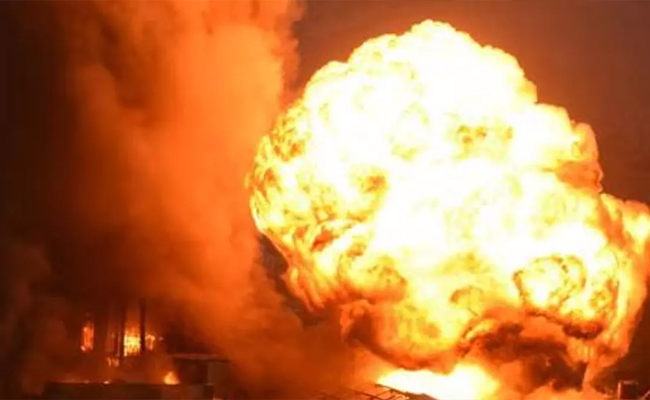
Mumbai (PTI): An empty double-decker electric bus was gutted in a fire during servicing at a BEST depot in Mumbai's Kurla area on Sunday, officials said, adding that nobody was injured.
The blaze broke out inside the Kurla BEST bus depot near Kanakia Building at 4.14 pm, according to preliminary information from the Mumbai Fire Brigade.
The parked bus was unoccupied at the time of the incident.
Fire brigade personnel rushed to the spot and brought the blaze under control. The exact cause of the fire was yet to be ascertained, they said.
No injuries were reported in the incident, officials added.
The Brihanmumbai Electricity Supply and Transport (BEST) Undertaking has hired 50 electric double-decker buses from Switch Mobility in its fleet of around 2,700 buses.