Centre in SC 'strongly' opposes setting up ex judges panel to monitor stubble burning
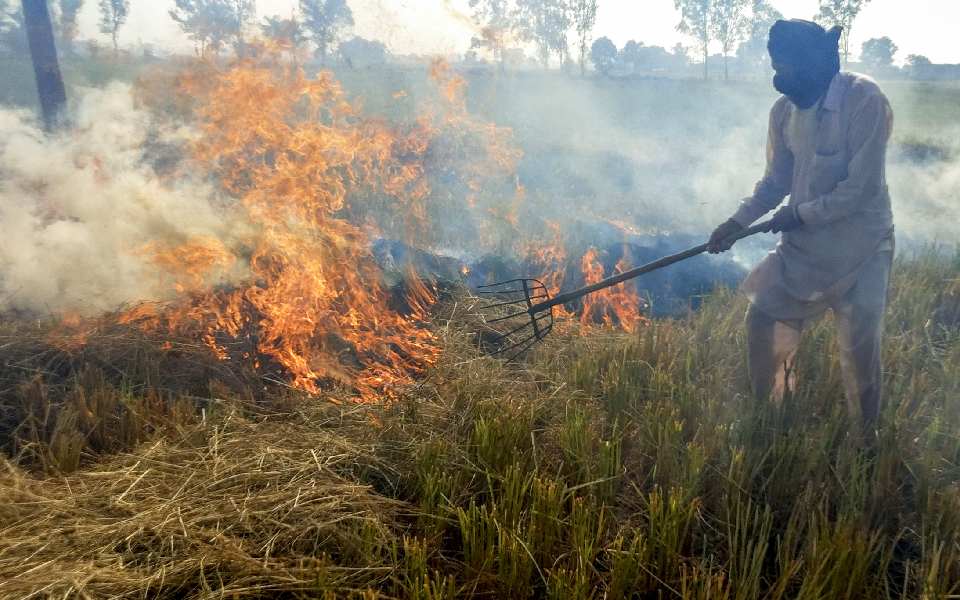
New Delhi, Nov 22: The Centre on Friday opposed in the Supreme court a proposal to form a committee of former apex court judges to oversee the implementation of measures to curb stubble burning, a key contributor to Delhi-NCR’s air pollution.
The suggestion was put forth before a bench of Justices Abhay S Oka and Augustine George Masih, hearing a case related to the rising pollution in Delhi-NCR, by senior advocate and amicus curiae Aparajita Singh.
She sought to leverage the expertise of judges as part of the proposed fact-finding committee.
The amicus said the judges had previously dealt with air pollution and stubble burning issues.
A bench headed by former Supreme Court's Justice Madan B Lokur had heard pleas related to pollution and the role of stubble burning as a contributing factor in the past.
In 2020, a bench headed by the then CJI Justice S A Bobde set up a panel headed by Justice Lokur to deal with the issues relating to stubble burning. The order was later recalled.
On Friday, the amicus curiae proposed that a committee of these judges could monitor and hear all stakeholders, including farmers and government authorities, for a comprehensive approach to address the crisis.
"A committee of experienced judges familiar with these issues could efficiently oversee the situation and hear individual grievances,” said Singh.
The proposal, however, was met with strong resistance from Additional Solicitor General Aishwarya Bhati, representing the Centre.
Bhati asserted the Centre and the Commission for Air Quality Management (CAQM) were taking adequate measures and that adding another oversight layer would be counterproductive.
"We strongly oppose this suggestion. There is no need for an additional judicial committee as your lordships are already monitoring the situation. We are answering all concerns, correcting shortcomings, and making progress,” said ASG Bhati while opposing the creation of "any more tier".
The amicus clarified her suggestion was for a fact-finding committee, but Bhati countered the statement, saying the government was already working with the available data and frameworks to address the issue effectively.
During the hearing, senior advocate Gopal Sankaranarayanan highlighted that changes in the timing of stubble burning, coupled with seasonal wind patterns, had worsened Delhi’s air quality.
The amicus curiae further flagged discrepancies in data reported by the CAQM and other sources regarding burnt areas in Punjab and Haryana.
"The burnt area in Punjab has increased to 19.1 lakh hectare from 15.1 lakh hectare in 2021, a 24% rise. Similarly, Haryana’s burnt area rose from 3.5 lakh hectare in 2021 to 8.3 lakh hectare in 2023. This contrasts with CAQM data, which claims a reduction in farm fires in Haryana,” Singh said, raising concerns about the accuracy of official reports.
The ASG defended the CAQM’s methodology, arguing that reliance on unverified sensors would undermine the process.
The amicus curiae, however, emphasised the need for scientifically validated protocols involving experts, with Punjab and Haryana also participating in the efforts.
The bench observed that while satellites could detect farm fires, burnt area showed their exact extent.
"We would like to have that data," it said.
In an order on November 18, the top court directed the Centre and the CAQM to procure farm fire data using geostationary satellites, as opposed to NASA’s polar-orbiting satellites, to ensure real-time monitoring.
The court noted that existing data from NASA satellites was limited to specific time windows and directed the involvement of ISRO in utilising stationary satellites for comprehensive day-long monitoring.
The court will review compliance with these directions and the latest developments on stubble burning measures in its next hearing.
Let the Truth be known. If you read VB and like VB, please be a VB Supporter and Help us deliver the Truth to one and all.
Activists write open letter to Odisha govt flagging anti-Christian violence
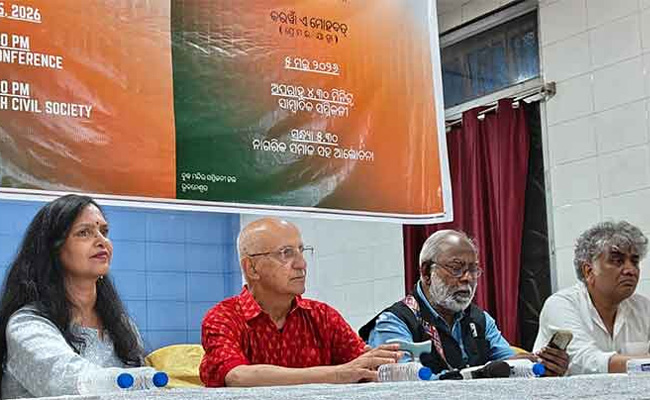
New Delhi: Activists and rights campaigners John Dayal, Aakar Patel, Vidya Dinker and Harsh Mander have expressed serious concern over the alleged rise in violence and intimidation against Christians in several districts, accusing both Hindutva organisations and sections of the police of targeting the minority community.
In a strongly worded communication addressed to the state administration, the signatories said they had received disturbing testimonies from affected people regarding social boycott, denial of burial rights, physical assaults and police intimidation.
According to the activists, Christians in some areas were allegedly boycotted by villagers, while people who traded with them, employed them or provided them shelter were also targeted.
The letter also highlighted what it described as “gruesome” incidents involving the prevention of burials of Christians within village burial grounds and even on privately owned lands belonging to Christian families. The activists said there were cases where bodies remained unburied for days due to opposition from local groups, while in some instances burials were allegedly forced to take place in forest areas outside village limits. Funeral prayers were also reportedly disrupted.
The signatories further alleged that in certain districts the violence escalated into physical assaults on Christians. They claimed that some victims were tied to trees and beaten, while others were allegedly placed inside sacks and assaulted. The letter also mentioned a few reported instances of sexual violence and attempts to burn people alive, which, according to them, were stopped at the last moment.
Expressing particular concern, the activists said many victims had testified that police personnel joined hands with Hindutva organisations to force Christians into signing “compromise” agreements. These agreements allegedly required them to give up their faith and stop collective worship.
The letter also accused the police of registering serious criminal cases against victims of attacks instead of taking action against the attackers. According to the signatories, many of those attacked were detained in police stations and jails, while in some cases the police themselves allegedly played a direct role in intimidation and violence against Christians.
Stating that there appeared to be a “complete breakdown in the constitutional machinery of the state” in relation to Christian minorities, the activists urged the administration to uphold and protect the constitutional and religious rights of all citizens without discrimination based on religion, caste or creed.
The letter was signed by John Dayal, Aakar Patel, Vidya Dinker and Harsh Mander.