Centre issues alert over high-quality fake Rs 500 notes; Highlights key identifier
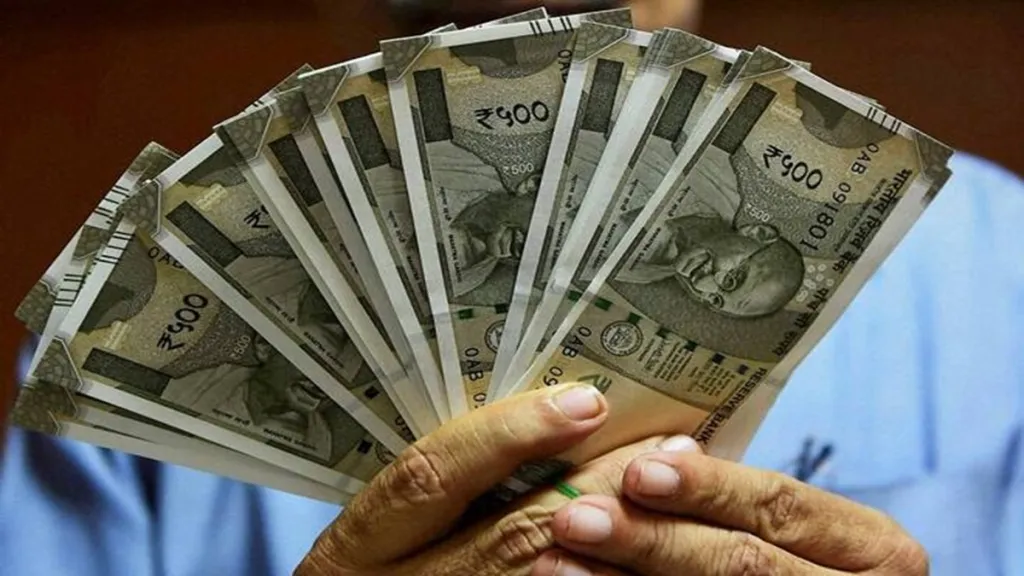
New Delhi: The Ministry of Home Affairs (MHA) has issued a high-priority alert to financial regulatory bodies, enforcement agencies, and banks dealing in cash, following intelligence reports of “high-quality” counterfeit Rs 500 notes entering circulation.
The alert, as cited by The New Indian Express, highlights a key identifier between the fake and genuine notes— a subtle spelling error in the fake currency. Instead of “RESERVE BANK OF INDIA,” the counterfeit notes bear the misspelled phrase “RSERVE BANK OF INDIA”.
Despite the near-perfect resemblance in print quality and design to genuine notes, this minor typographical flaw is being described by officials as “very subtle” and potentially easy to overlook. Institutions that handle large volumes of currency — such as banks, the Directorate of Revenue Intelligence (DRI), Financial Intelligence Unit (FIU), Central Bureau of Investigation (CBI), National Investigation Agency (NIA), and the Securities and Exchange Board of India (SEBI) — have been put on high alert.
Institutions handling currency have been asked to remain on high alert, as intelligence reports suggest that counterfeit notes may have already entered circulation, TNIE quoted officials as saying. They added that an image of the suspected counterfeit currency has also been circulated to aid identification.
The government has urged the general public to remain vigilant and report any suspicious currency to authorities immediately.
When asked about the possible volume of counterfeit notes that may have entered the Indian market, a senior investigative official noted that no agency can accurately assess the figure, as data is compiled from diverse sources, including notes submitted by citizens to banks. However, he added, the actual number may far exceed reported statistics.
In a recent response in Parliament, the government outlined the steps taken to combat the spread of fake currency. These include stringent legal provisions under the Bharatiya Nyaya Sanhita, 2023 (BNS) and the Unlawful Activities (Prevention) Act, 1967, as well as the formation of the National Investigation Agency (NIA), the FICN Coordination Group (FCORD), and the Terror Funding and Fake Currency (TFFC) Cell.
Let the Truth be known. If you read VB and like VB, please be a VB Supporter and Help us deliver the Truth to one and all.
CM Siddaramaiah alleges ‘criminal conspiracy’ in Sringeri recount, vows legal action

Bengaluru (PTI): Alleging a “criminal conspiracy” by BJP candidate D N Jeevaraj in the Sringeri Assembly poll recounting, Karnataka CM Siddaramaiah on Tuesday said the outcome was manipulated after valid postal ballot votes in favour of Congress leader T D Raje Gowda were tampered with during the recounting process.
Following a Karnataka High Court order on an election petition filed by Jeevaraj, challenging Raje Gowda’s election, the reverification and recounting were conducted on Saturday.
After the reverification and recount of postal ballots for the Sringeri Assembly constituency, votes polled in favour of Raje Gowda were reduced by 255, the returning officer said.
A report on the matter has been submitted to the Election Commission of India for further action, the officer added.
Congress leader Raje Gowda had won the 2023 Assembly polls from Sringeri by 201 votes, defeating his nearest rival Jeevaraj.
Addressing a press conference in Bengaluru, Siddaramaiah said the High Court had directed the recounting of postal ballots and that irregularities were noticed during the exercise conducted on May 2.
“This is a clear case of criminal conspiracy,” Siddaramaiah said, alleging that valid votes cast in favour of Raje Gowda were altered after being accepted by counting agents of all parties, including Congress, BJP, and JD(S).
He claimed that during the recounting of postal ballots, 255 votes were initially accepted as valid by all agents but were later tampered with by subordinate officials.
“There is a second mark on the votes polled in favour of Raje Gowda. They had accepted these as valid votes. Subsequently, another mark was made by officials. This is a clear case of criminal conspiracy,” he said.
When asked who was behind the alleged conspiracy, the CM replied, “It was hatched by Jeevaraj and others. It is planned.”
Siddaramaiah further alleged that the returning officer acted improperly by declaring the result despite the presence of an Election Commission observer during the recounting.
“Immediately after the counting, the returning officer announced the result. He should not have done so; this is against the law,” he said.
He pointed out that Raje Gowda had originally won by 201 votes, but after the recounting, the BJP candidate was declared the winner by 52 votes.
“The BJP has committed a criminal act of conspiracy. This is not vote chori but vote dacoity,” he alleged.
The CM said a police complaint had already been filed by Raje Gowda’s election agent, Sudhir Kumar, and emphasised the need for electoral integrity.
“We want transparency and free and fair elections. That is what our Constitution mandates,” he added.
Stating that the government would pursue legal remedies, Siddaramaiah said, “We are preparing an appeal challenging the returning officer’s announcement in a court of law.”
Responding to a separate query on elections in other states, the CM said there appeared to be an anti-incumbency factor in West Bengal, while results in Tamil Nadu were “surprising,” adding that Vijay’s party was emerging as the largest there.
Following the victory of party candidates in Bagalkote and Davanagere South, Siddaramaiah expressed confidence about future electoral prospects in Karnataka.
“Even in 2028, we will win the Assembly elections. We will come back,” the CM said.
Siddaramaiah added that he would order a forensic examination into the alleged tampering of postal ballots.