Centre summons Wikipedia executives over fake information on cricketer Arshdeep Singh's page
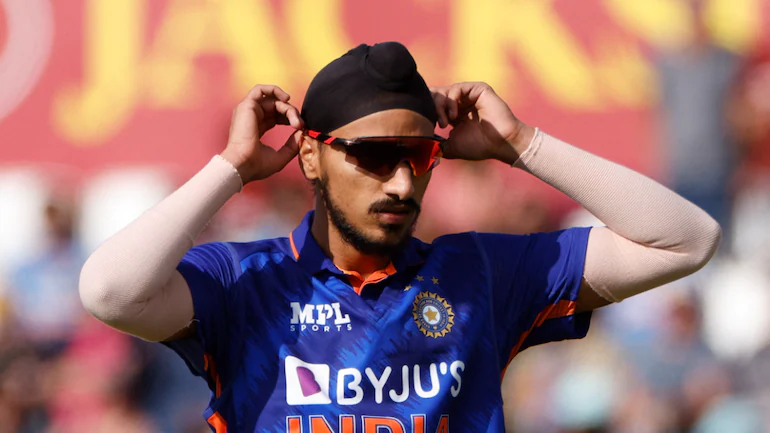
New Delhi, Sep 5: The Indian government on Monday slammed Wikipedia for publishing false information on cricketer Arshdeep Singh's page that linked him to the separatist Khalistani movement, saying such incitement cannot be permitted.
Singh faced vitriolic attacks on social media by some users after he dropped a crucial catch in a thrilling Super 4 Asia Cup clash between India and Pakistan in Dubai on Sunday.
After the missed catch, information on his Wikipedia page was changed to link him to the separatist Khalistani movement.
Minister of State for IT Rajeev Chandrasekhar took to Twitter to slam such a move.
"No intermediary operating in India can permit this type of misinformation (a)n(d) deliberate efforts to incitement (a)n(d) user harm - violates our govts expectations of safe and trusted internet," he said.
It was also said the Ministry of Electronics and IT has summoned executives from Wikipedia to explain the false post but officials denied any such move.
According to the edit history of the cricketer's Wikipedia page, an unregistered user replaced the words "India" with "Khalistan" at several places on the profile and his name was changed to "Major Arshdeep Singh Bajwa". But the changes were reversed within 15 minutes by Wikipedia editors.
The slanderous linking of him to the Khalistani movement was said to have been done by elements in Pakistan.
Big social media firms have drawn flak in the past over hate speech, misinformation and fake news circulating on their platforms.
The government had last year notified new IT rules to make digital intermediaries more accountable and responsible for content hosted on their platforms.
The rules required social media companies to take down contentious content quicker, appoint grievance redressal officers and assist in investigations.
Significant social media intermediaries those with more than 50 lakh users have to follow additional due diligence, including the appointment of a chief compliance officer, a nodal contact person and a resident grievance officer and all three officials will have to be residents in India.
The IT ministry, in June, circulated the draft rules that propose a panel to hear user appeals against inaction on complaints made, or against content-related decisions taken by grievance officers of social media platforms.
At present, "there is no appellate mechanism provided by intermediaries nor is there any credible self-regulatory mechanism in place", the ministry had said.
Several cricketers and politicians have backed Arshdeep Singh saying anyone can make a mistake in a high-pressure game.
Pakistan needed 34 runs to win when Ravi Bishnoi came in to bowl the 18th over. Arshdeep Singh dropped a relatively easy catch of Asif Ali on the third ball of the over, which led to a massive momentum shift and Pakistan winning by five wickets.
Pacer Arshdeep Singh was called in to bowl the final over but was unable to defend seven runs.
No intermerdiary operatng in India can permit this type of misinformation n deliberate efforts to incitement n #userharm - violates our govts expectation of Safe & Trusted Internet #wikipedia @GoI_MeitY #SafeTrustedInternet pic.twitter.com/Qm6HdppM1k
— Rajeev Chandrasekhar 🇮🇳 (@Rajeev_GoI) September 5, 2022
Let the Truth be known. If you read VB and like VB, please be a VB Supporter and Help us deliver the Truth to one and all.
Bihar: Over 150 children fall ill after consuming 'mid-day meal' in Saharsa
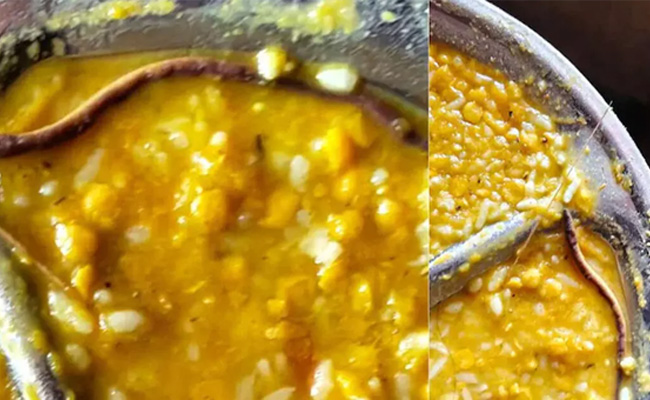
Saharsa (PTI): More than 150 children were taken ill after allegedly consuming food that was part of the mid-day meal in a school in Bihar’s Saharsa district, a senior official said on Thursday.
The incident occurred at a middle school in Baluaha village of the district.
The official said that 115 children were undergoing treatment at the Sadar Hospital, while around 50 students were admitted to Mahishi Public Health Centre.
“We received information that several children fell ill after consuming the mid-day meal in Baluaha. The children were initially treated at the primary health centre, but later, many were referred to the Sadar Hospital,” Saharsa District Magistrate Deepesh Kumar told reporters.
“According to doctors, the health condition of the children has improved, but they will be kept under observation for some time. There is no need to panic. Some kids are having mild fever. They are being treated accordingly,” Kumar said.
Meanwhile, family members of some children claimed that a snake was found in the container in which cooked pulses was stored at the school.
Of the 545 students present in the school, 200 had already eaten their meals by the time the snake was spotted, and later complained of stomach ache and vomiting, they said.
Regarding the claims, the DM said food samples have been collected from the school.
“We will be able to comment on this only after the results of the tested samples arrive,” he said.