Centre tells Visva Bharati to replace controversial plaques
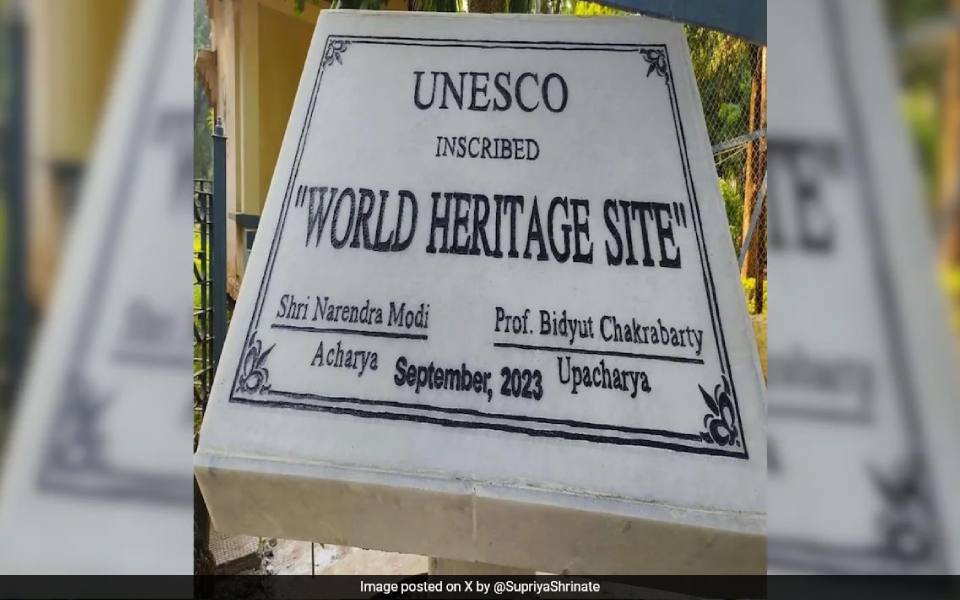
Kolkata, Nov 16: The Centre has asked Visva Bharati University to replace the controversial plaques commemorating UNESCO's award of World Heritage Site to Santiniketan, a varsity source said on Thursday.
The Union education ministry has told the university to remove the plaques and replace them with ones having Nobel laureate Rabindranath Tagore's name, the source added.
Visva Bharati spokesperson Mahua Bandyopadhyay told PTI, "We cannot confirm anything about the plaques unless we have a written communique from the Union education ministry."
Days after Santiniketan got the UNESCO tag on September 17, three plaques commemorating the honour came up in different parts of the campus having the names of Prime Minister Narendra Modi and former VB vice-chancellor Bidyut Chakrabarty but did not mention Tagore's name, the founder of Santiniketan and Visva Bharati.
This triggered an uproar from students, faculty and political parties.
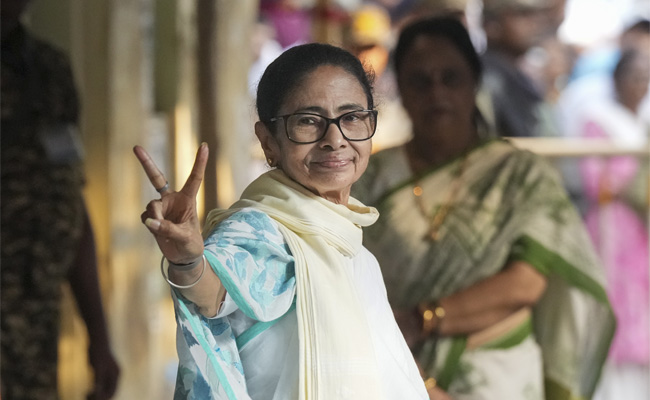
On October 26, West Bengal Chief Minister Mamata Banerjee asked Visva Bharati to immediately change the plaques or face indefinite protests by her party activists on the campus.
Finally, the protests were withdrawn after Chakrabarty's five-year term ended on November 8 and Kala Bhavan principal VC Sanjoy Kumar Mallik took over as the officiating VC.
Soon after taking over, Mallik told reporters that he would ensure the ideals and values cherished by Tagore are retained in the university's functioning.
Let the Truth be known. If you read VB and like VB, please be a VB Supporter and Help us deliver the Truth to one and all.
Karnataka: College student dies by suicide in Dharwad, 3 policemen suspended
Dharwad (Karnataka) (PTI): A college student allegedly died by suicide here, following which three policemen were suspended over allegations of harassment linked to his death by the victim's family.
Aditya Myageri, a BSc student at a private college here, was among 18 students detained by the Vidyagiri police on April 25 during an anti-drug drive, police said on Wednesday.
He hailed from Belur village in Bagalkot district, but was staying with his friends at a rented accommodation in Girinagar area of Dharwad city, police said.
Among the 18 students tested, Aditya was among the 10 who had tested negative for ganja consumption and was subsequently released.
Some of his roommates, however, tested positive.
According to police, Aditya's family alleged that despite testing negative, he was harassed by police. They also claimed some policemen demanded Rs 2,000 to settle the matter and threatened legal action if he failed to pay.
He had called his mother asking for money, but she could not arrange it immediately, the family claimed.
On Monday night, Aditya allegedly died by suicide by hanging from a ceiling fan at his rented accommodation, with his family alleging police harassment and pressure over demand for money drove him to the extreme step, a senior police officer said.
Police Commissioner N Shashi Kumar told PTI that an unnatural death case has been registered at Vidyagiri police station. Three policemen have been suspended over the allegations, and further investigation is underway.