Centre to pay jute mills only after full payment to farmers, labourers: Minister
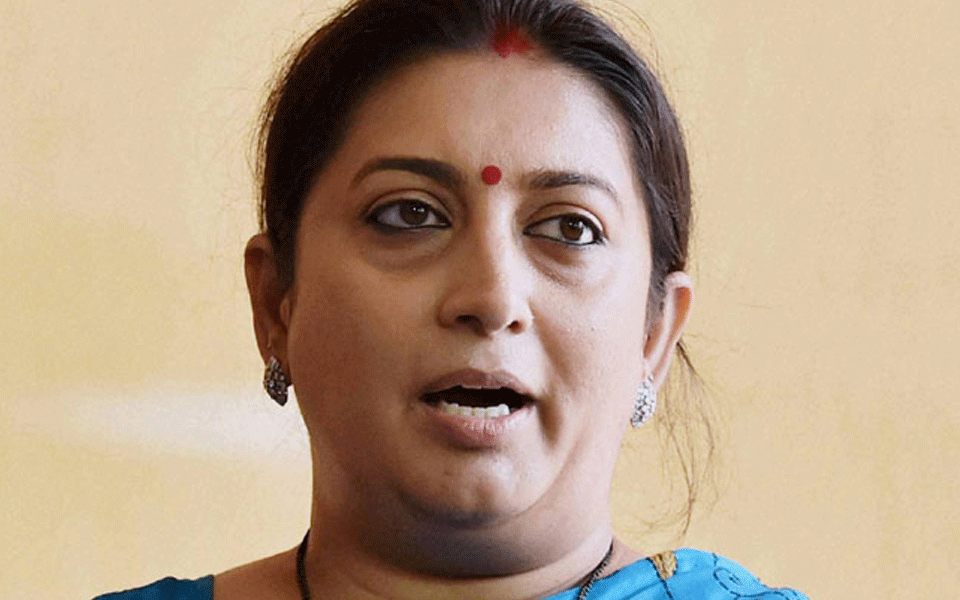
Kolkata, Sep 29 : Union Textile Minister Smriti Irani on Saturday said the Central government is making it mandatory that jute mills would get the entire payment for government orders only after jute farmers and labourers are paid fully.
"Jute industry has a ready order worth Rs 5,000-5,500 crore every year (in terms of sacking). The government gives such a huge order so that the jute industry stays alive. The huge money is given to the jute industry in terms of order so that the farmers and labourers can get benefit out of it," she said.
Farmers and labourers often complain that they do not get the benefit which they deserve, she said at an interactive session organised by the Indian Chamber of Commerce here.
"The jute industry used to get payments against the order regularly. Why are the farmers and labourers complaining that? Now, we are making it mandatory, that if you do not pay farmers or labourers or abdicate the responsibility, we will not give you the order," Irani said.
"The Centre has made a special arrangement and another decision will come soon so that the industry would get the entire payment against the order from the government only after farmers and labourers get fully paid," she said, adding that the industry assured that they would take care of the rights of the jute farmers and labourers.
Jute diversification, according to her, is going to be the future as it will not expand the base of the sector but also provide impetus for the growth. Beside Jute is being used in roads extensively, particularly in north-eastern states as it provides durability.
The Minister said Indian Jute Industries' Research Association (IJIRA) developed a sanitary napkin based on jute products and other innovative products and the jute industry has to take the responsibility to take these innovations forward by commercial applications.
The Central government is focusing on how to transform small-size firms into mid-size entities, Irani said.
"China prospers because its small firms became mid-size companies... small and medium enterprises account for 80 per cent of the textile industry and a lot of craft-based industry goes unaccounted.
"For the growth to happen exponentially, we are pushing towards ensuring that the small-size firms become mid-size entities. It needs infrastructure push," she said.
Irani stressed upon innovation in terms of design that the textile industry needs.
In view of objections being raised by the US in the WTO on the incentives offered by India to its exporters even as the country's per capita GNP has crossed the threshold limit, Irani said, "We have to study the new regime in terms of WTO and there has to be a quantifiable impact analysis. The government is analysing every element of the impact of the WTO regime and post December, we take proactive steps to ensure that industries are supported."
Addressing the Annual General Meeting at the Merchants' Chamber of Commerce later in the day, she said the government has increased the import duty on some textile products to protect domestic manufacturing.
According to her, India looks at the trade war between China and the US as an opportunity and not as a challenge.
She said India would be benefited from the trade war not only through policy intervention but also through industry practices.
Let the Truth be known. If you read VB and like VB, please be a VB Supporter and Help us deliver the Truth to one and all.
SC refuses to adjourn hearing on pleas against EC law, says this matter is more important
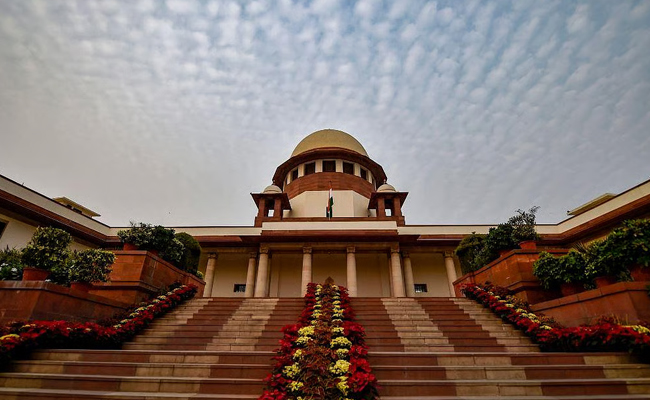
New Delhi (PTI): The Supreme Court on Wednesday refused to accede to the Centre's request to adjourn the hearing on pleas challenging the constitutional validity of a 2023 law that removed the CJI from a committee responsible for appointing the chief election commissioner and the deputies, saying the matter is "more important" than the Sabarimala case.
A nine-judge constitution bench headed by Chief Justice Surya Kant is currently hearing petitions regarding discrimination against women at religious sites, including the Sabarimala temple in Kerala, as well as the scope of religious freedom across various faiths.
A bench comprising justices Dipankar Datta and Satish Chandra Sharma turned down the request by Solicitor General Tushar Mehta, appearing for the Centre, to adjourn the hearing on the ground that he was currently occupied before a nine-judge bench in the Sabarimala reference case.
Referring to the gravity of the current challenge to the Chief Election Commissioner and Other Election Commissioners (Appointment, Conditions of Service and Term of Office) Act, 2023, Justice Datta said, "This matter is more important than any other matter."
"Let your (solicitor general's) associates take notes today. Let the petitioners start. All matters are important. We read in the newspapers that there is an observation that the PIL in Sabarimala should not have been entertained by the court. So, with due respect to the judges, nine judges are occupied in a matter where there is an observation that it should not have been entertained in the first place," Justice Datta said.
ALSO READ: Girl mauled to death by stray dogs in Punjab's Hoshiarpur
The bench then directed the petitioners to conclude their arguments by Thursday, allowing the Centre to present its submissions on a subsequent date. The bench then proceeded with the hearing which is underway.
Earlier on March 20, CJI Surya Kant recused himself from hearing the petitions. "I will be accused of conflict of interest. There is a conflict of interest," the CJI had said. The law, enacted by Parliament in December 2023, came months after a landmark verdict by which the apex court directed that election commissioners be appointed by a committee comprising the prime minister, the leader of the Opposition, and the chief justice of India.
The bench had said that the system will remain in force till a law is enacted.
Under the 2023 Act, the selection committee consists of the prime minister, a Union minister nominated by the prime minister and the leader of Opposition (or leader of the largest opposition party in the Lok Sabha).
The PILs said the exclusion of the CJI from the panel undermines the independence of the appointment process.
The law has been challenged by multiple petitioners, including Congress leader Jaya Thakur and the Association for Democratic Reforms.
Earlier, the Centre defended in the Supreme Court the appointment of two new election commissioners under the 2023 law that excludes the chief justice of India from the selection committee, saying the independence of the Election Commission does not arise from the presence of a judicial member on the committee.
In an affidavit filed in the apex court, the Union law ministry rejected the petitioner's claim that the two election commissioners were hastily appointed on March 14, 2024, to "pre-empt" the orders of the top court the next day, when the matters challenging the 2023 law were listed for hearing on interim relief.
The apex court also refused to stay the appointment of new election commissioners under the 2023 law.
A five-judge constitution bench had in March 2023 ruled that the chief election commissioner and election commissioners shall be appointed on the advice of a committee comprising the prime minister, the leader of the Opposition in the Lok Sabha and the chief justice of India.