Chandrababu Naidu advocates incentives for families to have more children in south India
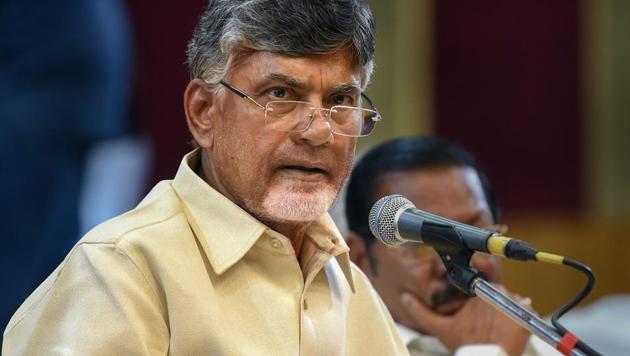
New Delhi: Andhra Pradesh Chief Minister N. Chandrababu Naidu has advocated for incentives to encourage families to have more children, citing concerns over South India's aging population. Addressing a press conference following meetings with Union Home Minister Amit Shah, Finance Minister Nirmala Sitharaman, and Road Transport and Highways Minister Nitin Gadkari, Naidu stated that while states like Uttar Pradesh and Bihar have a younger demographic, South India is experiencing a population decline that could pose future challenges.
Naidu, who previously supported family planning, said he has revised his stance, now promoting population growth as a means of leveraging India’s demographic dividend. “India has the advantage of a strong workforce. If managed properly, this will strengthen both the country and its global influence,” he said, drawing comparisons with aging populations in Europe, China, and Japan.
On concerns over parliamentary seat delimitation, Naidu asserted that the process is separate from demographic management and occurs once every 25 years. Addressing Tamil Nadu Chief Minister M.K. Stalin’s apprehensions about South India losing Lok Sabha seats, he said, “Policies will be discussed when the time comes.”
Regarding language policy, Naidu reiterated his stance against the imposition of Hindi, stating that languages should serve as tools for communication rather than barriers to knowledge. He emphasised the need for education in one's mother tongue while acknowledging Hindi's role in national integration.
Discussions on state issues
During his meeting with Amit Shah, Naidu raised the issue of land disputes in Andhra Pradesh, revealing that six out of ten legal cases in the state pertain to land grabbing. He urged the Centre to clear the AP Land Grabbing Prohibition Bill, citing Gujarat’s model as a precedent. He stressed that shifting the burden of proof to the accused would help curb illegal activities.
He also addressed concerns over law enforcement, highlighting measures to combat bootlegging and drug cultivation. Praising the ‘EAGLE Force’ for tackling ganja cultivation, he reiterated his government’s zero-tolerance policy on drugs and serious crimes. To support farmers, he assured incentives for alternative crops to replace ganja cultivation.
Economic concerns and infrastructure development
In discussions with Nirmala Sitharaman, Naidu criticised the previous government for leaving Andhra Pradesh with ₹10 lakh crore in arrears, which he said had led to a saturated loan scenario. Despite this, he reported a 12.94% economic growth rate, with the agricultural sector growing by 15.86%. He stressed the need to strengthen the service sector and maintain a 15% growth rate without relying on debt.
Naidu also emphasised the importance of interlinking rivers to prevent water wastage and improve irrigation in drought-prone areas like Rayalaseema. He proposed linking Polavaram to Banakacharla, along with the Vamsadhara, Nagavalli, Penna, and Krishna rivers, to utilise 200 TMC of water that currently goes to waste.
During his meeting with Nitin Gadkari, Naidu sought the completion of the Amaravati Outer Ring Road (ORR), spanning 189 km, and proposed an eight-lane ORR similar to Hyderabad’s. He also pushed for an eastern bypass road in Andhra Pradesh, solutions for traffic congestion at Srisailam, and the development of the Vizag-Mulapet coastal road and the Hyderabad-Machilipatnam port road, with detailed project reports (DPRs) under preparation.
Let the Truth be known. If you read VB and like VB, please be a VB Supporter and Help us deliver the Truth to one and all.
Sujit Nair raises concerns over speculation of DMK-AIADMK understanding to block TVK
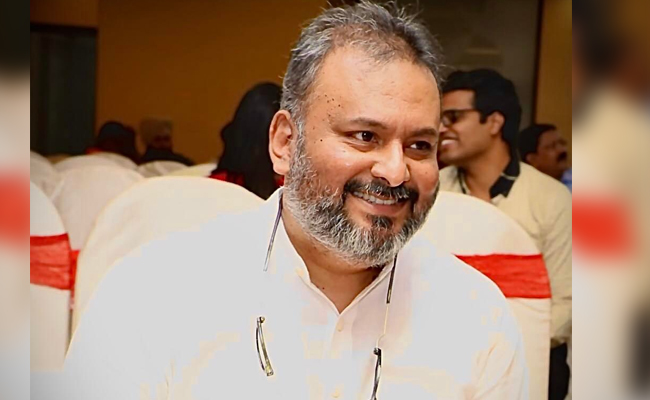
Chennai: Journalist and political commentator Sujit Nair has expressed concern over speculation that the Dravida Munnetra Kazhagam and the All India Anna Dravida Munnetra Kazhagam could explore a post-poll understanding to prevent Vijay-led Tamilaga Vettri Kazhagam from forming the government in Tamil Nadu.
In a social media post, Sujit Nair said the election verdict in Tamil Nadu reflected a clear public demand for political change and argued that the mandate should be respected irrespective of political preferences.
Referring to reports and political discussions surrounding a possible understanding between the DMK and AIADMK, he said he hoped such developments remained only speculative conversations and did not turn into reality.
Nair stated that if such an alliance were to take shape, it would raise serious questions about ideological politics in the country. He said TVK had emerged through a democratic electoral process and that the legitimacy to govern in a parliamentary democracy comes from the people’s verdict.
According to him, attempts to prevent an electoral winner from forming the government through unexpected political arrangements may be constitutionally valid, but many people could view them as politically opportunistic.
He further said that such a move could particularly affect the political image of the DMK, which has historically projected itself around ideology, social justice and opposition politics. Nair said that in ideological terms, the DMK appeared closer to TVK than to the AIADMK, and joining hands with its long-time political rival only to remain in power could weaken its broader political narrative.
He added that the same questions would apply to the AIADMK as well, as the party had spent decades positioning itself against the DMK and such an arrangement could create discomfort among its cadre and supporters.
Drawing a comparison with Maharashtra politics in 2019, Nair said he had expressed similar views when the Shiv Sena formed an alliance with the Indian National Congress and the Nationalist Congress Party after the Assembly elections.
He said post-poll alliances between long-standing political rivals often create a public perception that ideology and electoral mandates become secondary when political power equations come into play.
Nair also said such developments increase public cynicism towards politics and reinforce the belief among voters that ideology is often sidelined after elections.
He maintained that the Tamil Nadu verdict was emphatic and said respecting both the spirit and substance of the mandate was important for the credibility of democratic politics.