Chandrababu Naidu richest CM, Mamata Banerjee poorest: ADR
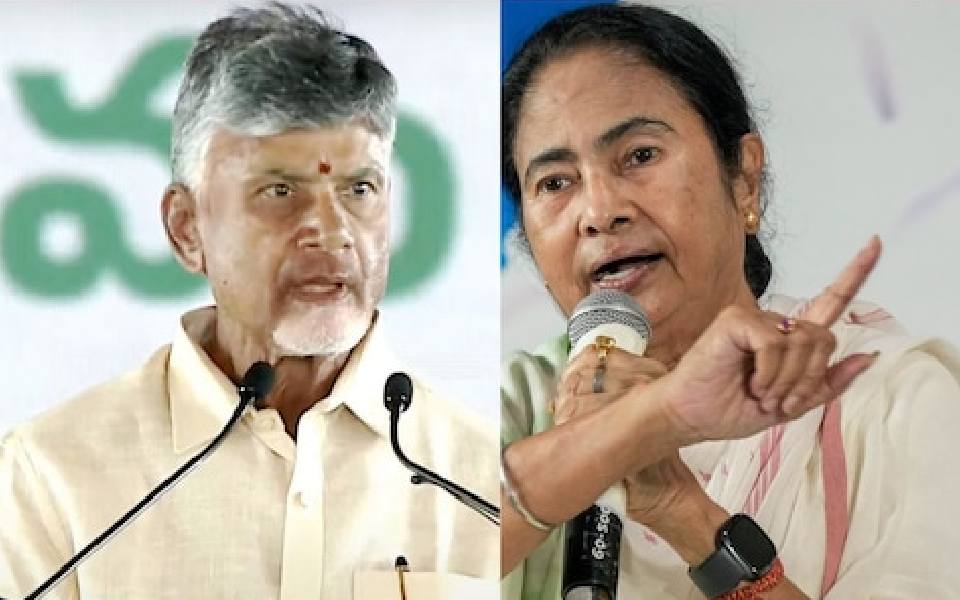
New Delhi, Dec 30: Andhra Pradesh Chief Minister N Chandrababu Naidu is the richest chief minister in India with assets worth over Rs 931 crore, while West Bengal's Mamata Banerjee is the poorest with just Rs 15 lakh, according to an Association for Democratic Reforms (ADR) report released on Monday.
The report said the average asset per chief minister from state assemblies and union territories is Rs 52.59 crore.
While India's per capita net national income or NNI was approximately Rs 1,85,854 for 2023-2024, the average self-income of a chief minister is Rs 13,64,310, around 7.3 times the average per capita income of India.
The total assets of 31 chief ministers are worth Rs 1,630 crores.
Arunachal Pradesh's Pema Khandu is the second richest chief minister with total assets worth over Rs 332 crores, Karnataka's Siddaramaiah is the third on the list with assets worth more than Rs 51 crore.
Jammu and Kashmir Chief Minister Omar Abdullah, with assets worth Rs 55 lakh, is the second poorest in the list and Pinarayi Vijayan is third with Rs 118 crore.
Khandu also has the highest liabilities to the tune of Rs 180 crore. Siddaramaiah has liabilities worth Rs 23 crore and Naidu more than Rs 10 crore, the report said.
It also said 13 (42 percent) chief ministers have declared criminal cases against themselves, while 10 (32 percent) have declared serious criminal cases including those related to attempt to murder, kidnapping, bribery, and criminal intimidation.
Out of the 31 chief ministers, only two are women - West Bengal's Mamata Banerjee and Delhi's Atishi.
Let the Truth be known. If you read VB and like VB, please be a VB Supporter and Help us deliver the Truth to one and all.
K'taka Home Minister seeks report on M'luru Police Commissioner following allegations of harassment
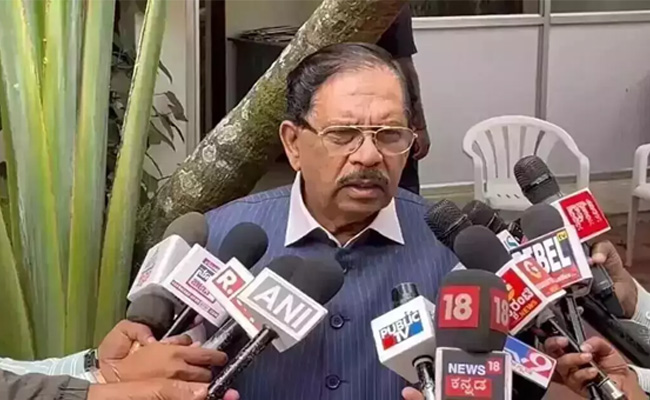
Bengaluru:Home Minister Dr. G. Parameshwara has directed theDirector General and Inspector General of Police(DGP ad IG) to submit a report in connection with allegations of harassment levelled by Directorate of Civil Rights Enforcement (DCRE) SP S.S. Kashi against Mangaluru City Police Commissioner Sudhir Kumar Reddy, as well as by DCRE Inspector T.R. Srinivas against senior officials.
The Minister confirmed the development while speaking to reporters in Bengaluru on Tuesday, April 21.
“I have noticed reports in the media regarding the allegations involving police officers. The DCRE inspector has made several allegations, and SP S.S. Kashi has also written a letter. I have asked the DGP to submit a report on both cases. Action will be taken based on the findings,” he said.
Referring to the Enforcement Directorate raids on the residences linked to the children of MLA N.A. Harris, he said the reasons behind the searches were not yet known. “The ED officials should clarify the purpose of the raids and what was found. Usually, they issue press statements. Until then, any comments would be premature and irrelevant,” he added.
Speaking on the Bitcoin scam, the Minister said a Special Investigation Team (SIT) had been constituted in the state and that the probe was in its final stages.
“The case has national and international dimensions. Information is being gathered on multiple aspects, and a final report will be submitted. Officials have indicated that the investigation is nearing completion. However, instructions have already been given to file an interim charge sheet,” he said.