Amaravati, April 14: Andhra Pradesh Chief Minister N. Chandrababu Naidu will observe a day-long fast on April 20 to protest the Narendra Modi-led Central government's refusal to grant special category status to the state.
The Telugu Desam Party (TDP) President will be staging the protest on his 68th birthday to pressurise the Central government to fulfill all commitments made at the time of bifurcation of Andhra Pradesh in 2014.
His announcement on Saturday came close on the heels of Prime Minister Narendra Modi's day-long huger strike on April 12 to protest disruption of Parliament.
"Is it not the central government which is responsible for Parliament not functioning smoothly," asked Naidu.
The second half of the budget session was washed out due to protest by various parties including the TDP, which sought to move no-confidence motion against the government after pulling out of BJP-led National Democratic Alliance (NDA).
Naidu's decision to sit on fast came amid ongoing protest by various political parties in the state against the Centre for not fulfilling its promises.
At a meeting in Guntur district on Saturday, Naidu said there would be no compromise on the state's rights.
He also announced that a massive public meeting would be organized at Tirupati on April 30 with the slogan "save the state from betrayal and conspiracy", recalling that it was in the same temple that four years ago, Modi, as the Prime Ministerial candidate, had promised special status but did not fulfill it after coming to power.
Lashing out both at the BJP and the opposition parties YSR Congress and Congress, Naidu appealed to people to ensure victory of TDP on all 25 Lok Sabha seats in the state. "Tomorrow, the government at the Centre will be decided by TDP," he said.
He recalled that TDP played a key role in government formation at the Centre in the past. "We played a key role in the National Front, United Front and NDA-1," he said.
The Chief Minister was speaking at a meeting at Sakhamuru in Guntur district after unveiling the model of Dr B.R Ambedkar memorial park, proposed to be built at a cost of Rs 100 crore on 20 acres. Naidu said 125-feet tall statue of Ambedkar will come up in the proposed park, which will also have a research centre. He vowed to complete the project in 18 months.
Let the Truth be known. If you read VB and like VB, please be a VB Supporter and Help us deliver the Truth to one and all.
Stone-pelting allegations trigger tension in K'taka town; youths injured, security tightened
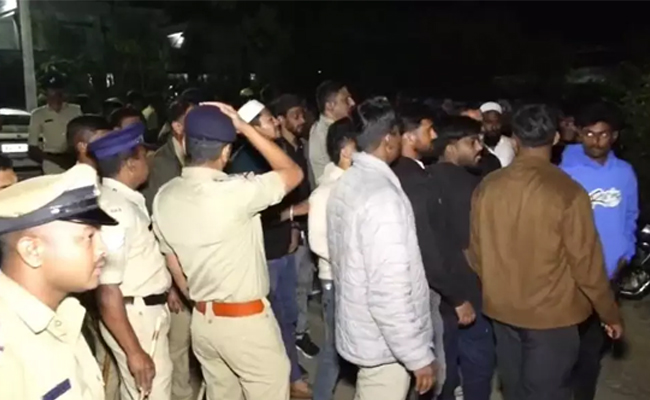
Chikkamagaluru (Karnataka) (PTI): Tension gripped the Vijayapura area of Chikkamagaluru late Monday night following allegations of stone-pelting, triggering protests by members of two communities and heavy police deployment.
Allegations surfaced that some youths from a community had pelted stones at houses over the past week and harassed girls for the last three days, leading to outrage among local residents, police said.
According to police sources, two youths who were found moving in a suspicious manner were caught by activists of an organisation, beaten up and later handed over to the police. Soon after, hundreds of youths from both communities gathered in front of the Basavanahalli Police Station and the government hospital, creating a tense atmosphere.
While one group claimed they were not involved in stone-pelting, another group demanded strict action against those responsible for the attacks on houses and alleged harassment.
Police, who were alerted in advance, rushed to the spot and dispersed the crowd.
Authorities said they struggled for some time before bringing the situation under control. Tight security was in place across the city.
Meanwhile, the two injured youths are undergoing treatment at the government hospital.