Charging People U/S 295 IPC For Questioning Superstitions Violates Articles 14 & 19: Bombay HC
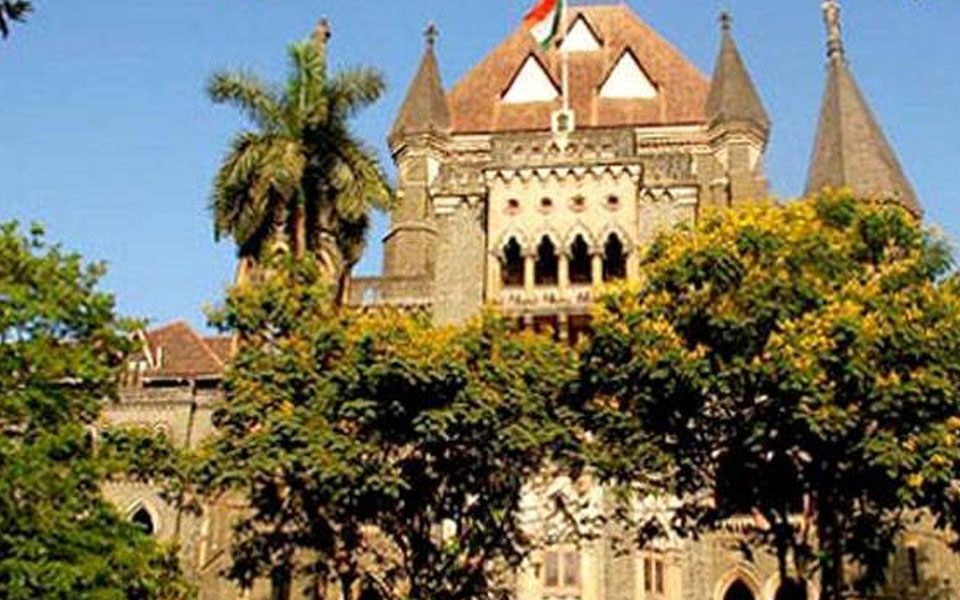
Mumbai : Aurangabad Bench of the Bombay High Court recently ruled that charging people under Section 295 (deliberate and malicious acts intended to outrage religious feelings of any class by insulting its religion or religious beliefs) of the Indian Penal Code merely for questioning superstition and traditional authority violates Articles 14 and 19 of the Constitution of India.
Making reference to the “Enlightenment Movement”, the Bench comprising Justice TV Nalawade and Justice Vibha Kankanwadi observed,“This Court further holds that allowing the trial of such issue as an offence will prevent the persons involved in the movement, which is started against superstition, from continuing the movement. As already observed above, it will be interference in the rights given to the persons living in India under Articles 14 and 19 of the Constitution of India.”
The Court was hearing a petition filed by Ashok Deshmukh and four of his Facebook friends, who were booked for insulting Hindu religion by comparing Lord Parshuram with the famous character ‘Parshya’ of Marathi blockbuster, Sairat. His friends were booked for liking and commenting on his post.
The Bench began by observing that while in the past, the atheists who expressed their thoughts were made to suffer by believers, who formed the majority, the “Enlightenment movement” soon picked up. This, it said, led to several remarkable social changes, such as abolition of Sati, in those times. It explained,
Then there was remarkable intellectual development and change in beliefs. A number of longstanding ideas and beliefs many of which were related to social life and religionwere overthrown. Due to the contact with West, intellectual class of our society interested in social changes started talking about social reforms. The social reformers got support within no time as the class, community feeling oppressed due to discrimination on the basis of Varnas and caste system wanted such social change.
Women were also subordinated and after the aforesaid movement, the women recognized the necessity of social change and they also started protesting the situation there were facing. Many prominent thinkers, social reformers of India of 19th and 20th century can be named as a philosophers produced by the enlightenment movement. Due to their efforts, many bad practices, customs like Sati were rooted out and it can be said that in India, it is the achievement of such social reformers.”
The Court observed that with the movement, the number of people who believed in science and rationality increased, leading to rejection of beliefs in traditional authority.
For instance, it noted that while several stories in Purans have emphasized on traditional authority of the topmost Varna, reformers believe that such stories were developed only to establish the traditional authority of Brahmanas.
The Court then asserted that the “right to fight against the traditional authority of aforesaid nature can be found in Article 14 of the Constitution of India”, and also relied on Article 19 of the Indian Constitution. It further opined that in cases like the one before it, it is the Court’s duty to ascertain the rights and the intention of the accused, observing,
“If the person, who has questioned rational behind the proposition or story due to which traditional authority was established and continued and the proposition, which amounts to superstition,is allowed to be prosecuted only for such questioning, that step will stop human development. That is why Courts need to be very cautious in the matters like present one. The Courts need to ascertain carefully whether such questioning can be prevented in the background of aforesaid thoughts and whether such prevention will be in public interest.”
The Court asserted that Section 295A of the Indian Penal Code needs to be interpreted with this observation in mind. It further emphasised on all people, whether atheists or believers, living peacefully in a democracy, observing, “We also need to keep in mind that political revolution, industrial revolution and urbanization have affected religiosity profoundly. There may be interest to some in religiosity, but many may not have such interest. Many may have religiosity, but many may not have such interest. Many may have religiosity, but their orientation may be critical. In a democracy, all such persons are required to live together and there is no other alternative to it.”
The Court went on to rule that the posts in question were not put up to insult any community or any caste, and set aside the FIR.
courtesy : livelaw.in
Let the Truth be known. If you read VB and like VB, please be a VB Supporter and Help us deliver the Truth to one and all.
CM Siddaramaiah alleges ‘criminal conspiracy’ in Sringeri recount, vows legal action
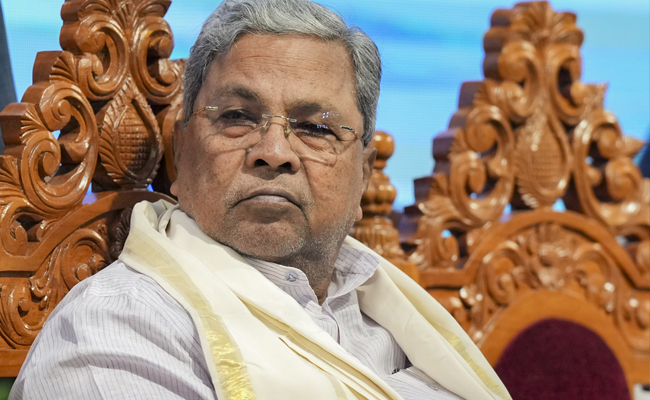
Bengaluru (PTI): Alleging a “criminal conspiracy” by BJP candidate D N Jeevaraj in the Sringeri Assembly poll recounting, Karnataka CM Siddaramaiah on Tuesday said the outcome was manipulated after valid postal ballot votes in favour of Congress leader T D Raje Gowda were tampered with during the recounting process.
Following a Karnataka High Court order on an election petition filed by Jeevaraj, challenging Raje Gowda’s election, the reverification and recounting were conducted on Saturday.
After the reverification and recount of postal ballots for the Sringeri Assembly constituency, votes polled in favour of Raje Gowda were reduced by 255, the returning officer said.
A report on the matter has been submitted to the Election Commission of India for further action, the officer added.
Congress leader Raje Gowda had won the 2023 Assembly polls from Sringeri by 201 votes, defeating his nearest rival Jeevaraj.
Addressing a press conference in Bengaluru, Siddaramaiah said the High Court had directed the recounting of postal ballots and that irregularities were noticed during the exercise conducted on May 2.
“This is a clear case of criminal conspiracy,” Siddaramaiah said, alleging that valid votes cast in favour of Raje Gowda were altered after being accepted by counting agents of all parties, including Congress, BJP, and JD(S).
He claimed that during the recounting of postal ballots, 255 votes were initially accepted as valid by all agents but were later tampered with by subordinate officials.
“There is a second mark on the votes polled in favour of Raje Gowda. They had accepted these as valid votes. Subsequently, another mark was made by officials. This is a clear case of criminal conspiracy,” he said.
When asked who was behind the alleged conspiracy, the CM replied, “It was hatched by Jeevaraj and others. It is planned.”
Siddaramaiah further alleged that the returning officer acted improperly by declaring the result despite the presence of an Election Commission observer during the recounting.
“Immediately after the counting, the returning officer announced the result. He should not have done so; this is against the law,” he said.
He pointed out that Raje Gowda had originally won by 201 votes, but after the recounting, the BJP candidate was declared the winner by 52 votes.
“The BJP has committed a criminal act of conspiracy. This is not vote chori but vote dacoity,” he alleged.
The CM said a police complaint had already been filed by Raje Gowda’s election agent, Sudhir Kumar, and emphasised the need for electoral integrity.
“We want transparency and free and fair elections. That is what our Constitution mandates,” he added.
Stating that the government would pursue legal remedies, Siddaramaiah said, “We are preparing an appeal challenging the returning officer’s announcement in a court of law.”
Responding to a separate query on elections in other states, the CM said there appeared to be an anti-incumbency factor in West Bengal, while results in Tamil Nadu were “surprising,” adding that Vijay’s party was emerging as the largest there.
Following the victory of party candidates in Bagalkote and Davanagere South, Siddaramaiah expressed confidence about future electoral prospects in Karnataka.
“Even in 2028, we will win the Assembly elections. We will come back,” the CM said.
Siddaramaiah added that he would order a forensic examination into the alleged tampering of postal ballots.