Chhath Puja: AAP says 'fake' Yamuna ghat created with filtered water for PM, BJP hits back
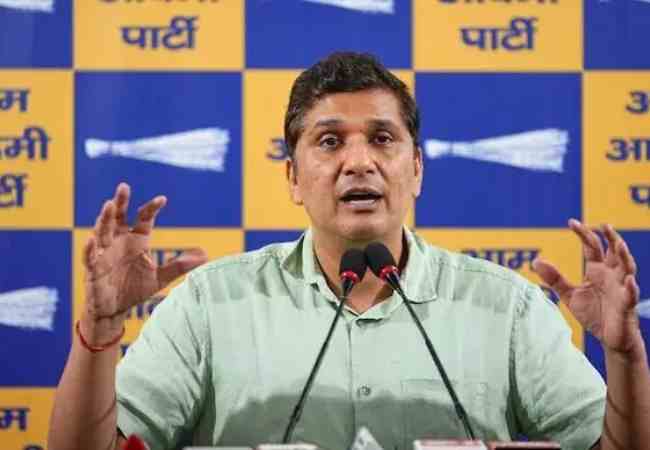
New Delhi (PTI): Amid the Chhath Puja festivities, the AAP on Sunday accused the BJP of creating a "fake" Yamuna ghat with filtered water for Prime Minister Narendra Modi while devotees have to stand in the polluted river.
The BJP hit back, terming the AAP's allegations "a shameful model of political frustration".
Addressing a press conference here, AAP Delhi unit president Saurabh Bharadwaj said the BJP is "fooling" the devotees and playing with the lives of Purvanchalis.
"In a desperate bid to seize power in Bihar, the BJP is playing with the lives of lakhs of Purvanchalis in Delhi. A fake Yamuna ghat filled with filtered water has been built at Vasudev Ghat for PM Modi while devotees have to stand in the polluted river," he said.
He claimed the water for the ghat has been taken from the Wazirabad water treatment plant pipeline, which supplies Delhi's drinking water.
Bharadwaj further claimed that Delhi Water Minister Parvesh Verma is now spraying the same chemical in the Yamuna to clear the foam for which he once abused the previous AAP government and manhandled officials.
The BJP is telling a thousand lies to hide one. Its drama is designed to fool voters and hide the truth that the Yamuna remains dangerously toxic, the AAP leader charged.
"The Delhi Pollution Control Committee admits that the (Yamuna) water can cause serious diseases, yet BJP leaders are busy with photo-ops and spraying chemicals to mask the foam," Bharadwaj said.
Delhi BJP president Virendra Sachdeva dismissed the AAP's allegations at a press conference.
"Today, the people of Delhi and the entire country witnessed the shameful model of political frustration of the Aam Aadmi Party's leadership. People saw AAP leader Saurabh Bharadwaj objecting to the cleaning of the natural Vasudev Ghat on the banks of the Yamuna and to the availability of clean water there," he said.
"The live video released by Saurabh Bharadwaj from the Yamuna banks, in which he objected to the cleaning of the river, was the first-ever political drama in which an opposition leader raised objections against the government's efforts to ensure cleanliness and sanitation," he said.
Hitting out at the previous AAP dispensation, Sachdeva claimed that from 2018 to 2024, former chief minister Arvind Kejriwal banned Chhath Puja on the banks of the Yamuna.
Now, when Rekha Gupta's government has completed the basic cleaning of the Yamuna and made natural ghats available for devotees to perform Chhath rituals in just eight months, they are raising a hue and cry, he said.
Let the Truth be known. If you read VB and like VB, please be a VB Supporter and Help us deliver the Truth to one and all.
Man booked for duping 7 persons of Rs 91 lakh on promise of awarding govt works

Mumbai (PTI): The Mumbai police have registered a case against a man for allegedly duping seven persons of Rs 91 lakhs on the promise of awarding them works of different government departments, an official said on Tuesday.
The accused was identified as Satish Kadam, a resident of Nanded in Marathwada region, an official said.
A complaint was filed by Hanumant Vadje, who alleged that the accused cheated him and six others of around Rs 91 lakh by promising to give them various works of Urban Development and Social Justice Department, he said.
The fraud occurred between 2024 and 2026, with Kadam collecting money in cash and into his accounts, police said, adding he had returned some amount to them partially.
Multiple cheques issued by the accused bounced, prompting the victim to lodge a complaint at the Marine Drive police station. Based on the complaint, a case of cheating and criminal breach of trust was registered against him.
The case is under further investigation, the official said.