Chhattisgarh caps commercial LPG supply, sets timeline for domestic refill booking
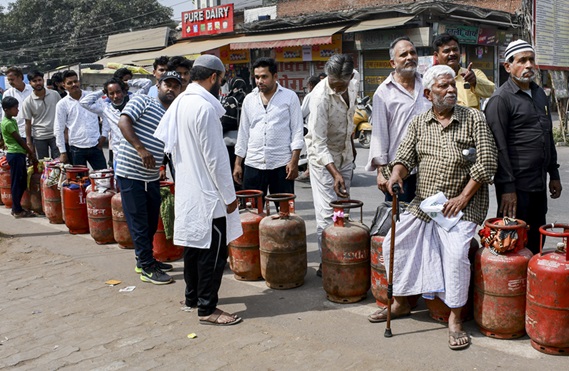
Raipur, Mar 26 (PTI): The Chhattisgarh government has capped the supply of commercial LPG cylinders at 20 per cent of the previous month’s consumption, while directing time-bound online refill booking for domestic consumers, officials said on Thursday.
Based on available stock, priority categories for LPG supply have been identified. These include educational institutions, hospitals, military and paramilitary camps, jails, hotels, social welfare institutions, railway and airport canteens, government offices, guest houses, animal feed units, and restaurants, an official statement said.
The decision was taken on Wednesday during a review meeting of regional managers of oil companies, chaired by the state's food department secretary, Reena Baba Saheb Kangale, to assess LPG availability and streamline the distribution system in the state amid supply concerns following the West Asia conflict.
ALSO READ: Karnataka govt urges people to ignore rumours on petrol, diesel shortage
It was decided in the meeting that commercial LPG consumers, including institutions and establishments, will now receive a maximum of 20 per cent of their total consumption from the previous month, the statement said.
To ensure timely access for domestic users, the government has directed that online LPG refill booking facilities be made available within 25 days in urban areas and within 45 days in rural areas, it said.
The meeting focused on ensuring equitable distribution of LPG based on availability, with priority to essential consumer institutions.
District administrations have been instructed to ensure security arrangements at LPG distributor offices and warehouses with the help of police and home guards to prevent overcrowding and disorder. Distributors have also been directed to keep their telephone lines active and address consumer complaints promptly, the release said.
ALSO READ: LPG supply to be cut off if households refuse PNG switch where available: Govt order
It was also decided that oil companies will conduct daily reviews of commercial LPG stock and distribution, and regularly share updates with the department.
Senior officials from the Food and Civil Supplies Department and representatives of Indian Oil Corporation, Bharat Petroleum Corporation, and Hindustan Petroleum Corporation attended the meeting.
Let the Truth be known. If you read VB and like VB, please be a VB Supporter and Help us deliver the Truth to one and all.
Women’s Reservation Bill: K'taka CM accuses PM Modi of adopting 'double standard'
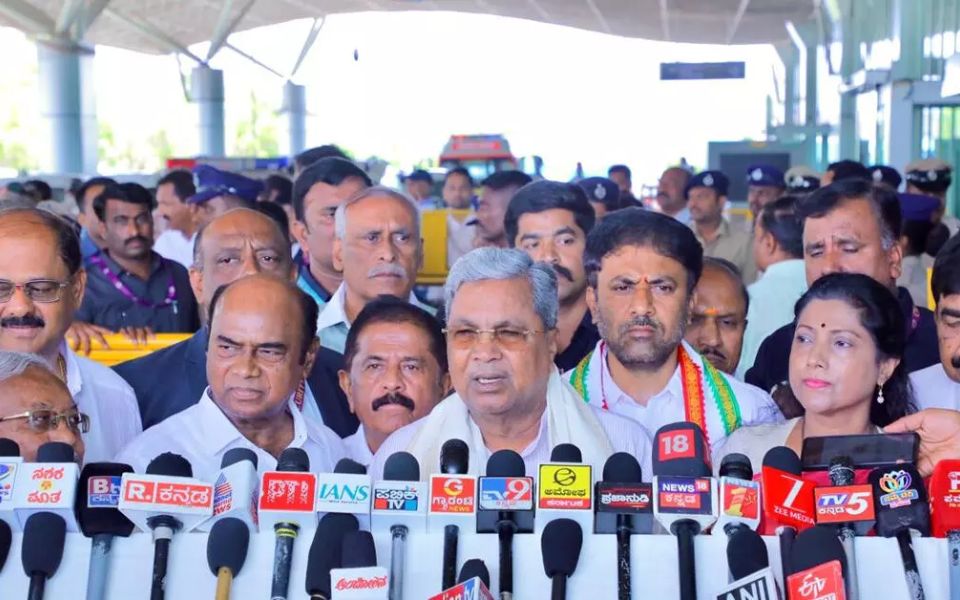
Mysuru (Karnataka) (PTI): Karnataka Chief Minister Siddaramaiah on Monday accused Prime Minister Narendra Modi of adopting a “double standard” on women’s reservation, alleging that the Centre had delayed implementation despite having the opportunity to act earlier.
Addressing reporters here, Siddaramaiah said the BJP and Modi had earlier opposed welfare guarantees and were now replicating them, while also questioning the timing and intent behind the women’s reservation move.
“That’s what I call double standards. Narendra Modi is not for social justice. If he was, this would have been done long ago. How many years has he been in power? It’s been 12 years. Why hasn’t it been done so far?” he asked.
The Chief Minister reiterated that the Congress had consistently supported women’s reservation and accused the Centre of "politicising" the issue.
“We spoke about women’s reservation. The Prime Minister asked me what our stand was. I said we are in favour of women’s reservation,” he said, referring to recent discussions with the PM.
He maintained that delimitation should only be carried out after a fresh Census to ensure equitable representation among states.
“In my view, delimitation should be done after a new census. That is why we opposed it. We have not opposed women’s reservation. We have always supported it,” he said.
Highlighting Congress’ past role, he said, “Who brought the 73rd and 74th amendments? Rajiv Gandhi and the Congress party. Those amendments ensured 50 per cent reservation for women in local bodies. Why would we oppose it?”
Siddaramaiah further questioned the union government’s delay in implementation. “Narendra Modi indulged in politics and got it passed in 2023. Why didn’t he implement it immediately? Then why did he wait so long? He could have implemented it immediately. If he is committed to women’s reservation, he should have implemented it,” he said.
On the linkage between delimitation and reservation, he asked, “Why did the Centre link it with delimitation? Why did it go for a constitutional amendment?” adding that such a move could disadvantage southern states that have successfully controlled population growth.
“Southern states have controlled population well, but northern states haven’t. Naturally, it benefits them and disadvantages us,” he said.
Responding to BJP’s criticism that women would “teach Congress a lesson,” Siddaramaiah said, “They are doing politics. If Modi had brought this earlier, who would have opposed women’s reservation?”
On electoral prospects elsewhere, he said he had no direct information on Tamil Nadu but was optimistic about ruling DMK's victory.
"According to the information I have, DMK and its alliance are likely to win,” while asserting that Kerala would also be won by the opposition.
In a major setback to the BJP-led Central government, a Constitution Amendment Bill to implement 33 per cent reservation for women in legislatures in 2029 and increase the number of Lok Sabha seats to 816 was defeated on Friday, with the ruling dispensation asserting that the struggle to give the rights to women will continue.
While 298 members voted in support of the bill in Lok Sabha, 230 MPs voted against it. Out of 528 members who voted, the bill required 352 votes for a two-third majority.
According to the Constitution (131st Amendment) Bill, Lok Sabha seats were to be increased to 816 from the current 543 to "operationalise" the women's reservation law before the 2029 parliamentary polls, following a delimitation exercise based on the 2011 Census.
Seats were also to be increased in state and Union territory assemblies to accommodate 33 per cent reservation for women.