Chhattisgarh govt declares Jan 22 as 'dry day' to mark Ram temple consecration in Ayodhya
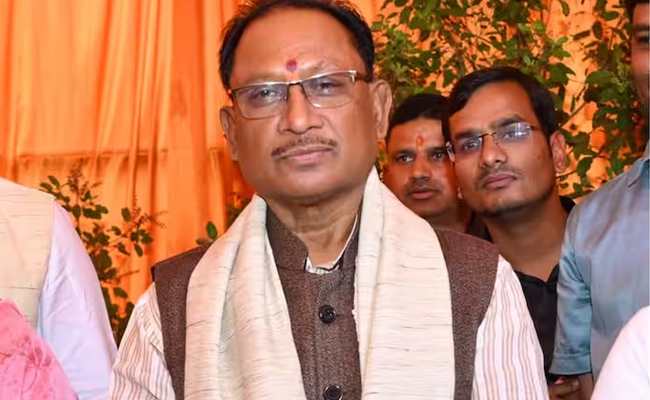
Raipur (PTI): Chhattisgarh Chief Minister Vishnu Deo Sai has said his government has decided to declare January 22 as a "dry day" as the consecration of Ram temple will take place in Ayodhya on that day.
"As you all know that from December 25 till January 2, we have been observing 'good governance' day. Ram Raj has been the model of our good governance," Sai told reporters on Tuesday evening.
"We are fortunate that Chhattisgarh is Lord Ram's 'nanihal' (the place of Lord Ram's maternal grandparents) and it is also fortunate that 'pran pratistha' of Ram Mandir in Ayodhya will take place on January 22," he said.
There is happiness all over Chhattisgarh. The state's rice millers association has sent 300 metric tonnes of aromatic rice to Ayodhya for the ceremony and cultivators from the state will also dispatch vegetables to the city in Uttar Pradesh, the CM said.
There will be a festive atmosphere across the state on January 22. Like Diwali, 'diyas' (earthen lamps) will be lit on the day, he said.
"The state government has decided that there will be a dry day in the entire state on January 22," Sai said.
According to research scholars, Lord Ram had passed through several places located in Chhattisgarh during his 14-year exile from Ayodhya.
Chandkhuri, a village located 27 km from Chhattisgarh capital Raipur, is considered as the birthplace of Mata Kaushalya, mother of Lord Ram.
The ancient Mata Kaushalya temple situated in the village was given a magnificent look during the previous Congress government in the state.
Let the Truth be known. If you read VB and like VB, please be a VB Supporter and Help us deliver the Truth to one and all.
Where is question of offence when there is consensual relationship? SC asks
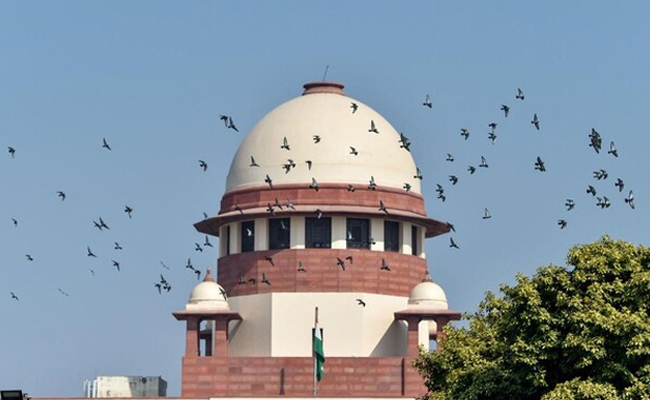
New Delhi (PTI): Where is the question of an offence when a relationship is consensual? the Supreme Court on Monday asked a woman who had challenged an order of the Madhya Pradesh High Court that had quashed an FIR against her former live-in partner in a case of alleged sexual assault on a false promise of marriage.
A bench of Justices B V Nagarathna and Ujjal Bhuyan noted that the woman lived together with the man and also had a child from him.
"Where is the question of offence when there is a consensual relationship? They were living together and she also had a child from him and then there is no marriage and now, she says sexual assault? For 15 years they lived together," Justice Nagarathna remarked.
The woman's counsel told the court that she had lost her husband earlier and was introduced to the accused by her brother-in-law.
The court was also told that the accused had promised to marry her and sexually exploited her.
Justice Nagarathna then asked, "Why did she go and live with him before marriage?"
"She lived with him. She had a child from him. He walks out because there is no marriage bond. Legal bond is not there. He walks out, that is the risk in a live-in relationship. So once he walks out, it does not become a criminal offence," she said.
The woman's lawyer submitted that the accused was already married and had concealed this fact.
"See, if there was marriage, the question of her rights would have been better. She could have filed regarding bigamy. She could have filed for maintenance. She would have got those reliefs. Now since there is no marriage, they live together, this is the risk. They can walk out any day. What do we do?" Justice Nagarathna said.
She suggested that the woman could pursue remedies, such as maintenance for the child, and asked the parties to go for mediation.
"Even if he goes to jail, what will she gain? We can think of some maintenance for the child. Child is now seven years (old). At least, some monetary compensation can be made for the child," Justice Nagarathna said.
The apex court issued a notice in the matter and asked the parties to explore if a settlement could be reached between the petitioner and the accused.