Chidambaram targets Modi government for dodging Rafale probe
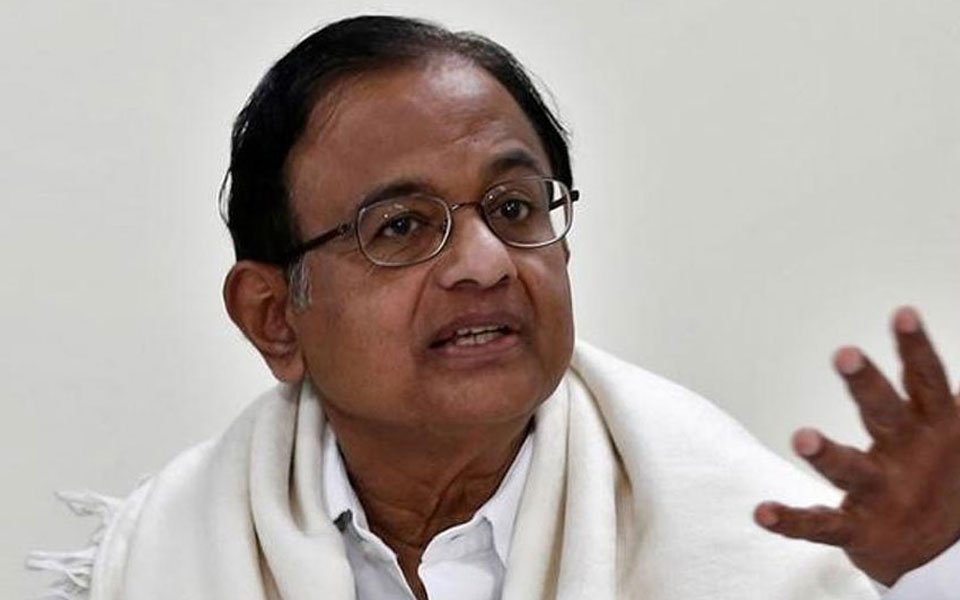
New Delhi, Sep 24: Congress leader P. Chidambaram on Monday ridiculed the Narendra Modi government for refusing a probe into the Rafale deal after Union Finance Minister Arun Jaitley discredited former French President Francois Hollande's revelation on the choice of an offset partner.
"Truth cannot have two versions' says Finance Minister (Jaitley). Absolutely correct. Since, according to the Finance Minister, there are two versions, what is the best way to find out which version is 'true'?
"Either (1) order an inquiry or (2) toss a coin. I suppose the Finance Minister would prefer to toss a coin (preferably with 'head' on both sides).
"It is a pity that the government does not see the inexorable flow of events and refuses to order an inquiry. Who knows what will happen in six months or 12 months," the senior Congress leader said in a series of tweets.
"Truth cannot have two versions," Jaitley on Sunday cited Hollande's initial claim to a French website that "Reliance Defence partnership with Dassault Aviation was entered at the suggestion of the Indian Government" and his subsequent statement to the AFP news agency that "he is not aware if government ever lobbied for Reliance Defence".
Continuing its relentless attack against the Modi government over the "Rafale scam", a delegation of top Congress leaders will meet the Central Vigilance Commission (CVC) later on Monday seeking a probe into the alleged regurgitates in the deal announced by the Prime Minister in April 2015.
The party has already submitted a memorandum to the Comptroller and Auditor General of India Rajiv Mehrishi for a special and forensic audit into the intergovernmental deal with France to purcure 36 Rafale jets.
Let the Truth be known. If you read VB and like VB, please be a VB Supporter and Help us deliver the Truth to one and all.
11-year-old dies by suicide after sexual assault in Bareilly; accused arrested

Bareilly (UP) (PTI): A 26-year-old man has been arrested for allegedly sexually assaulting an 11-year-old girl, who later died by suicide due to trauma, police said on Wednesday.
The post-mortem report confirmed sexual assault and multiple injuries on the minor's body, including bite marks and nail scratches. The cause of death was found to be hanging, they said.
According to ASP (South) Anshika Verma, the incident came to light on 27 April, when the girl, a Class 8 student, was found hanging at her home in Deoria Abdullaganj village under the Mirganj police station area. Initially, the family reported the death as suicide and was reluctant to pursue police action.
"The autopsy report changed the course of the investigation. It confirmed sexual assault and noted severe physical trauma. The cause of death was confirmed as hanging," Verma said.
A breakthrough in the case came from the statement of the victim's younger sister, who told police that the accused, Zeeshan (26), a resident of the same village, frequently loitered near the minor's school and allegedly gave her small sums of money to keep his interactions with her a secret, she said.
Police said that on the day of the incident, the accused allegedly lured the minor and assaulted her. Distressed by the incident, the child later took her own life while her mother was away, police said.
"Based on technical surveillance, CCTV footage, and statements from the family, we established Zeeshan's involvement. He was arrested near the Mirganj weekly market on Tuesday," they said.