Children's death due to Indian syrup a shame: IT czar Narayana Murthy
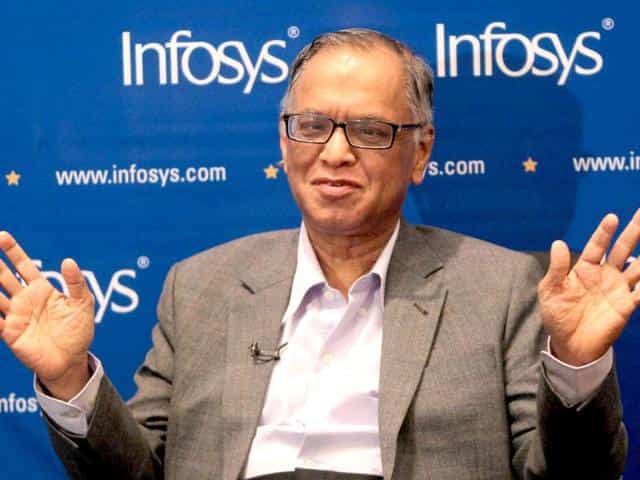
Bengaluru, Nov 15: Infosys founder N R Narayana Murthy on Tuesday said the country faces huge challenges in the field of research in sciences despite the nation achieving the feat of producing COVID-19 vaccine and inoculating the people of the country.
He said the death of 66 children in Gambia in Africa allegedly due to India-produced cough syrup had shamed the country.
He was speaking at an event to present Infosys prize to six people by the Infosys Science Foundation. The prize carries a purse of USD 1,00,000.
Lauding companies which manufactured and supplied the billion COVID-19 vaccines, Murthy said this was an achievement by any standard.
The IT czar appreciated the rollout of the new national education policy, which is based on the recommendations of professor Kasturirangan Committee.
The Infosys founder appreciated professor Gagandeep Kang and several others becoming fellows of the Royal Society in London, and professor Ashok Sen winning the Millenium prize.
"These are all encouraging and happy events that show that India is on a path of growth absolutely but we still have huge challenges," the IT tycoon said.
"There is not a single Indian institution of higher learning in the top 250 of the world university global ranking that was announced in 2020. Even the vaccines we have produced, or either based on technology from advanced countries, or based on research from the developed world. Consequently, we still have not produced a vaccine for dengue and chikungunya, which have been ravaging us for the last 70 years now," said Murthy.
"That death of 66 children in Gambia, resulting from an India-produced cough syrup has brought unimaginable shame to our country and has dented the credibility of our pharmaceutical regulatory agency," Murthy said.
However, there was a solution, which is a difficult one, and according to him, the country opted for it, he said.
According to him, experts feel that India's inability to use research to solve immediate pressing problems is due to lack of inculcating curiosity at an early age, disconnect between pure and applied research, inadequate cutting-edge research infrastructure in the higher educational institutions, insufficient grants and inordinate delays in creating incentives for research and inadequate fora for knowledge sharing with global research institutions.
The Infosys founder opined that money is not the primary resource for success in invention or innovation.
He said there were two components for success in research -- the first component is to re-orient teaching in schools and colleges towards Socratic-questioning and relating what they learn in the classroom to the real-world problems around them, rather than passing the examinations through learning by rote. The second step is for researchers to focus on solving the immediate problems. Such a mindset would inevitably lead to solving bigger challenges, he opined.
The IT industry icon said the IITs are becoming a victim of learning by rote, too. "Even our IITs have become victims of this syndrome, thanks to the tyranny of coaching classes," Murthy said.
He said nation's progress on the economic and social front depends on the quality of scientific and technological research. PTI GMS According to Murthy, research thrives in an environment of honour and respect for intellectuals, meritocracy and the support and approbation of such intellectuals from society.
"Therefore, recognising and rewarding the outstanding research efforts of researchers is necessary. By doing so, we will encourage not only other researchers, but also create role models and inspire young people to consider careers in research," Murthy said ahead of announcing the researchers selected for the Infosys Prize-2022.
He said scientific research is about curiosity, daringness, healthy skepticism and questioning status quo.
He told the gathering that the country has had a healthy run in scientific and technological progress in the last few years.
The Infosys Prize- 2022 winners are: engineering and computer Science - Suman Chakraborty; humanities - Sudhir Krishnaswamy; life sciences - Vidita Vaidya; mathematical sSciences - Mahesh Kakde; physical sciences - Nissim Kanekar, and social sciences - Rohini Pande.
Let the Truth be known. If you read VB and like VB, please be a VB Supporter and Help us deliver the Truth to one and all.
Maharashtra sets up state vaccination task force to strengthen immunisation programme

Mumbai (PTI): The Maharashtra government has set up a State Vaccination Task Force to strengthen the regular immunisation programme and review the progress of related campaigns, a health department official said on Monday.
The State Vaccination Task Force will comprise at least 29 members and will be headed by the administrative head of the health department, he informed.
The government has also constituted separate district-level and municipal vaccination task forces to improve implementation and address challenges at the grassroots level, he said.
Municipal task forces, chaired by respective civic commissioners, have been constituted in view of the vast urban population in Maharashtra and the role of civic bodies in implementing different health programmes.
The district-level task forces will function under the chairmanship of collectors.
"Complete immunisation of children at the appropriate age is an extremely simple, cost-effective and highly effective measure to reduce child mortality and the prevalence of diseases among kids. Immunisation is a powerful tool for reducing illness in children," maintained the official.
To ensure full vaccination of all children, the state government implements various campaigns from time to time as per the central government guidelines, he pointed out.
"Active participation and cooperation of other relevant government departments are essential (in making these campaigns successful)," according to the official.
The state-level body will review the regular immunisation programme, associated campaigns and vaccine-preventable diseases in detail. It will also conduct focused assessments of high-risk districts and municipal corporations, including vacancies at district, municipal and sub-district levels, availability of cold chain equipment, resource gaps and training requirements, he noted.
The state task force will review allocation and utilisation of funds for immunisation and ensure timely action by officers concerned based on reports from district and municipal task forces and state-level monitoring mechanisms, the official said.
It will also ensure active coordination and participation of other government departments in immunisation drives, while district and municipal task forces will carry out similar functions at their respective levels, the official added.