
China claims role in mediating India-Pakistan tensions; New Delhi rejects third-party intervention
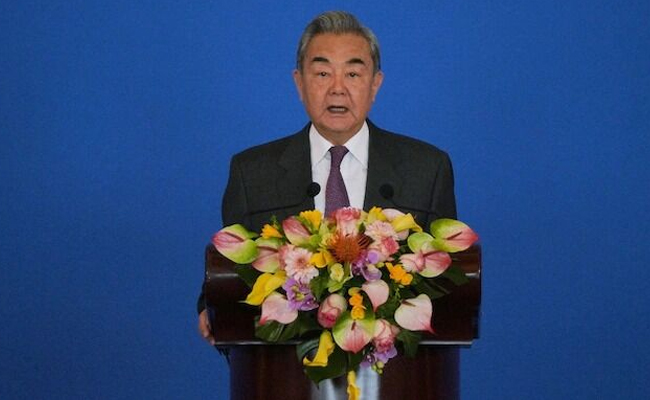
New Delhi: China has claimed that it played a role in mediating tensions between India and Pakistan this year, a statement that New Delhi has firmly rejected, reiterating that the matter was resolved through direct talks between the two countries.
According to a report published by NDTV, Chinese Foreign Minister Wang Yi said on Tuesday that “tensions between India and Pakistan” were among several global hotspot issues that China had “mediated” in 2025. He made the remarks while addressing a symposium on international affairs and China’s foreign relations in Beijing.
New Delhi has been maintaining that the May 7-10 conflict between India and Pakistan was resolved through direct talks between the DGMOs (Director General of Military Operations) of the armies of the two countries, without any third-party involvement. The Ministry of External Affairs had earlier clarified that the ceasefire understanding was finalised during a phone call between the DGMOs on May 10.
China's role in the May 7-10 Operation Sindoor conflict between India and Pakistan this year came under serious scrutiny and criticism, especially the military assistance provided by Beijing to Islamabad.
Addressing broader geopolitical developments, Wang Yi said China had adopted an “objective and just stance” in dealing with conflicts worldwide and listed regions where Beijing claimed to have played a mediating role. He also spoke of improving ties with India and referred to India’s participation in multilateral forums such as the Shanghai Cooperation Organisation.
India, however, has not responded to China’s mediation claim beyond reiterating its long-standing position that all issues with Pakistan are addressed bilaterally.
Let the Truth be known. If you read VB and like VB, please be a VB Supporter and Help us deliver the Truth to one and all.
Time has come to implement Women's Reservation Act: PM Modi's letter to LS, RS floor leaders
_vb_91.jpeg)
New Delhi (PTI): Prime Minister Narendra Modi has said that the time has come for the implementation of the Women's Reservation Act in its true spirit and the 2029 Lok Sabha elections and Assembly elections are conducted with the quota for women in place.
In a letter to the floor leaders of Lok Sabha and Rajya Sabha, ahead of the three-day special sittings of Parliament, Modi also asked all members to come together in one voice to pass the amendments to the women's reservation law, officially known as Nari Shakti Vandan Adhiniyam.
"After extensive deliberations, we have reached the conclusion that the time has now come to implement the Nari Shakti Vandan Adhiniyam in its true spirit across the country.
"It is imperative that the 2029 Lok Sabha elections and Assembly elections are conducted with women's reservation in place," the Prime Minister said in his letter dated April 11.
The Budget Session of Parliament has been extended, and a special three-day sitting of the House has been convened on April 16 to 18.
The Women's Reservation Act will ensure an increase in the number of Lok Sabha seats to 816, of which 273 will be reserved for women.
The provision to provide 33 per cent reservation to women in the Lok Sabha and state assemblies was brought by amending the Constitution in 2023.
However, the women's quota would have come into effect only after the completion of the delimitation exercise on the basis of the 2027 Census. This meant the reservation would not have become enforceable before 2034 if the present law remains as is.
To implement it from the 2029 Lok Sabha elections, changes were needed in the Nari Shakti Vandan Adhiniyam; hence, the government is holding a special session to pass the amendments to the law.
_vb_07.jpeg)
_vb_85.jpeg)
_vb_84.jpeg)