China expands lockdowns as COVID-19 cases hit daily record
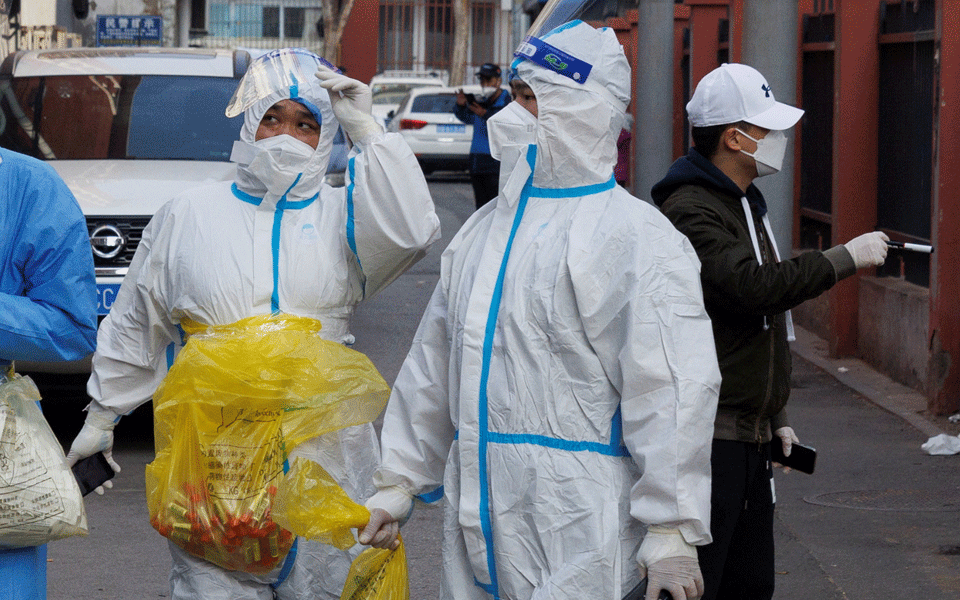
Beijing (AP): China is expanding lockdowns, including in a cental city where factory workers clashed this week with police, as its number of COVID-19 cases hit a daily record.
People in eight districts of Zhengzhou with a total of 6.6 million residents were told to stay home for five days beginning on Thursday, except to buy food or get medical treatment. Daily mass testing was ordered in what the city government called a "war of annihilation" against the virus.
During clashes on Tuesday and Wednesday, Zhengzhou police beat workers protesting over a pay dispute at the biggest factory for Apple's iPhone.
Across China, the number of new cases reported in the past 24 hours was 31,444, the National Health Commission said Thursday. That is the highest daily figure since the coronavirus was first detected in the central Chinese city of Wuhan in late 2019.
The daily average of reported cases is steadily increasing. This week, authorities reported China's first COVID-19 deaths in six months, bringing the total to 5,232.
While the numbers of cases and deaths are relatively low compared to the US and other countries, China's ruling Communist Party remains committed to its "zero-COVID" strategy that aims to isolate every case and eliminate the virus entirely while other governments end anti-virus controls and rely on vaccinations and immunity from past infections to prevent deaths and serious illness.
Businesses and residential communities from the manufacturing center of Guangzhou in the south to Beijing in the north have also been placed under various forms of lockdown, measures that particularly affects blue-collar migrant workers. In many cases, residents say the restrictions go beyond what the national government allows.
Guangzhou suspended access Monday to its Baiyun district of 3.7 million residents, while residents of some areas of Shijiazhuang, a city of 11 million people southwest of Beijing, were told to stay home while mass testing is conducted.
Beijing this week opened a hospital in an exhibition center and suspended access to Beijing International Studies University after a virus case was found there. The capital earlier closed shopping malls and office buildings and suspended access to some apartment compounds.
The tightening came after the Communist party this month announced measures to try to reduce disruptions by shortening quarantines and making other changes.
The party is trying to contain the latest wave of outbreaks without shutting down factories and the rest of its economy as it did in early 2020. Its tactics include "closed-loop management," under which workers live in their factories with no outside contact.
Economic growth rebounded to 3.9 per cent over a year earlier in the three months ending in September, up from the first half's 2.2 per cent.
But activity already was starting to fall back, and growth for the year is on track to fall well short of the government's target of 5.5 per cent.
Foxconn, the world's biggest contract assembler of smartphones and other electronics, is struggling to fill orders for the iPhone 14 after thousands of employees walked away from the factory in Zhengzhou last month following complaints about unsafe working conditions.
Foxconn, based in Taiwan, said its contractual obligation about payments "has always been fulfilled."
The company denied what it said were comments online that employees with the virus lived in dormitories at the Zhengzhou factory.
It said facilities were disinfected and passed government checks before employees moved in.
Let the Truth be known. If you read VB and like VB, please be a VB Supporter and Help us deliver the Truth to one and all.
Karnataka Guv to halve convoy size following PM Modi's austerity call
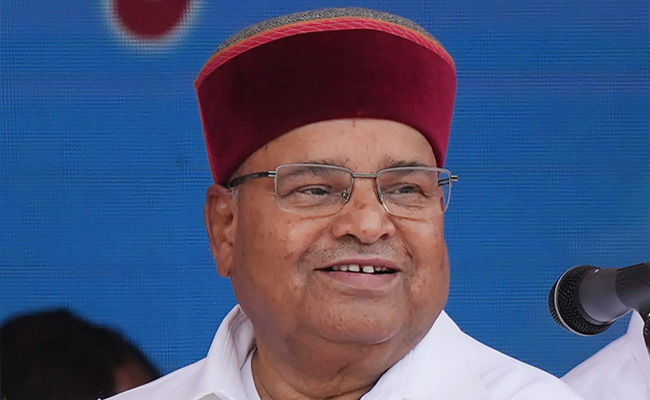
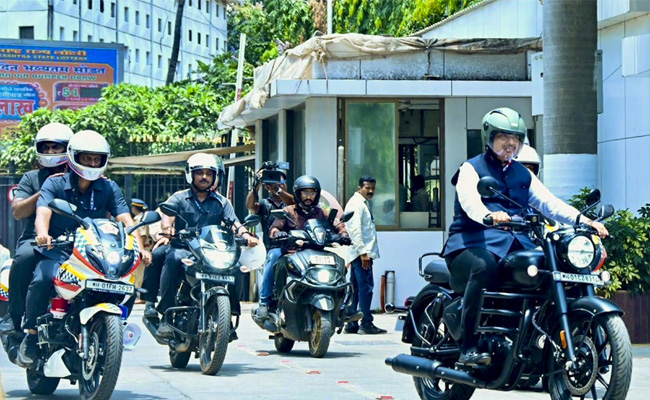
Bengaluru (PTI): Karnataka Governor Thaawarchand Gehlot on Thursday reduced the size of his official convoy to the minimum required strength following Prime Minister Narendra Modi's austerity call.
In a post on 'X', the Lok Bhavan said Gehlot had taken the step in response to the Prime Minister's appeal for fuel conservation and reduction in foreign exchange expenditure amid the West Asia crisis.
"Hon'ble Governor of Karnataka Shri Thaawarchand Gehlot has reduced his convoy to the minimum required strength, following Hon'ble Prime Minister Shri Narendra Modi Ji's appeal," the post said.
The move comes days after Modi, while addressing a rally organised by the BJP in Hyderabad, called for several measures aimed at conserving foreign exchange and reducing dependence on imports amid tensions in West Asia.
The Prime Minister had urged citizens to reduce petrol and diesel consumption, use metro rail services in cities, adopt carpooling, increase the use of electric vehicles and utilise railway services for parcel transportation. He had also suggested working from home wherever possible to conserve fuel and foreign exchange.
Modi further appealed to people to postpone the purchase of gold and foreign travel for one year, reduce edible oil consumption, lower dependence on chemical fertilisers and promote natural farming and swadeshi products to strengthen self-reliance and conserve foreign exchange.