Chinese President Xi Jinping writes to PM Modi, offers help to fight COVID-19 surge
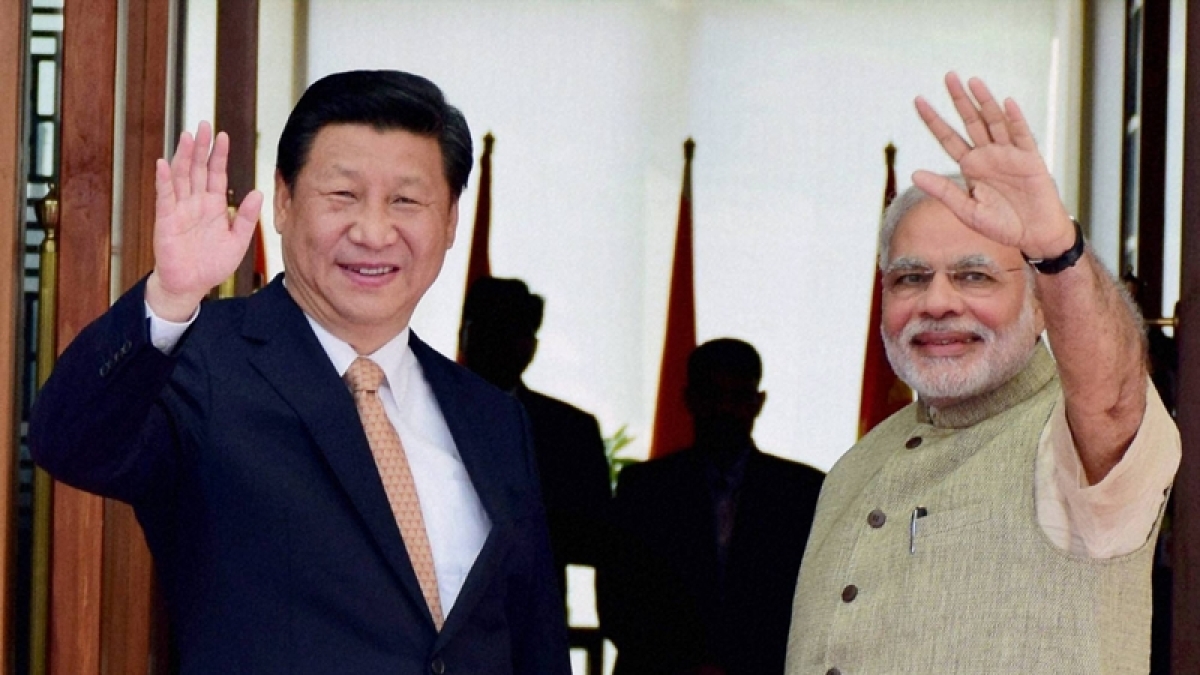
Beijing, Apr 30: Chinese President Xi Jinping on Friday wrote to Prime Minister Narendra Modi and expressed readiness to strengthen cooperation with India to fight the pandemic and provide support and help to deal with the current surge of COVID-19 cases in the country.
President Xi sent a message of sympathy to Prime Minister Modi over the COVID-19 pandemic in India, the official media here reported.
"I am very concerned about the recent situation of COVID-19 pandemic in India. On behalf of the Chinese Government and people, as well as in my own name, I would like to express sincere sympathies to the Indian Government and people," according to the message from President Xi to Prime Minister Modi.
"The Chinese side stands ready to strengthen cooperation with the Indian side in fighting the pandemic and provide support and help in this regard. I believe that under the leadership of the Indian Government, the Indian people will surely prevail over the pandemic," Xi said.
"Humanity is a community with a shared future. Only through solidarity and cooperation can countries around the world ultimately defeat the pandemic," the Chinese president said.
India on Friday logged 3,86,452 new coronavirus infections, the highest single-day rise so far, pushing the total tally of COVID-19 cases to 1,87,62,976, while active cases crossed the 31-lakh mark. The death toll increased to 2,08,330 with 3,498 new fatalities.
On Thursday, Chinese Foreign Minister Wang Yi promised to do the utmost in supporting India's fight against the COVID-19 surge and said that anti-pandemic materials produced in China were entering India at a faster pace.
In his letter to External Affairs Minister S Jaishankar, Wang said that the Chinese side "shares empathy for the challenges facing India and expresses sincere sympathy".
"The coronavirus is the common enemy of mankind, and the international community needs solidarity and coordination for a concerted response. The Chinese side firmly supports the Indian Government and people in fighting the pandemic," he wrote in the letter.
Wang said that anti pandemic materials produced in China are entering India at a faster pace to help India fight the epidemic.
The messages from President Xi and Foreign Minister Wang to Prime Minister Modi and External Affairs Minister Jaishankar came amidst tensions along the disputed border between India and China.
The militaries of the two countries are yet to agree on disengagement from the remaining areas of eastern Ladakh after the withdrawal of troops and weapons from the North and South banks of Pangong Lake in February following a series of military and diplomatic talks.
The two sides are now engaged in talks to extend the disengagement process to the remaining friction points.
Meanwhile, Chinese Foreign Ministry spokesman Wang Wenbin told media briefing here on Friday that China has exported 26,000 ventilators and oxygen generators to India this month.
Since April, China has exported more than 26,000 ventilators and oxygen generators, more than 15,000 medical monitors, and nearly 3,800 tonnes of medical materials and medicines to India, he said in response to a question.
China's relevant anti-epidemic materials and medical equipment companies are working hard and working around the clock to speed up production, he said.
He also said cargo flights to India are in smooth operation. In the recent two weeks, multiple flights have been conducted from China to India, he said.
On April 26, state-run Sichuan Airlines, which operates 11 cargo flights to India has suspended causing disruption of procurement of oxygen concentrators by private companies to from India to augment supplies.
After media reports, the airline has retracted its decision and said it is working out a new plan to resume the services.
But so far it has not announced any new schedule.
China reported the first COVID-19 case in the central Chinese city of Wuhan in late 2019 and since then the deadly disease has become a pandemic, affecting more than 150,618,000 people and over 3,168,500 deaths worldwide.
Let the Truth be known. If you read VB and like VB, please be a VB Supporter and Help us deliver the Truth to one and all.
TN Assembly elections: Eight-month pregnant homemaker wins Thiru Vi Ka Nagar seat for TVK
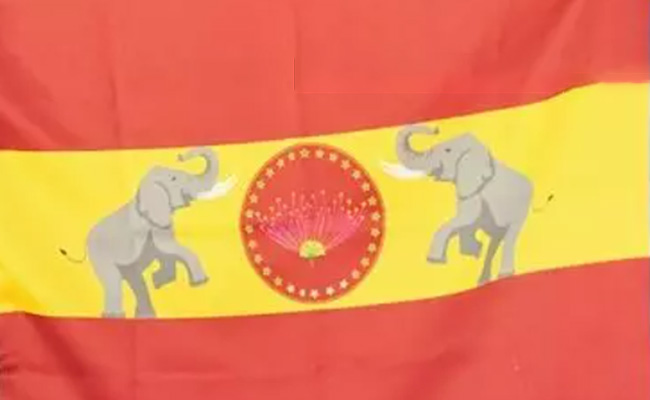
Chennai (PTI): Before giving birth, she had already delivered a mandate—a symbol of hope for Thiru Vi Ka Nagar.
Echoing Delhi’s 2013 “common citizen” political churn associated with the rise of the Aam Aadmi Party (AAP), an eight-month-pregnant homemaker, M R Pallavi, has been elected as an MLA from Chennai’s Thiru Vi Ka Nagar constituency, emerging as one of the notable first-time faces of the Vijay-led TVK in the recently held Tamil Nadu Assembly elections.
In the narrow lanes of Thiru Vi Ka Nagar, a steady stream of media personnel has been making their way to Pallavi’s residence—a scene reminiscent of the result day in Delhi when journalists thronged the modest home of Rakhi Birla, who had won from Mangolpuri on an AAP ticket.
Pallavi, 36, a homemaker educated up to class XII, defeated the DMK candidate K S Ravichandran by a margin of 22,333 votes in the reserved Thiru Vi Ka Nagar Assembly constituency.
Tamilaga Vettri Kazhagam emerged as the single largest party by winning 108 seats, while DMK and AIADMK got 59 and 47, respectively.
Pallavi’s victory has drawn attention due to her personal circumstances. She campaigned extensively while eight months pregnant, going door-to-door to reach voters.
According to local accounts, she even fainted once during the campaign but continued her outreach.
She has not spoken to the media following her victory, as doctors have advised her to rest. Her husband, Rajesh, briefly recounted her campaign efforts.
A self-professed admirer of actor-turned-politician Vijay, Pallavi joined TVK soon after its formation and is now among its first-time legislators.
Doctors have advised her to be hospitalised around May 20, as she is expecting her second child. Ahead of that, voters in Thiru Vi Ka Nagar have entrusted her with representing them in the state Assembly.
Political observers say the rise of candidates like Pallavi signals a possible shift in Tamil Nadu’s political landscape, with voters backing a new party and candidates from non-traditional backgrounds.