Chirag Paswan reportedly demands 36 seats, BJP offers 22 amid seat-sharing talks
Bihar elections 2025

Patna: As the countdown to the 2025 Bihar Assembly elections officially begins with the notification for the first phase issued on Friday, political maneuvering has intensified within the National Democratic Alliance (NDA).
The spotlight is currently on Lok Janshakti Party (Ram Vilas) leader and Union Minister Chirag Paswan, who is demanding 36 seats, even as the BJP has so far offered only 22, The New Indian Express quoted its sources as saying.
Chief Minister Nitish Kumar convened a meeting of senior JD(U) leaders at his official residence, 1 Anne Marg, to finalise the list of candidates. Meanwhile, LJP chief Paswan called an emergency meeting of his party’s core team at the state office to discuss seat distribution and election preparedness.
While Paswan is reportedly pressing for 36 seats, the BJP is hesitant to concede beyond 22. A final decision is expected only after the LJP's central parliamentary board convenes in the national capital.
The JD(U), on its part, is reportedly firm on retaining constituencies held by its sitting MLAs. Chirag Paswan’s party reportedly wants to contest seats like Manhar in Vaishali, Matihani in Begusarai, and Chakai in Jamui, which are presently represented by JD(U) legislators.
On the opposition front, Congress, a major ally of the opposition INDIA bloc, has moved ahead with candidate selection, clearing 25 names for seats largely seen as traditional party bastions. The list was finalised during a meeting of the party’s Central Election Committee held in New Delhi on Wednesday.
Bihar will vote in two phases, on November 6 and 11, to elect a new Assembly, with counting on November 14.
Let the Truth be known. If you read VB and like VB, please be a VB Supporter and Help us deliver the Truth to one and all.
Death toll in Mundathikode fireworks explosion rises to 16
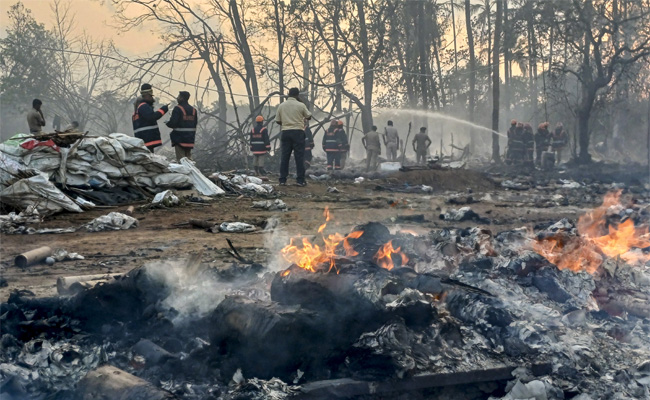
Thrissur (Kerala) (PTI): One more person who had been hospitalised following the Mundathikode fireworks explosion died at Thrissur Medical College on Sunday, police said.
With this, the death toll in the incident has risen to 16.
According to Thrissur Medical College police, the deceased has been identified as Unnikrishnan from Edappal, who was among the 38 persons present at the fireworks manufacturing unit in Mundathikode where the explosions occurred on April 21.
Police said Unnikrishnan had suffered over 80 per cent burns and had remained in critical condition.
The condition of the two other injured persons remains critical, police said.
Of the 38 persons present at the site, 16 have died, while four remain missing.
The fireworks were being manufactured for Thiruvambady Devaswom as part of the Thrissur Pooram festivities.
The licensee of the unit had also suffered burn injuries and had died earlier.