Christian persecution: Centre tells SC plea based on half-baked and self-serving facts
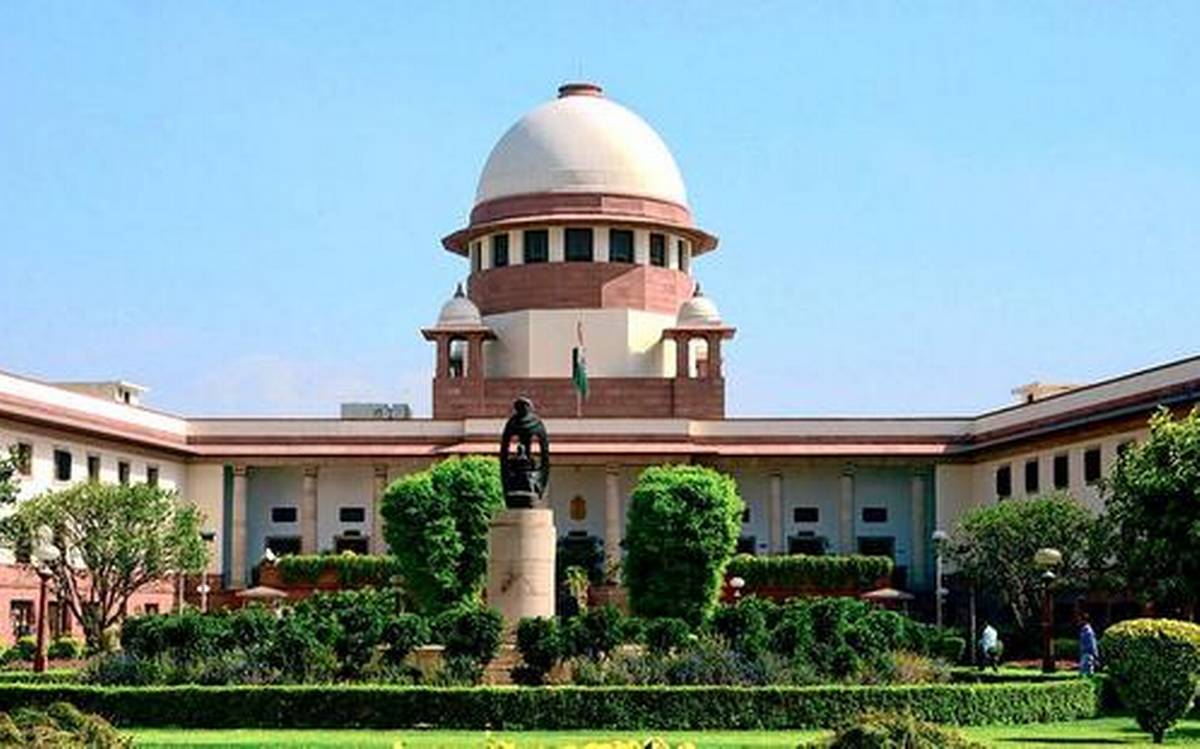
New Delhi, Aug 16: The Centre Tuesday claimed in the Supreme Court that a plea for directions to stop the alleged violence against the members of the Christian community in the country has been filed for some "hidden oblique agenda" which is based on "half-baked," "self-serving facts and articles" and reports.
The Ministry of Home Affairs (MHA) in its reply affidavit said that it is a recent trend that certain organisations start planting articles and preparing self-serving reports themselves or through their associates, which eventually become the basis of a writ petition/PIL.
The Centre said enquiries reveal that the majority of the incidents alleged as Christian persecution in these reports were either false or wrongfully projected and the petitioner, based upon self-serving articles and reports wishes that this court conducts a "fishing enquiry."
It added that incidents of minor disputes, where no religious/communal angle existed, had also been published in the self-serving Reports as instances of violence against Christians.
The MHA said, "It is submitted that there appears to be some hidden oblique agenda in filing such deceptive petitions, creating unrest throughout the country and perhaps for getting assistance from outside the country to meddle with internal affairs of our nation. It is submitted that the issues highlighted can always be taken care of by law enforcing agencies in respective States under the process of law or by the affected parties by approaching the respective High Courts".
A bench of Justices DY Chandrachud and AS Bopanna was told by Solicitor General Tushar Mehta, appearing for the Centre, that the response to the PIL has been filed at the last minute and apologised for that.
Senior advocate Colin Gonsalves, appearing for petitioners Rev. Dr. Peter Machado of National Solidarity Forum, Rev. Vijayesh Lal of Evangelical Fellowship of India, and others that they have received the Centre's reply at the last minute and they would like to file a rejoinder to it.
The bench then posted the matter for hearing on August 25.
In its affidavit on a plea filed by advocate Aakarsh Kamra, the Centre said the petitioner, based upon self-serving articles and reports wishes that this court conducts a "fishing enquiry" in the entire country without even bothering to inform the court that none of the facts are either verified by the Petitioner or by the so-called organisations, who have prepared the reports.
"That a perusal of half-baked and self-serving facts and self-serving articles and reports culminating in a petition - based upon mere conjectures - clearly appears to be for an oblique purpose. It is a recent trend that certain organisations start planting articles and preparing self-serving reports themselves or through their associates, which eventually become the basis of a writ petition / PIL. This is a hazardous trend and defeats the very object as to why PIL jurisdiction was originated by this Court", it said.
The affidavit denied that there is any violation of fundamental rights as enshrined under the Constitution, as alleged in the petition by the petitioners, and the government is committed to ensuring rule of law in the country and ensuring all communities, individuals, and groups are provided with equal protection of the laws in the country.
"It is submitted that therefore, in the absence of material particulars or any case there exist serious discrepancy in the facts as alleged in a petition, as stated hereunder, this Court may decline to entertain the petition. Further, it is a settled principle of law that this Court in writ jurisdiction is not a forum wherein opposing claims on facts can be established and it does not indulge in a factual enquiry under writ jurisdiction", it said.
It said on a preliminary ascertainment of the truthfulness of the assertions as alleged in the petition, based on inputs received, it is found that the Petitioner has resorted to falsehood and some selective self-serving documents and it endeavors to point out those to the court.
"It is submitted that the petitioners claimed to have based the petition on information gathered through sources like press reports, "independent" online databases, and from findings of various non-profit organisations. It is submitted that enquiries reveal that the majority of the incidents alleged as Christian persecution in these reports were either false or wrongfully projected", it said.
The Centre said in some cases, incidents of a purely criminal nature and arising out of personal issues have been categorised as violence targeting Christians.
"It is submitted that several incidents, which were found to be true or exaggerated, were not necessarily related to incidents of violence targeting Christians. For instance, incidents wherein merely complaints/accusations were made against Christians had also been cited as instances of persecution of a particular community in the report", it said.
" factual check and the inputs received thereof reveals that legal actions taken by local administration against illegal constructions were also being projected as instances of religious targeting of places. It is submitted that the said reports, which form the basis of the present petition, seek to portray any and all criminal incidents, in the case where the victim party was of a particular religion, as incidents of violence against the victim due to religious reasons without there being any factual basis behind such presumption", it said.
Let the Truth be known. If you read VB and like VB, please be a VB Supporter and Help us deliver the Truth to one and all.
Rajnath to top commanders: Outmaneuver adversaries with strategic surprise
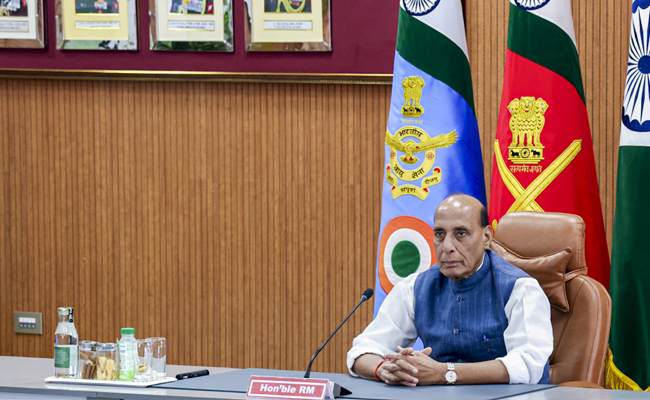
Jaipur/New Delhi (PTI): Defence Minister Rajnath Singh on Friday directed the top military commanders of the three services to integrate an "element of surprise" into modern warfare to outmaneuver India's adversaries and bolster strategic posture.
In his address at the joint commanders conference in Jaipur, Singh also described the Operation Sindoor as a testament to the "swift, precise, and joint response" of the Indian armed forces to safeguard national interests and called upon the military to remain ready to deal with any security challenges.
In their two-day deliberations, the commanders carried out a comprehensive review of the combat preparedness of the military in the wake of the evolving regional security situation.
Operation Sindoor was a demonstration of India's growing capabilities and a symbol of the nation's collective resolve and new military ethos, Singh said, a day after the first anniversary of Operation Sindoor.
He also unveiled a 'Joint Doctrine for Integrated Communication Architecture' that is aimed at strengthening doctrinal clarity, interoperability and integrated communications across the armed forces in future multidomain operations.
The joint commanders' conference, themed 'Military Capability in New Domains', brought together the top leadership of the defence ministry and the three services to deliberate on emerging security challenges and future readiness.
Comprehensive deliberations were held on future warfare, multidomain operations, technological transformation and joint capability development.
The conference witnessed extensive discussions on cognitive warfare, cyber resilience against evolving quantum and AI-enabled threats, military capability development in emerging domains, indigenous innovation and AI-enabled warfighting concepts.
It was attended by Chief of Defence Staff Gen Anil Chauhan, Chief of the Naval Staff Admiral Dinesh Kumar Tripathi, Chief of the Army Staff Gen Upendra Dwivedi, Chief of the Air Staff Air Chief Marshal AP Singh and Defence Secretary Rajesh Kumar Singh among others.
In his remarks, Singh asked the commanders to remain "future-ready" by learning from the operation as well as the current global security landscape.
He underscored the need to strengthen capabilities in artificial intelligence, autonomous systems, data analytics and secure communication networks to stay prepared in the rapidly evolving geopolitical security scenario. He emphasised that future conflicts will increasingly be shaped by hybrid threats, information dominance and operations conducted simultaneously across cyber, space, electromagnetic and cognitive domains, according to an official readout.
Highlighting the transformative impact of emerging technologies, Singh stressed on the importance of ensuring integrated national preparedness across all spectrums of conflict, it said.
Singh's remarks at the conference came a day after the first anniversary of Operation Sindoor.
The defence minister appreciated the progress achieved in enhancing jointness, integration and technological adoption across the three services, the readout noted.
Singh said that jointness constitutes a pivotal dimension within the transformative changes sweeping across the global defence sector.
"Future wars will not be won solely through weaponry, but through innovative thinking and enhanced synergy," he said.
The defence minister exhorted the commanders to cultivate the "element of surprise" to remain unpredictable to the nation's adversaries and secure a strategic edge in any given situation.
He, however, urged them to remain vigilant of the element of surprise of the enemy and always stay two steps ahead.
Singh also reiterated the Narendra Modi government's commitment to enhancing the capabilities of the defence forces through state-of-the-art weapons and platforms. He added that special focus is being laid on research in niche domains.
During the conference, he released a documentary film on Operation Sindoor.
The film reaffirms the nation's and defence forces' commitment to operational preparedness and decisive national response capabilities.
Demonstrations of advanced systems and platforms developed for intelligence fusion, operational planning and information management were also showcased during the conference reflecting growing integration of cutting-edge technologies into joint operational structures, according to the defence ministry.
The discussions will contribute significantly towards shaping India's future military transformation and integrated operational preparedness, it said.