CIA officer reports Havana syndrome symptoms during India trip: US media
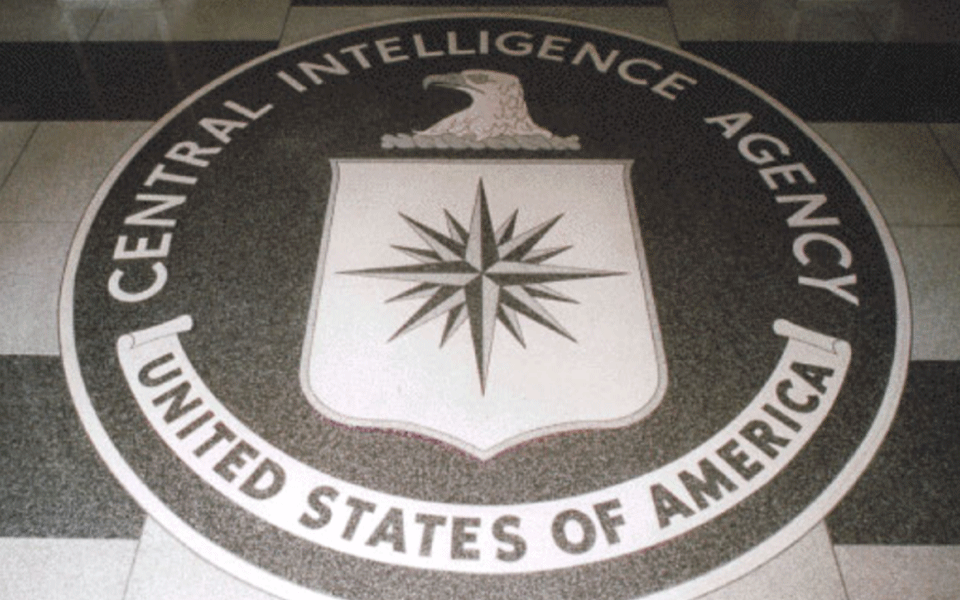
Washington(PTI):A CIA officer, who travelled to India with CIA Director William Burns this month, reported symptoms consistent with Havana syndrome, a mysterious affliction that has struck US diplomats, spies and other government workers at home and abroad, US media reports said on Tuesday.
The official, who was not identified, had to receive medical attention, CNN reported, citing three unnamed sources.
The incident set off alarm bells within the US government and left Burns "fuming" with anger, one source explained. Some officials at the CIA viewed the chilling episode as a direct message to Burns that no one is safe, including those working directly for the nation's top spy, the report quoted two other sources as saying.
The circumstances of the incident are still being investigated, and officials have not yet determined whether the CIA officer was targeted because the officer was travelling with the director, William Burns, or for other reasons. If the incident was caused by an adversarial intelligence service, it may not have known the officer was travelling with Burns, The New York Times reported.
A CIA spokeswoman declined to confirm the case in India but said the US government and the agency are taking every incident seriously.
"Director Burns has made it a top priority to ensure officers get the care they need and that we get to the bottom of this," the NBC News quoted a spokeswoman as saying.
"We've strengthened efforts to determine the origins of the incidents, including assembling a team of our very best experts bringing an intensity and expertise to this issue akin to our efforts to find [Osama] bin Laden," she said.
The situation in India could have dramatic implications: the CIA director's schedule is tightly held and there are deep concerns among US officials about how the perpetrator would have known about the visit and been able to plan for such aggression, the CNN report said.
The person travelling with Burns who experienced the symptoms in India received immediate medical attention when they returned to the US, it said.
Burns held extensive talks with NSA Ajit Doval on the Afghan crisis. The CIA chief, accompanied by a few officials, paid a quiet visit to India primarily to discuss the situation in Afghanistan after the US pulled out its troops.
When asked about the visit, the US embassy declined to comment. There was no comment from the Indian security establishment as well.
The event marks the latest reported case of a US government employee reporting symptoms associated with the mysterious ailment.
Havana syndrome first came into public view in 2017 after US diplomats and other government workers stationed in Cuba reported feeling unusual physical sensations after hearing strange high- and low-pitched sounds. US government employees have also reported cases in China and the Washington, DC area.
Late last month, at least two US diplomats were medically evacuated from Vietnam after Havana syndrome incidents were reported in the capital city, Hanoi, ahead of Vice President Kamala Harris' arrival.
Under Burns and the Director of National Intelligence, Avril Haines, the intelligence community has undertaken a wide-ranging investigation into the mysterious attacks, including a 100-day probe into the potential causes that began earlier this summer.
"We don't comment on specific incidents or officers. We have protocols in place for when individuals report possible anomalous health incidents that include receiving appropriate medical treatment," a CIA spokesperson told CNN.
"The health and well-being of American public servants are of paramount importance to the administration, and we take extremely seriously any report by our personnel of an anomalous health incident," a senior administration official was quoted as saying by NBC News.
The India incident has raised questions about whether a foreign adversary had intentionally targeted the CIA director's staff, but the sources said the agency is unclear what exactly could have caused it, the report said.
The case is one of a number of new incidents in recent months involving CIA personnel who have experienced what US officials call "anomalous health incidents," it said.
Many people who have experienced Havana Syndrome report experiencing vertigo, dizziness, fatigue, nausea and intense headaches. Some describe it as being hit by an invisible blast wave. Some have no longer been able to work.
Many US officials suspect that the incidents, which have caused permanent brain injuries in some victims, are a result of an attack or a surveillance operation by Russian spies, but the evidence is inconclusive.
The National Academies of Sciences said in a report last year that the most likely cause of the injuries was directed microwave energy, but the conclusion is being debated in the scientific community.
Last week, Deputy CIA Director David Cohen said that the agency is getting closer to solving the mystery but that there are limits. "In terms of have we gotten closer, I think the answer is yes but not close enough to make an analytic judgment that people are waiting for," he said.
Let the Truth be known. If you read VB and like VB, please be a VB Supporter and Help us deliver the Truth to one and all.
KMES Institutions shine in SSLC result, continue four-decade legacy of education in rural Karkala
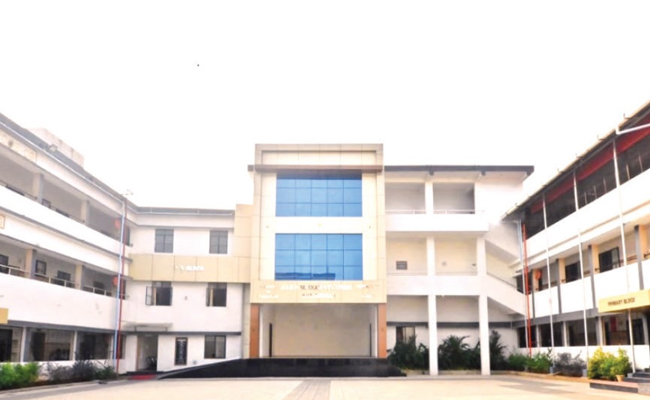
Karkala: KMES Institutions of Education at Kukkundooru in Karkala taluk has recorded outstanding results in the 2025-26 SSLC and PUC examinations, continuing a four-decade educational journey that began with just 22 kindergarten students and no building of its own.
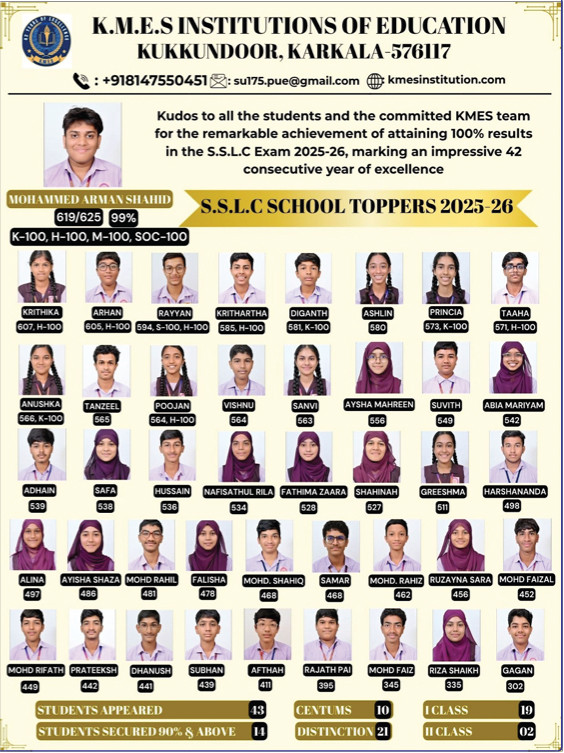
The institution secured a 100 per cent result in the SSLC examinations, with all 43 students passing the examination this year.
Muhammad Arman Shahid emerged as the school topper by scoring 619 marks out of 625, securing 99 per cent and also ranking sixth at the state level. He scored full marks in Kannada, Hindi, Mathematics and Social Science.
Krithika V. Nayak secured the second position in the school with 607 marks and 97.12 per cent, while Arhan stood third with 605 marks and 96.8 per cent.
Out of the 43 students, 21 passed with distinction, 19 secured first class, two students obtained second class and one student passed in third class. Fourteen students scored above 90 per cent.
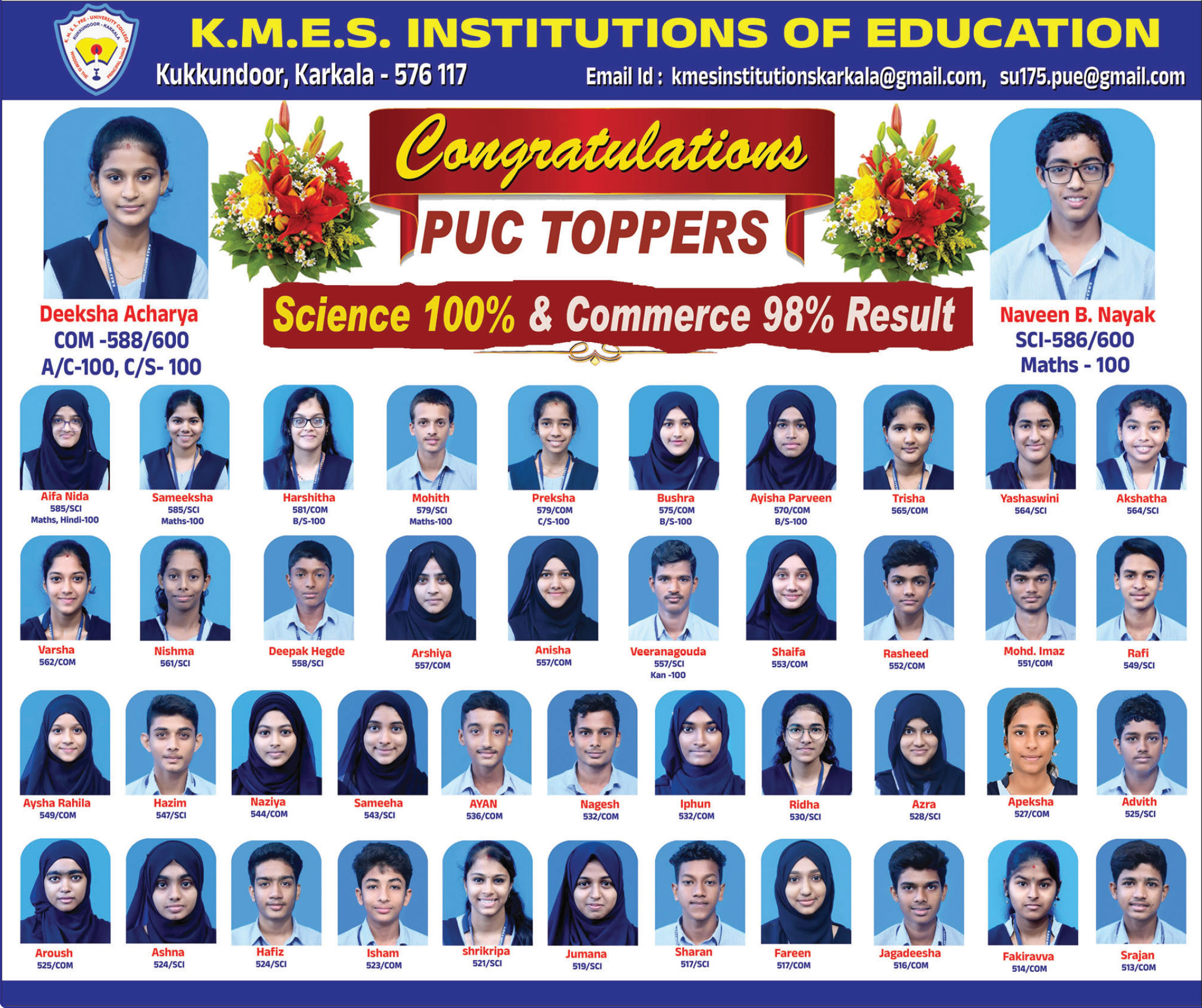
The institution also performed strongly in the PUC examinations. The Science stream recorded a 100 per cent result, with all 44 students passing, while Commerce secured a 98 per cent pass percentage.
Twelve students scored full marks in different subjects, including Mathematics.
In Commerce, Deeksha Acharya topped the college with 588 marks, while Harshitha H. Kini secured the second position with 581 marks.
In Science, Naveen B. Nayak emerged as topper with 586 marks, followed closely by Sameeksha Moily and Aifa Nidha, who both secured 585 marks.
Speaking about the achievement, High School head teacher Shrimati Patkar said the institution has always focused on supporting academically weak students through affordable education and free special classes.
“Our ambition is to provide quality education even to students who struggle in studies. The fees are very low, and free coaching classes are conducted. I have worked here for 28 years and have always found the atmosphere supportive of education,” she said.
Primary School head teacher Lolita Zeena D’Silva appreciated the dedication of the teaching staff and said the school encourages students not only to achieve high marks but also to become role models.
PU College Principal Balakrishna Rao said the institution focuses on value-based education and overall personality development.
“The aim is to help students succeed not only academically but also in cultural activities, sports and leadership. We encourage qualities such as patience, tolerance and discipline,” he said.
Rao also credited the institution’s growth to the support of founders K.S. Mohammed Masood and K.S. Nissar Ahmed, along with President K.S. Imtiaz Ahmed.
Speaking on the occasion, Imtiaz Ahmed said the institution was built on the dream of making quality education accessible to financially backward families in rural areas.
He said the guidance and encouragement of his elder brothers, Mohammed Masood and Nissar Ahmed, along with the contribution of teachers, students and parents, helped transform the institution into a model educational centre.
The KMES Institutions trace their roots back to 1984, when they were founded by senior social activists Haji P.M. Khan, K.S. Nazeer Ahmed and Haji A.S. Rashid Haider.
The institution initially functioned from the Government Urdu School premises as it did not have a building of its own. Classes began with only 22 students in lower kindergarten and two teachers.
Later, under the leadership of K.S. Mohammed Masood and with continuous financial and moral support from non-resident businessman K.S. Nissar Ahmed, the institution gradually expanded.
In 1993, the school shifted to its own building and began conducting classes from LKG to Class 5.
As student admissions increased, Nissar Ahmed personally funded the construction of three additional classrooms to address infrastructure shortages.
The institution’s new school building was completed in 1997, while the PU College building was constructed in 2001.
From humble beginnings in a borrowed building to producing state-level rank holders and consistent academic results, the KMES Institutions have grown into one of the prominent educational centres in the Karkala region.