
Citizenship (Amendment) Bill 2019 introduced in Lok Sabha
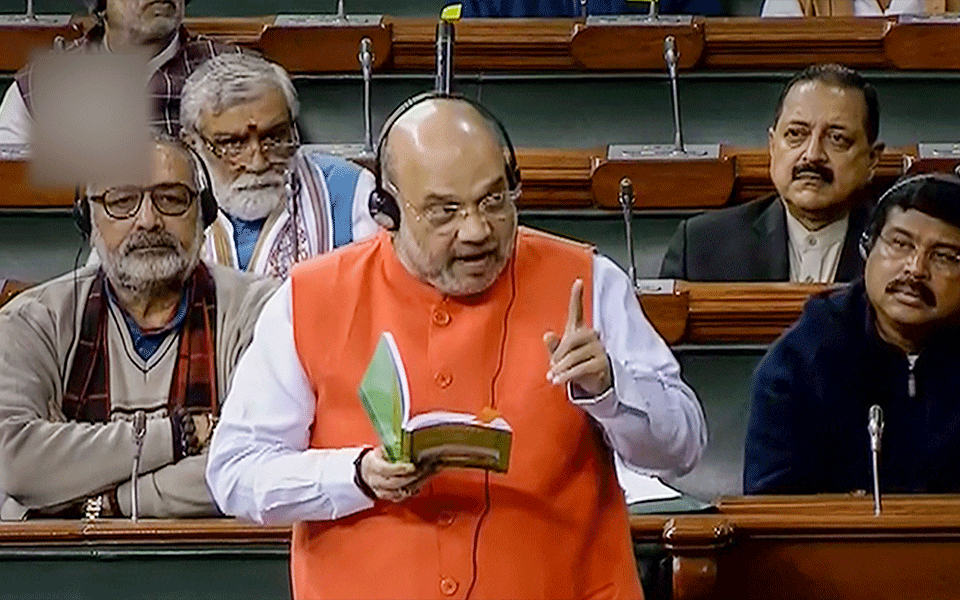
New Delhi: Union Home Minister Amit Shah on Monday said in Lok Sabha that the Citizenship (Amendment) Bill 2019 is not against minorities but against infiltrators.
Introducing the bill, Shah said the Congress "divided" the country on the basis of religion that is why it was necessary to bring the bill.
Shah said the proposed legislation is being brought on the basis of reasonable classifications provided under the Constitution and it does not violate any of its provisions.
The bill, he said, seeks to give Indian nationality to non-Muslim refugees from Pakistan, Bangladesh and Afghanistan who are facing religious persecution there.
The home minister said laws were framed to give citizenship to people on several occasions in the past, including in 1971 after the creation of Bangladesh and attacks on Indians in Uganda, by using the provision of reasonable classifications.
"This bill is not even .001 per cent against minorities. It is against infiltrators," he said.
Earlier, opposition leaders Adhir Ranjan Chowdhury, Saugata Roy, N K Premchandran, Gaurav Gogoi, Shashi Tharoor, Assaduddin Owaisi opposed the introduction of the bill, saying it was violative of various provisions of the Constitution, including move to grant citizenship on the basis on religion.
The bill was introduced after a division of votes for which 293 MPs voted in favour and 82 voted against.
Let the Truth be known. If you read VB and like VB, please be a VB Supporter and Help us deliver the Truth to one and all.
Karnataka issues nutrition advisory for govt events; recommends millets, healthier options
_vb_61.jpeg)
Bengaluru (PTI): The Karnataka government on Monday issued a nutrition advisory recommending healthier food and beverage options at meetings, functions, and other official gatherings held in the state.
The advisory has been issued by the Department of Karnataka Health and Family Welfare Services to promote healthy dietary and nutritional habits among officials and staff, noting that food, refreshments and beverages served in government offices and official programmes are "often not aligned with nutrition standards."
The advisory recommends serving snacks such as millet-based, low-fat and low-sugar foods, fresh fruits, vegetable salads, sprouts, roasted nuts and seeds during in-house office meetings and breaks.
Beverages such as green tea, low-fat buttermilk, and locally filtered or boiled water served in glass bottles or steel flasks have also been suggested.
According to the advisory, for larger government events, conferences and exhibitions, departments have been advised to include at least one millet-based item during snacks and a minimum of two millet dishes in meals, along with local cuisine and at least one regional recipe.
It also recommends the use of brown rice instead of white rice, freshly prepared vegetable salads, and fresh fruits or low-sugar fruit juices.
If non-vegetarian food is served, it should consist of well-cooked lean or white meat, the advisory stated.
In eateries operating within government office campuses, the department has recommended millet-based foods, fresh vegetable salads, boiled pulses such as horse gram or chickpeas, and low-fat beverages.
It suggests serving food using reusable metal plates and glasses.
The advisory also recommends avoiding microwave-heated food, industrially processed food, fried snacks, high-fat or heavily spiced dishes, carbonated drinks, high-sugar fruit juices, and alcoholic beverages.
It further discourages serving milk-based tea or coffee and plastic-bottled water during official events.
“Overall, hygiene and cleanliness should be maintained while serving food and water. Local cottage industries, self-help groups, prison kitchens, nutri-gardens and others should be preferred for placing food and beverage orders,” the advisory added.
_vb_54.jpeg)
_vb_07.jpeg)
_vb_34.jpeg)