Citizenship bill: Protesters again wave black flags at Modi in Assam
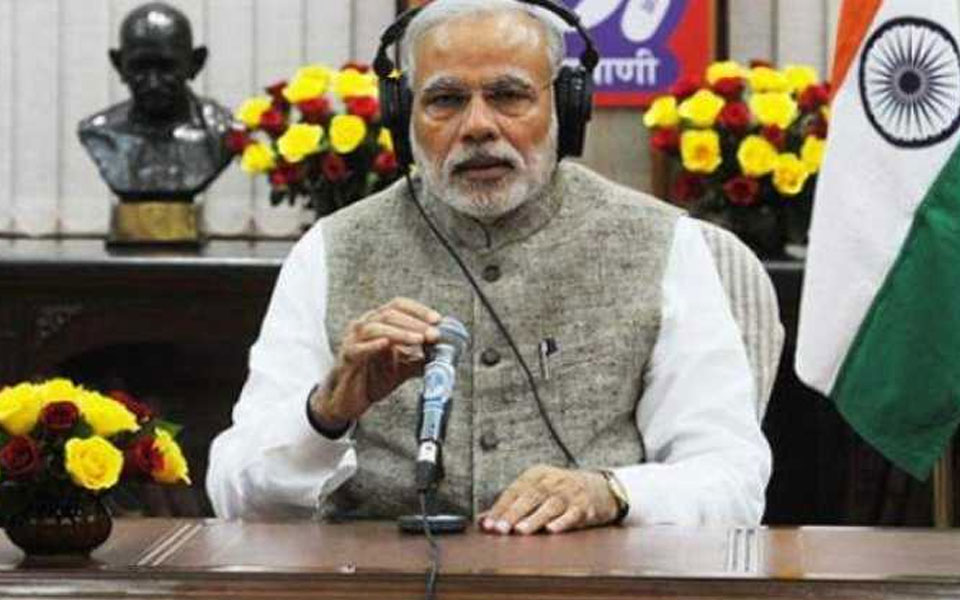
Guwahati : Prime Minister Narendra Modi was shown black flags in at least two places here on Saturday for the second consecutive day over the contentious Citizenship (Amendment) Bill.
Modi, who was on his way to the airport from the Raj Bhawan here, was shown black flags by protesters belonging to the Asom Jatiyatabadi Yuva Chhatra Parishad (AJYCP) at Machkhowa area.
Minutes later, a group of students showed black flags to the prime minister when his huge convoy was passing through the Gauhati University at Jalukbari area.
Members of both the groups were detained, police said.
On Friday evening, Modi was shown black flags in at least four different locations as soon as he landed in Guwahati and was travelling from the airport to the Raj Bhawan to spend the night.
While hundreds of Gauhati University students waved black flags at Modi in Jalukbari area, activists of the Krishak Mukti Sangram Samiti (KMSS) and AJYCP did the same at Adabari and Fancy Bazar areas.
Members of the All Assam Students Union (AASU) were also seen waving black flags to the prime minister and shouting slogans as his convoy crossed the AASU headquarters on the Mahatma Gandhi Road at Uzan Bazar.
The Citizenship (Amendment) Bill seeks to provide Indian citizenship to Hindus, Jains, Christians, Sikhs, Buddhists and Parsis from Bangladesh, Pakistan and Afghanistan after six years of residence in India even if they do not possess any document.
The bill was passed by the Lok Sabha during the Winter Session on January 8 and has been awaiting Rajya Sabha nod.
Let the Truth be known. If you read VB and like VB, please be a VB Supporter and Help us deliver the Truth to one and all.
Man arrested with Rs 2.54-crore heroin in Mumbai

Mumbai (PTI): Police have arrested a man and seized over 500 grams of heroin worth Rs 2.54 crore in the illicit market from him in Mumbai, officials said on Friday.
The police's Anti-Narcotics Cell (ANC) made the drug seizure in Santacruz in the western suburbs. The operation was conducted by the Kandivali unit of the ANC on Thursday as part of a special crackdown against drug trafficking in the area, they said.
Acting on specific inputs, an ANC team conducted a raid in Santacruz (East) and intercepted a man. During a search, the team recovered 508 grams of high-grade heroin from his possession, an official said.
The seized contraband, a highly addictive, opioid drug derived from morphine, is estimated to be worth Rs 2.54 crore in the international market, he informed.
Following the seizure, a case was registered against the man under relevant sections of the Narcotic Drugs and Psychotropic Substances (NDPS) Act, 1985, and he was formally placed under arrest in the early hours of Friday.
The police are currently investigating the source of the drug and trying to identify the intended recipients of the consignment, he said.