Citizenship Bill undermines 'documented position' of Bhupen Hazarika: Son
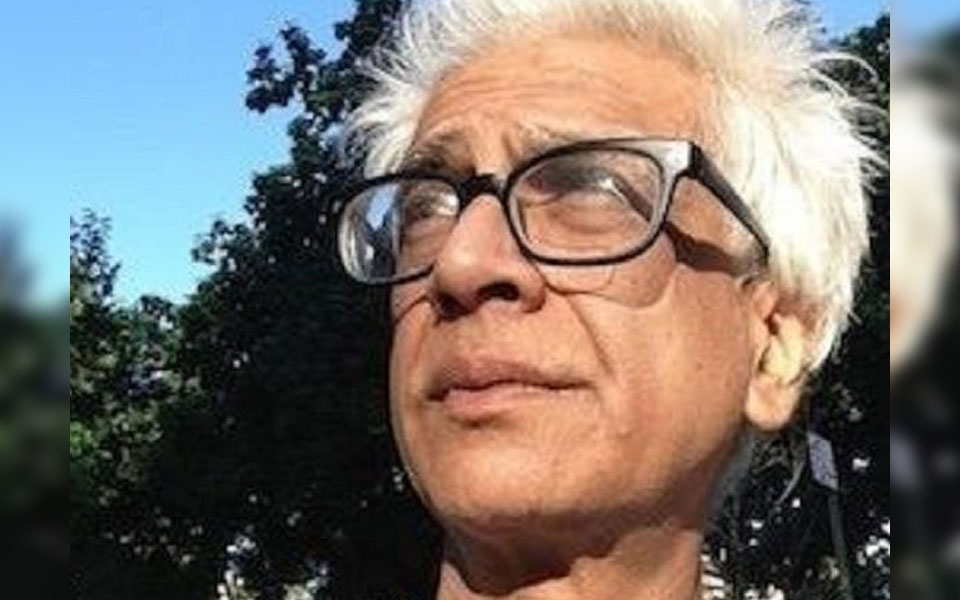
Guwahati : Taking a swipe at BJP, Assamese singer-composer Bhupen Hazarika's son Tez Hazarika has said his father's name and words were being invoked and celebrated publicly even as plans were afoot to pass the "painfully unpopular" Citizenship (Amendment) Bill.
In a Facebook post on Monday, Tez described the proposed legislation as "undermining" the "documented position" of his father, who was awarded the country's highest civilian award, the Bharat Ratna, posthumously by the Narendra Modi government last month.
He said he had so far not received any invitation to accept the Bharat Ratna conferred on his father, so there was nothing to reject.
"I believe that my father's name and words are being invoked and celebrated publicly while plans are afoot to pass a painfully unpopular bill regarding citizenship that is actually undermining his documented position. It would in reality be in direct opposition to what Bhupenda believed in his heart of hearts," he said, without naming any political party.
How the Centre moves on the matter, "far outweighs" in importance the awarding and receiving of such national recognition, he said.
"For his fans a vast majority of people of the Northeast and India's great diversity including all indigenous populations of India, he would never have endorsed what appears, quite transparently, to be an underhanded way of pushing a law against the will and benefit of the majority in a manner that also seems to be grossly unconstitutional, undemocratic and un-Indian," said Tez, who resides in the US.
The BJP government at the Centre has been pitching for the early passage of the legislation, which promises Indian citizenship to religious minorities from Pakistan, Afghanistan and Bangladesh.
The legislation was passed by Lok Sabha during the Winter Session on January 8 and has been awaiting the Rajya Sabha nod.
It has triggered massive protests across the Northeast with many organisations and parties claiming that it would have a negative impact on the demography of the region.
"Adopting any form of this bill at this point in the manner in which it is being proffered, now or in the future, will ultimately have the sad and undesirable effect of not only disrupting the quality of life, language, identity and power balance of the region, but that of undermining my father's position by delivering a wreaking blow to the harmony, inner integrity and unity of the secular and democratic Republic of India," he said.
"Numerous media journalists are now asking me whether or not I will accept the Bharat Ratna for my father. I go on record here to answer that A), I have not received any invitation so far there is nothing to reject. And B), how the Centre moves on this matter far outweighs in importance the awarding and receiving of such national recognition - a display of short lived cheap thrills," he wrote.
"Bharat Ratna and longest bridges, while necessary, will not promote the peace and prosperity of the citizens of India. Only just popular laws and foresight on the part of the leadership will," Tez added.
Prime Minister Narendra Modi recently inaugurated Bogibeel Bridge the country's longest railroad bridge in Assam.
PTI's efforts to reach Tez did not yield results.
Meanwhile, Bhupen Hazarika's brother and prominent singer Saumer Hazarika as well as his sister-in-law and popular singer Manisha Hazarika told the media that the family has neither rejected Bharat Ratna nor criticised the Centre for conferring the award posthumously.
Saumar Hazarika said, "Tez has not contacted me on the issue of his Facebook post today. We as Bhupenda's family have welcomed the Bharat Ratna award to him. We had attended the Assam government's programme celebrating the conferring of the honour to my brother who always stood for unity of the people of the Northeast and the country."
Manisha Hazarika, wife of Bhupen Hazarika's late brother and well-known singer Jayanta Hazarika, said, "Bhupen Hazarika was an institution. He is above politics and because he took Assam to the world that he has been honoured with the highest civilian award. If this award is made family centric, than it will be a dishonour to the award, the entire northeast region and the country.
Let the Truth be known. If you read VB and like VB, please be a VB Supporter and Help us deliver the Truth to one and all.
Man arrested with Rs 2.54-crore heroin in Mumbai

Mumbai (PTI): Police have arrested a man and seized over 500 grams of heroin worth Rs 2.54 crore in the illicit market from him in Mumbai, officials said on Friday.
The police's Anti-Narcotics Cell (ANC) made the drug seizure in Santacruz in the western suburbs. The operation was conducted by the Kandivali unit of the ANC on Thursday as part of a special crackdown against drug trafficking in the area, they said.
Acting on specific inputs, an ANC team conducted a raid in Santacruz (East) and intercepted a man. During a search, the team recovered 508 grams of high-grade heroin from his possession, an official said.
The seized contraband, a highly addictive, opioid drug derived from morphine, is estimated to be worth Rs 2.54 crore in the international market, he informed.
Following the seizure, a case was registered against the man under relevant sections of the Narcotic Drugs and Psychotropic Substances (NDPS) Act, 1985, and he was formally placed under arrest in the early hours of Friday.
The police are currently investigating the source of the drug and trying to identify the intended recipients of the consignment, he said.