Citizenship bill will never cause any harm to Assam, northeast: PM Modi
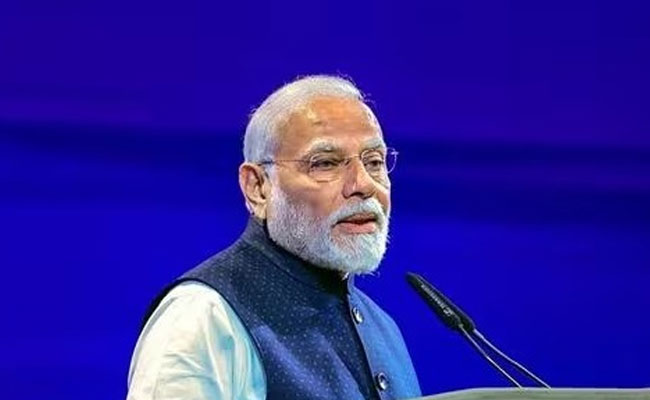
Changsari (Assam): Prime Minister Narendra Modi Saturday assured the people of Assam and the North East that the citizenship bill will in no way cause harm to their interest.
He was addressing a public rally here in the Assembly constituency of Assam health minister and BJP-led NEDA convener Himata Biswa Sarma.
"It is a national commitment to the people of the North East that they will not be harmed in any way and citizenship will be only granted after due investigation and recommendation of the state governments," Modi said.
It must be understood that there is a difference between those who forcefully entered the country and those who were "forced to flee their homes to save their lives due to their faith. Both are not the same", he said.
"We have committed to provide shelter to those who are minorities in neighbouring countries and had to leave everything due to the atrocities inflicted on them. They have come to our country and embraced the idea and ethos of Mother India," he said.
The BJP is committed to implement the 36-year old Assam Accord and a committee set up on the implementation of its Clause 6 is a step in that direction, Modi said.
The BJP-led NDA government is committed to protect the language, culture, resources, hopes and aspirations of the people of Assam and North East, he said.
The prime minister also said the BJP government was committed to make Assam the oil and gas hub of the country and in the last four years projects worth Rs 14,000 crore have been completed.
Let the Truth be known. If you read VB and like VB, please be a VB Supporter and Help us deliver the Truth to one and all.
Man arrested with Rs 2.54-crore heroin in Mumbai

Mumbai (PTI): Police have arrested a man and seized over 500 grams of heroin worth Rs 2.54 crore in the illicit market from him in Mumbai, officials said on Friday.
The police's Anti-Narcotics Cell (ANC) made the drug seizure in Santacruz in the western suburbs. The operation was conducted by the Kandivali unit of the ANC on Thursday as part of a special crackdown against drug trafficking in the area, they said.
Acting on specific inputs, an ANC team conducted a raid in Santacruz (East) and intercepted a man. During a search, the team recovered 508 grams of high-grade heroin from his possession, an official said.
The seized contraband, a highly addictive, opioid drug derived from morphine, is estimated to be worth Rs 2.54 crore in the international market, he informed.
Following the seizure, a case was registered against the man under relevant sections of the Narcotic Drugs and Psychotropic Substances (NDPS) Act, 1985, and he was formally placed under arrest in the early hours of Friday.
The police are currently investigating the source of the drug and trying to identify the intended recipients of the consignment, he said.