CJI calls on HC collegiums to consider female lawyers of SC for judgeship
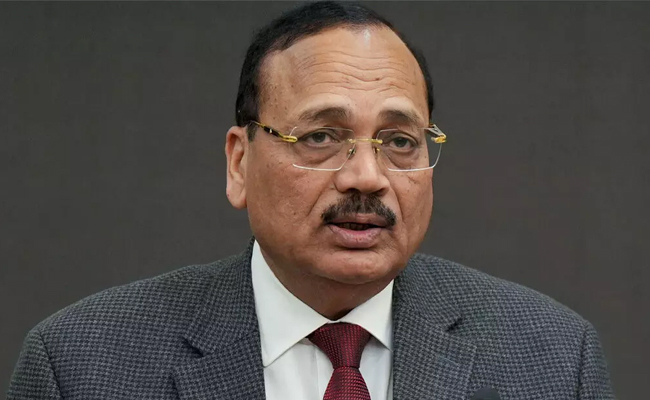
New Delhi (PTI): Chief Justice of India Surya Kant on Sunday batted for greater institutional reforms in the judiciary to bring more women into the legal field and said that high court collegiums should consider meritorious women members of the Bar for judgeship as a norm and not as an exception.
Addressing an event, the Chief Justice of India (CJI) underlined that members of the Bar must acknowledge and accept a simple reality: women members are not seeking concessions.
"They are seeking fair and appropriate representation, which has long been due. Only when the profession itself internalises this truth, will the pathway to the Bench become clearer," he said to applause from women lawyers and members of the judiciary at the first national conference of Indian Women in Law on the topic "Half the Nation – Half the Bench Bridge the gap – Balance the Bench.
The CJI requested the high court collegiums to widen the zone of their consideration and include women advocates from their states who are practising in the Supreme Court for elevation.
CJI Kant said if progress is to be meaningful, it must be institutionalised. The story should not be that one individual secured greater representation, but it should be that the Supreme Court and the high courts across the country consciously embedded fairness into their processes.
"We must all understand that reform of this nature is not an event; it is a continuous process. The cultivation of institutional fairness requires persistence beyond individual tenures and beyond individual personalities. It may not reach full fruition within my term of office, nor within that of my sister or brother judges. That, however, cannot and should not determine the depth of our commitment," he said.
CJI Kant added that when that happens, representation will no longer depend on personalities or moments of resolve -- it will stand anchored in the structure of the institution itself, and that, ultimately, is how enduring change is made.
He said that an area of reform lies within the high court collegiums and they must recognise that the moment for measured action is not in the future, but it is now.
"Where suitable, meritorious women members of the Bar are available, their consideration should not be an exception; it should be the norm. And where, in certain high courts or districts, suitable candidates within a particular age bracket are not immediately available, that should not become a barrier. I earnestly request the high court collegiums to widen the zone of their consideration and include women advocates practising in the Supreme Court who belong to that state, for elevation," he said.
Senior advocates Shobha Gupta and Mahalakshmi Pavani, who are associated with the organisation, 'Indian Women in Law', welcomed the guests. Among them were former CJI NV Ramana and other serving judges of the apex court, including Justice BV Nagarathna and Ujjal Bhuyan.
The CJI highlighted that multiple women are currently serving as Chief Justices of different high courts, and the Punjab and Haryana High Court has as many as 18 sitting women judges.
Similarly, the Madras and Bombay High Courts also have about a dozen female judges each, he said.
CJI Kant pointed out that equally significant is the encouraging scenario in the district judiciary which offers perhaps the clearest indication of what lies ahead.
"With women comprising approximately 36.3 per cent of the working strength of judicial officers at the district level, the foundation is steadily strengthening.
"Friends, this is not a simple statistic; I would argue it reflects a generational shift. If we speak of a pipeline, it is here that it is visibly widening. And when the base of the system reflects greater inclusion, it is only a matter of time before that strength finds expression in the higher judiciary," he said.
The CJI said these developments indicate that the momentum has begun and the environment has been created.
"And with steadily increasing numbers of women entering and excelling in the legal profession, it is both natural and necessary that their presence on the Bench grows suitably. Yet we must guard against complacency. While momentum is encouraging, it is not complete," he said.
At the outset, CJI Kant lauded the journey of women in legal fields and said, “It is worth recalling that barely a century ago, under the regressive colonial regime, women in this country were not even permitted to practise law. The distance travelled since then has been substantive, but it has not been accidental."
He said women often bring distinct insights shaped by how law operates in homes, workplaces and everyday realities and consequently, their presence does not merely add diversity to the Bench, it deepens the court’s engagement with the society it serves.
"The legal profession, over time, has unwittingly developed a working climate that imposes invisible costs disproportionately on women. From late-night briefings and inadequate facilities to unreported workplace bias and repeated questioning of authority. These are daily realities that, I am sure, all of you are all too familiar with.
"And yet, despite these burdens, countless brilliant women have excelled in this profession because they believe in its ethos," he said.
CJI Kant said every woman who takes her place on the Bench sends a clear message to those still facing these obstacles that your perseverance is not unseen and it is not in vain.
Let the Truth be known. If you read VB and like VB, please be a VB Supporter and Help us deliver the Truth to one and all.
PM to reach Sikkim on Monday to attend 50 years of statehood ceremony, launch Rs 4,000 cr projects
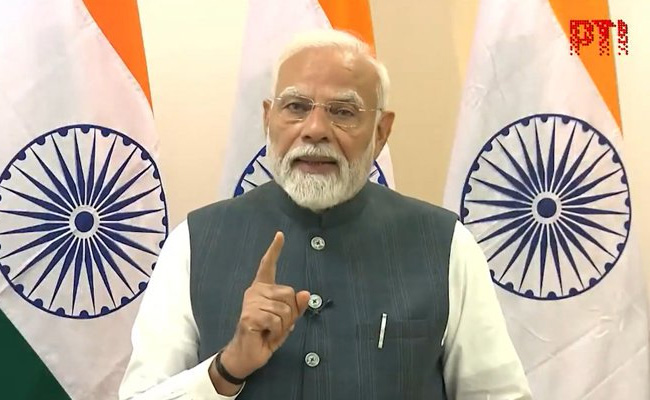
Gangtok (PTI): Prime Minister Narendra Modi is scheduled to reach Sikkim on Monday for a two-day tour, during which he will hold a roadshow, attend the closing ceremony of 50 years of statehood and launch projects worth Rs 4,000 crore, officials said.
Elaborate security arrangements have been put in place in the state capital and surrounding areas in view of Modi's visit, they said.
According to the itinerary of his visit, Modi will arrive in Gangtok around 3 pm and will hold a roadshow to Lok Bhawan here soon after landing at Libing helipad.
The Prime Minister will visit the Orchidarium in Gangtok the next day. To showcase the ecological and floral heritage of the state, a "Swarnajayanti Maitri Manjari Park" has been developed as a world-class Orchid Experience Centre on the golden jubilee of Sikkim's statehood.
He will launch multiple development projects worth over Rs 4,000 crore across the state while participating in the closing ceremony of Sikkim's 50th year of statehood at Paljor Stadium.
The projects span a wide range of sectors, including infrastructure, connectivity, healthcare, education, power, urban development, environment, tourism and agriculture, the officials said.
The Prime Minister will also address the gathering on the occasion, the officials said.
Modi had been scheduled to be present at the opening ceremony of the year-long celebrations of 50 years of Sikkim's statehood at Paljor Stadium last year, but he could not reach the venue due to inclement weather. He, however, addressed the gathering through video conferencing from Bagdogra in neighbouring West Bengal.