CJI Gavai backs exclusion of creamy layer in reservation to scheduled castes
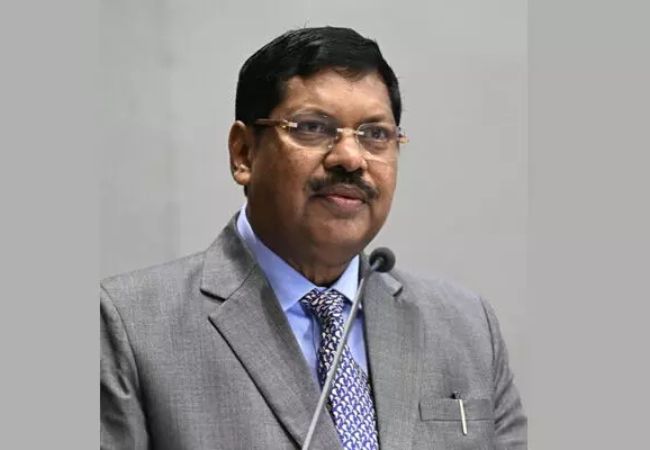
Amaravati, Nov 16 (PTI): Chief Justice of India BR Gavai on Sunday affirmed that he is still for exclusion of creamy layer in reservations to Scheduled Castes.
Addressing a programme "India and the Living Indian Constitution at 75 Years", Gavai opined that children of an IAS officer can not be equated with the offsprings of a poor agricultural laborer when it comes to reservations.
"I also went further and took a view that the concept of creamy layer, as has been found in the judgment of Indra Sawhney (vs Union of India & Others). What is applicable to the Other Backward Classes, should also be made applicable to Scheduled Castes, though my judgment has been widely criticised on that issue," Gavai said.
"But I still hold that judges are not supposed to normally justify their judgments, and I still have about a week to go (retirement)," Justice Gavai further said.
The CJI said over the years, equality or women empowerment is gaining momentum in the country and the the discrimination which was meted out to them was strongly criticized.
He said before he is set to end his journey as the Chief Justice in a couple of days, the last function that he attended happened to be again at Amaravati of Andhra Pradesh while the first one after becoming the CJI was at his native place Amravati in Maharashtra.
Justice Gavai observed in 2024 that states must evolve a policy for identifying the creamy layer even among the Scheduled Castes (SC) and Schedule Tribes (ST) and deny them the benefit of reservation.
Asserting that the Indian Constitution is not "static", Justice Gavai said Dr BR Ambedkar always considered that it has to be evolving, organic, and a state-of-the-art living document as Article 368 provides for the amendment of the Constitution.
"On one hand Dr Ambedkar was criticized that the powers to amend the Constitution are too liberal, and on the other hand, it was criticized that some of the amendments require ratification by half of the states, and two-third majority of the parliament, and it was difficult to achieve an amendment in this manner," he said.
According to him, DR Ambedkar’s addresses during the presentation of the draft Constitution in the Constituent Assembly are the most important speeches which every student of law should read.
Quoting Ambedkar he said equality without liberty will take away an incentive of a human being to excel in his life and liberty alone would lead to supremacy of the powerful over the weaker. The trinity of equality, liberty and fraternity would be necessary to take the country forward in achieving the social and economic justice.
He said it is because of the Constitution, India had two Presidents from among Scheduled Castes and also the incumbent is a woman from Scheduled Tribe.
"Coming from a humble background from a school, predominantly in a semi-slum area in Amravati, a municipal school, I could reach the highest office in the judiciary and contribute in my humble way to nation building only because of the Constitution of India,” Gavai said.
He said the Indian Constitution stands on the four pillars of justice, liberty, equality, and fraternity.
Let the Truth be known. If you read VB and like VB, please be a VB Supporter and Help us deliver the Truth to one and all.
Women’s Reservation Bill: K'taka CM accuses PM Modi of adopting 'double standard'
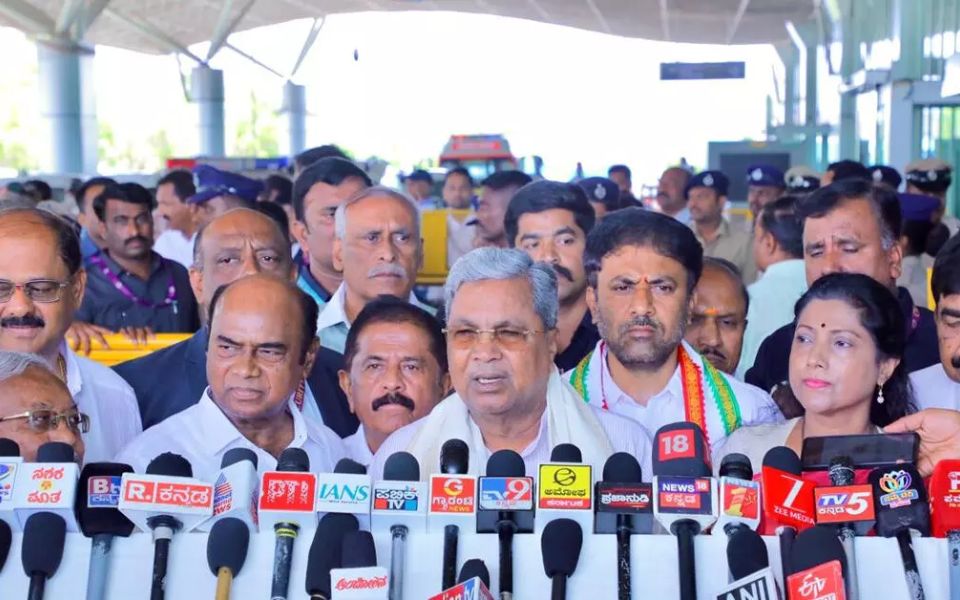
Mysuru (Karnataka) (PTI): Karnataka Chief Minister Siddaramaiah on Monday accused Prime Minister Narendra Modi of adopting a “double standard” on women’s reservation, alleging that the Centre had delayed implementation despite having the opportunity to act earlier.
Addressing reporters here, Siddaramaiah said the BJP and Modi had earlier opposed welfare guarantees and were now replicating them, while also questioning the timing and intent behind the women’s reservation move.
“That’s what I call double standards. Narendra Modi is not for social justice. If he was, this would have been done long ago. How many years has he been in power? It’s been 12 years. Why hasn’t it been done so far?” he asked.
The Chief Minister reiterated that the Congress had consistently supported women’s reservation and accused the Centre of "politicising" the issue.
“We spoke about women’s reservation. The Prime Minister asked me what our stand was. I said we are in favour of women’s reservation,” he said, referring to recent discussions with the PM.
He maintained that delimitation should only be carried out after a fresh Census to ensure equitable representation among states.
“In my view, delimitation should be done after a new census. That is why we opposed it. We have not opposed women’s reservation. We have always supported it,” he said.
Highlighting Congress’ past role, he said, “Who brought the 73rd and 74th amendments? Rajiv Gandhi and the Congress party. Those amendments ensured 50 per cent reservation for women in local bodies. Why would we oppose it?”
Siddaramaiah further questioned the union government’s delay in implementation. “Narendra Modi indulged in politics and got it passed in 2023. Why didn’t he implement it immediately? Then why did he wait so long? He could have implemented it immediately. If he is committed to women’s reservation, he should have implemented it,” he said.
On the linkage between delimitation and reservation, he asked, “Why did the Centre link it with delimitation? Why did it go for a constitutional amendment?” adding that such a move could disadvantage southern states that have successfully controlled population growth.
“Southern states have controlled population well, but northern states haven’t. Naturally, it benefits them and disadvantages us,” he said.
Responding to BJP’s criticism that women would “teach Congress a lesson,” Siddaramaiah said, “They are doing politics. If Modi had brought this earlier, who would have opposed women’s reservation?”
On electoral prospects elsewhere, he said he had no direct information on Tamil Nadu but was optimistic about ruling DMK's victory.
"According to the information I have, DMK and its alliance are likely to win,” while asserting that Kerala would also be won by the opposition.
In a major setback to the BJP-led Central government, a Constitution Amendment Bill to implement 33 per cent reservation for women in legislatures in 2029 and increase the number of Lok Sabha seats to 816 was defeated on Friday, with the ruling dispensation asserting that the struggle to give the rights to women will continue.
While 298 members voted in support of the bill in Lok Sabha, 230 MPs voted against it. Out of 528 members who voted, the bill required 352 votes for a two-third majority.
According to the Constitution (131st Amendment) Bill, Lok Sabha seats were to be increased to 816 from the current 543 to "operationalise" the women's reservation law before the 2029 parliamentary polls, following a delimitation exercise based on the 2011 Census.
Seats were also to be increased in state and Union territory assemblies to accommodate 33 per cent reservation for women.