CJI Gavai flags absence of Chief Secretary, DGP during Maharashtra visit; Calls it protocol lapse
Stresses importance of constitutional respect between judiciary, executive, and legislature
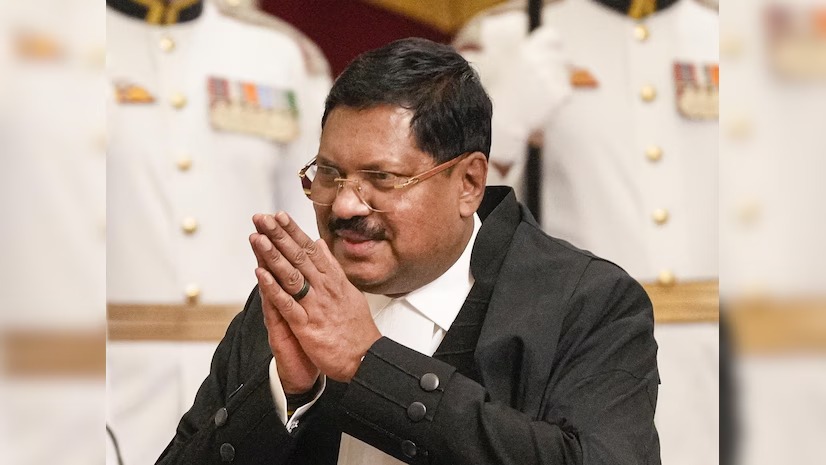
Mumbai: Chief Justice of India Bhushan Ramkrishna Gavai on Sunday expressed concern over a perceived lapse in protocol during his first visit to Maharashtra after assuming office. Addressing a felicitation event organised by the Bar Council of Maharashtra and Goa in Mumbai, the CJI noted the absence of senior state officials, including the Chief Secretary, Director General of Police (DGP), and Mumbai Police Commissioner, upon his arrival in the city.
Gavai, who hails from Maharashtra and became the second Dalit to be appointed as the CJI, highlighted that the absence of these key officials was disappointing and warranted introspection.
“When a person from Maharashtra becomes the Chief Justice of India and visits Maharashtra for the first time, if the Chief Secretary, DGP, or the Police Commissioner don’t consider it appropriate to be present, then they need to reflect on that,” Gavai said.
Emphasising that protocol is not a ceremonial formality but a reflection of institutional respect, the Chief Justice remarked, “Protocols are not something new — it’s a question of the respect one constitutional body gives to another.”
He also spoke on the importance of maintaining mutual respect among the three pillars of democracy, the judiciary, legislature, and executive. “Such courtesies are indicative of how constitutional bodies value each other’s roles,” he added.
In a lighter vein, Gavai quipped that had another Chief Justice been in his place, the matter might have invoked Article 142 of the Constitution, a provision that empowers the Supreme Court to pass any order necessary for doing complete justice.
Justice Gavai assumed office as the Chief Justice of India last week, becoming only the second Dalit to hold the position in the country’s judicial history.
Let the Truth be known. If you read VB and like VB, please be a VB Supporter and Help us deliver the Truth to one and all.
Cong performed better in Kerala, anti-incumbency trends influenced WB, TN: CM Siddaramaiah
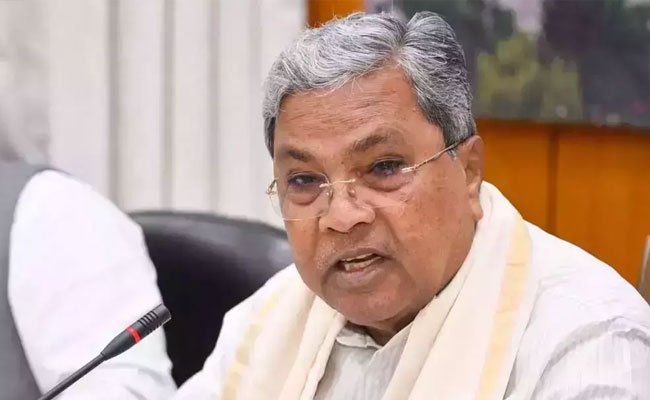
Bengaluru (PTI): Karnataka Chief Minister Siddaramaiah on Monday said the Congress had largely met or exceeded expectations in several States, even as results in some regions reflected shifting voter sentiments.
Speaking to reporters in Bengaluru, he said the party accepted the mandate in Assam while performing better than anticipated in Kerala.
He also pointed to possible anti-incumbency trends influencing outcomes in West Bengal and Tamil Nadu.
“In Assam, we got the expected result, and we accept the people’s mandate. In Kerala, we have won more seats than expected. We anticipated around 76 to 80, but we have gone up to around 95,” Siddaramaiah said.
In West Bengal and Tamil Nadu, there may have been an anti-incumbency trend, and that could have influenced the results, he added.
Siddaramaiah also extended his congratulations to a new political entrant in Tamil Nadu, noting the emergence of a different electoral dynamic in the State.
“I congratulate the new entrant who has achieved success there,” he added.
Deputy Chief Minister D K Shivakumar said electoral outcomes in some States had diverged from the party’s internal assessments, reflecting evolving voter expectations.
“We expected a certain trend, but the results have been different. Political reading was wrong in some places,” he said.
“People were looking for change in some States, and that has been reflected in the results,” Shivakumar, who is also the Congress Karnataka unit president, said.
Referring to Kerala, he said the Congress-led alliance had benefited from public sentiment.
“There was already an expectation based on local body elections, and people had shown confidence in us. That has translated into a strong result,” the Deputy Chief Minister said.
On Tamil Nadu, he acknowledged that the scale of political shift had come as a surprise.
“We expected to secure around 30 to 40 per cent of the vote share, but such a major shift was not anticipated. It shows that voter expectations were different,” he said.
Shivakumar added that electoral outcomes underscored the need for better political assessment in future.
“We have to understand these changes carefully. Political reading cannot go wrong like this,” he said.