CJI rues lack of basic judicial infra, stresses need of filling vacancies, raising no. of judges

New Delhi (PTI): Chief Justice of India (CJI) N V Ramana on Saturday rued the lack of basic minimum standards of judicial infrastructure in the country and stressed the need of not only filling the existing vacancies but also raising the number of judges in high courts to efficiently deal with the intellectual property litigations.
The CJI was speaking as the chief guest at the National Seminar on Adjudication of IPR Disputes in India' here organised by the Delhi High Court and attended by Union Finance Minister Nirmala Sitharaman and many judges from across the country.
"Judicial infrastructure needs to be improved. Unfortunately, we are not even meeting the basic minimum standards in this area. It has been my endeavour since assuming the office of Chief Justice of India, to put in place an institutional mechanism to coordinate and oversee the improvement of judicial infrastructure.
"Mere allocation of funds is not enough. The challenge is to put the available resources to optimum use. I have been pursuing the government for setting up of statutory authorities, both at the centre and at the states. But unfortunately...," Justice Ramana said.
He reiterated his message to offshore investors that the Indian judicial system is investor friendly and absolutely independent to impart justice to all.
"When I visited Japan in 2016 to attend a conference on IPR, I was repeatedly asked by entrepreneurs as to how investor friendly the Indian judicial system is. In fact, whenever I travel abroad, from a cross section of hosts, I keep getting similar queries. My answer has always remained the same; that the Indian judiciary is absolutely independent and it always treats all the parties equally and equitably," he said.
The CJI referred to the vesting of IPR jurisdiction back with high courts and said it has been done at a time when the judiciary is already overburdened with the backlog .
However, this would not deter the judiciary from rising to the occasion and putting in place systems which may be required to deal with the new regime, and it is an appropriate moment to build sufficient capacities in the high courts so that intellectual property litigation can be conducted efficiently and smoothly , he said.
"These new and additional challenges can be effectively met by strengthening the high courts. Not only do we need to fill the existing vacancies on an urgent basis, but there is also a need to increase the number of judges. With better service conditions, we may be able to attract more and more talents into our fold," the CJI said.
Justice Ramana, in his speech, also referred to the ongoing pandemic and said intellectual property right (IPR) protects creativity and innovation, and its importance has been felt during the Covid times as the vaccines and medications had to be researched, trials had to be conducted and commercial scale manufacturing had to take place within a span of few months.
Referring to the evolution of legal regimes and laws on IPR, he said India has rightfully earned the title of the pharmacy of the world , and the position of the nation as the pharma hub of the globe is largely attributable to the existing IPR regime.
Several pharmaceutical multi-national companies have been contracting research and development to national laboratories in India for the past two decades. The existing framework has enabled a massive growth of pharmaceutical exports by India, with local firms building capabilities in making generic products. The lower price of generic drugs has enabled access to lifesaving medicines for those in the developing and under-developed countries, he said.
The CJI advised the stakeholders that while adjudicating the claims of intellectual property rights, one must balance the contemporary claims with the sustainable interests of the future generations.
Let the Truth be known. If you read VB and like VB, please be a VB Supporter and Help us deliver the Truth to one and all.
Congress using hijab issue to pacify minority anger, alleges Karnataka LoP R Ashoka
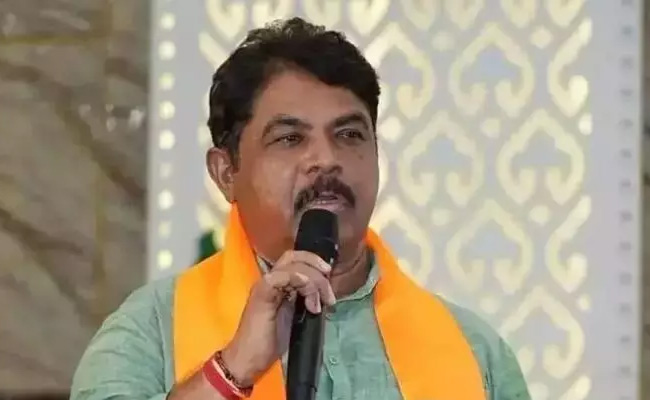
Bengaluru: Leader of Opposition in the Assembly R. Ashoka has accused the Congress government of using the hijab issue to placate what he described as discontent among minority voters after the Davanagere by-election.
In a post on X on Wednesday, Ashoka alleged that the state government, instead of addressing issues such as price rise, corruption, farmers’ distress and law and order, was attempting to retain its minority vote base by reviving the hijab issue.
Referring to the 2022 dress code introduced by the BJP government, which prohibited hijab in schools and colleges, Ashoka said the Karnataka High Court had upheld the policy and emphasised the importance of discipline in educational institutions.
He questioned the Congress government’s move to revisit the issue and asked whether setting aside the court-backed policy to benefit one community could be described as secularism.
Ashoka further alleged that while the government was willing to permit hijab, it continued to prohibit saffron shawls.
He accused the government of dividing students on religious lines rather than treating schools and colleges as spaces of equality.
Drawing a comparison with Mamata Banerjee’s government in West Bengal, Ashoka claimed that excessive appeasement politics had harmed the state and warned that the Congress in Karnataka could face a similar political response.
He said voters in Karnataka would teach the Congress a lesson for what he termed “vote-bank politics” and for compromising constitutional and judicial principles.