'Class 6 question paper' asking whether Dalits are untouchables sparks controversy
The MCQs, on Muslims and Dalits, reinforce stereotypes
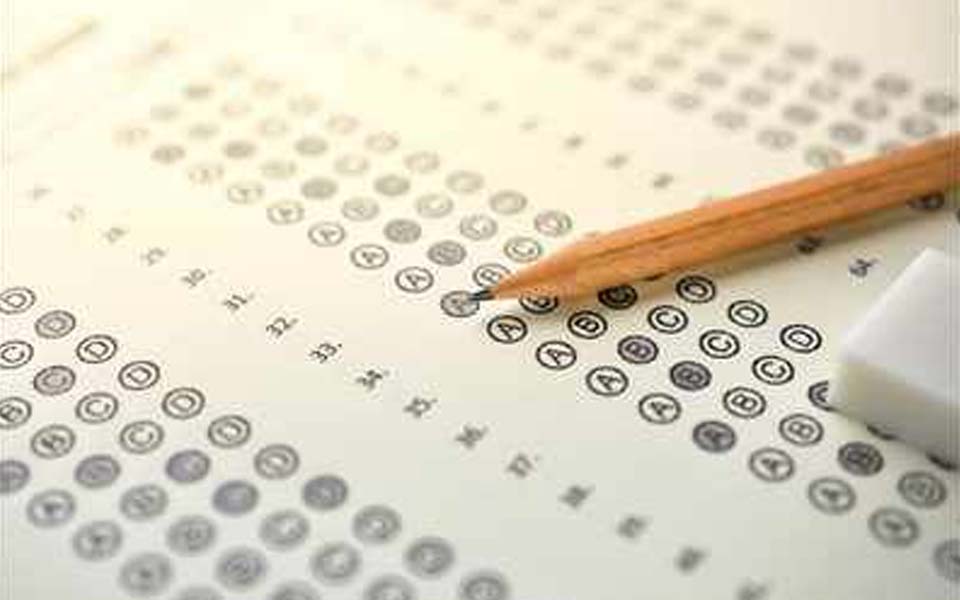
New Delhi, Sep 7: A question purportedly in a class 6 exam asking whether Dalits are untouchables has sparked a controversy in Tamil Nadu, with the paper going viral on social media.
Though the question paper was being circulated on the Internet as linked to one of the Kendriya Vidyalaya Sangathan schools, the KVS termed the paper fake, and the Central Board of Secondary Education said it has no role in setting question papers for internal exams.
"Shocked and appalled to see that a Class 6 Kendriya Vidyalaya exam contains questions that propagate caste discrimination and communal division. Those who are responsible for drafting this Question Paper must be prosecuted under appropriate provisions of law," Dravida Munnetra Kazhagam president Stalin said in a tweet.
The multiple-choice question asked what does the word Dalit' means and the listed options included foreigners, untouchables, upper class and middle class.
Question no. 17 read: “What do you mean by Dalit?” and choices for answers were: (A) Foreigners (B) Untouchables (C) Middle Class (D) Upper class. Question no. 18 read: “What is the common stereotype about Muslims?” and choices for answers were: (A) They don’t send their girls to school (B) They are pure vegetarian (C) They do not sleep at all at the time of Roza (D) All of them.
AMMK leader TTV Dinakaran issued a statement lashing out at CBSE saying, "I strongly condemn the CBSE for having a lesson on a sensitive topic without basic understanding on how it would impact the minds of the students".
"It is wrong to ask questions in this manner to young children. It sets a bad precedent. Action should be taken against people who have done this," he added.
The Kendriya Vidyalaya Sangathan said it has noticed the fake question paper being circulated on social media claiming it to be of some Kendriya Vidyalaya in Tamil Nadu or Puducherry. "However no evidence has so far been brought to the notice of KVS which may establish that the question paper belongs to a Kendriya Vidyalaya," it said in a statement.
The CBSE said it does not set question papers for internal exams in "any class for any school". "It only conducts board exams for class 10 and 12. The said references to CBSE are therefore found incorrect and unfounded, a senior board official said.
Kendriya Vidyalaya Sangathan also said its RO has reported that none of 49 KVs of Chennai region has prepared such questions.
"It is therefore to clarify that the said Question Paper is NOT related to any Kendriya Vidyalaya. Social media users are requested to refrain from spreading misleading messages."
Let the Truth be known. If you read VB and like VB, please be a VB Supporter and Help us deliver the Truth to one and all.
Bridge portion collapses on Jammu outskirts; 3-4 labourers feared trapped, 1 rescued
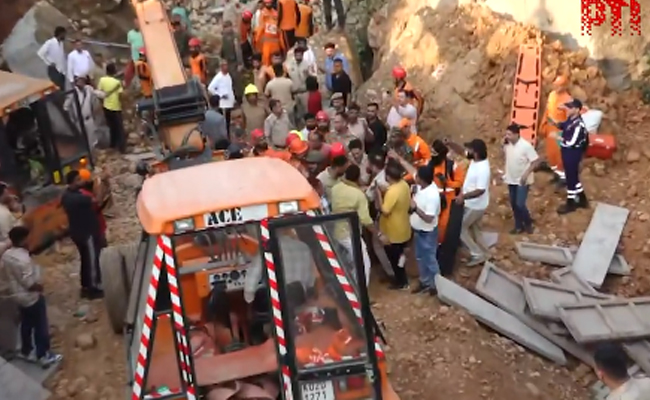
Jammu (PTI): A portion of a small bridge collapsed in the Bantalab area on the outskirts of Jammu city on Friday, trapping at least three to four labourers under the debris, while one injured worker was rescued, official sources said.
Authorities have closed the road link following the collapse of the portion of the bridge.
The incident occurred when labourers were carrying out repair work on a retaining wall near the bridge that was damaged in last year's flash floods, the sources said.
According to the sources, a section of the bridge suddenly gave way, burying workers engaged at the site under the rubble.
Police, Army and State Disaster Response Force (SDRF) teams launched rescue operations to extricate those buried under the debris. They pulled out one injured labourer and shifted him to a hospital, the sources said.
Family members of the labourers present at the site said around six workers engaged at the site at the time of the incident came under the debris when the structure collapsed. The family members said while two of the labourers managed to escape, four got trapped.
The sources said those trapped included the husband of a woman labourer, a mason, an unmarried labourer and a relative of the contractor.
There was no official confirmation on the exact number of persons trapped under the debris till the filing of this report.
The rescue operations are ongoing.