Class X girls asked to remove hijab in Gujarat; Education dept removes exam admin
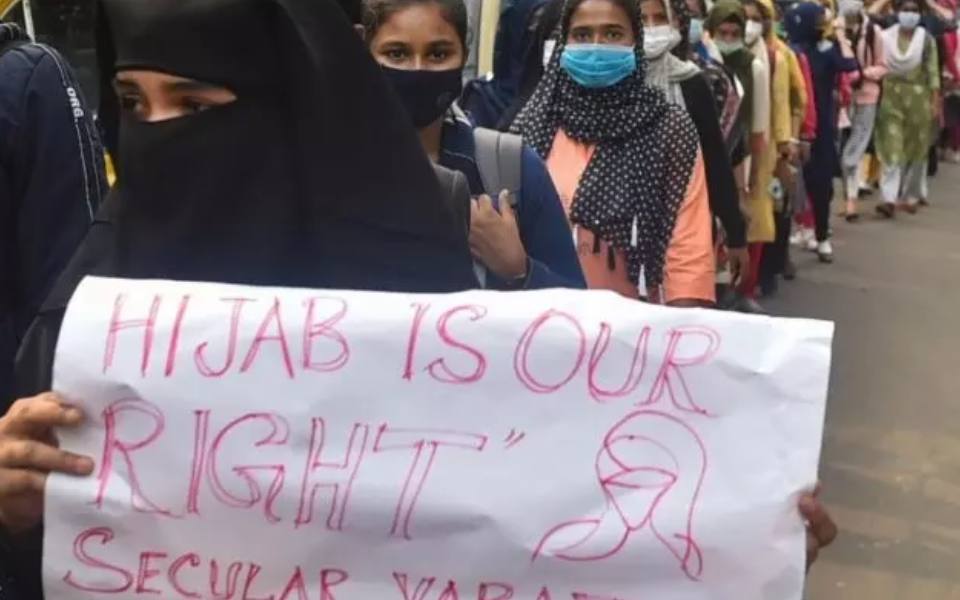
Bharuch, Mar 14: The principal of a private school was removed as an exam administrator by the Gujarat Education Department on Thursday after an outrage erupted among parents who alleged that she had compelled Muslim girl students to remove their hijabs before a Class X examination.
The incident took place at Lions School in Ankleshwar town, Bharuch district, just before the mathematics paper on Wednesday of the Gujarat Secondary and Higher Secondary Education Board (GSHSEB).
Following complaints from the parents, the state education department swiftly removed the exam centre administrator, Ilaben Suratiya, who is also the principal of the school.
District Education Officer Swati Raol took action after meeting with the concerned parents.
"I have seen the CCTV footage and the parents also gave their application to me in this regard. I have ordered an inquiry into the incident and also started the process to change the exam centre administrator because I found merit in the complaint," Raol said.
Parents recounted how their daughters, including one who cried for hours after the incident, were pressured by school staff to remove their hijabs before the exam.
Suratiya defended the actions, stating that ensuring clear video recordings of all students' faces was the rationale behind the request.
"As per the rules, the faces of all the students must be clear in the video recording. That's why we had asked the girls to remove their (head) scarves before the exam so that we don't have to disturb them during the exam and others also don't get disturbed," Suratiya said.
However, Raol contested this action of the principal saying "there are no specific instructions or guidelines from the board about the attire to be worn during exams".
CCTV footage reviewed by parents revealed that women supervisors at the school requested two Muslim students to remove their hijabs before collecting the garments, citing the need for clear facial identification according to exam protocols.
Talking to reporters, a parent said, "The school principal and other staff harassed the girl students, including my own daughter, by asking them to remove their hijab ahead of the exam.
"My daughter cried for three hours after returning home. It happened with nearly a dozen girls yesterday. We want the authorities to take action against those involved in this act," the parent said.
After a thorough review and discussions with parents, Raol initiated an investigation into the incident and promptly replaced Suratiya as the exam centre administrator.
The GSHSEB clarified that there are no specific dress code rules for examinees, emphasising that students can wear any "decent" attire during exams.
Exam Director of the GSHSEB, M K Raval, said students can appear for the exam wearing any decent attire.
"There are no specific rules about clothes to be worn during exams. Students can wear any decent attire. Any female supervisor can check the identity of a female student ahead of the exam by matching her face with the photo on the receipt. After that, we have no issues," Raval said.
Let the Truth be known. If you read VB and like VB, please be a VB Supporter and Help us deliver the Truth to one and all.
KKR defeat LSG via Super Over
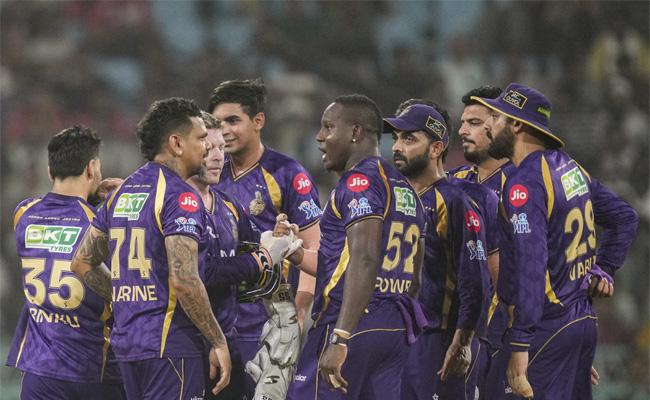
Lucknow (PTI): Kolkata Knight Riders edged Lucknow Super Giants via Super Overs in a battle between two bottom-placed teams in the IPL, here on Sunday.
Chasing a modest 156, LSG suffered a batting collapse and managed to tie the contest and take it to Super Over with No. 9 Mohammed Shami striking a last-ball six against a wayward Kartik Tyagi, who leaked 16 runs in the final over.
But Sunil Narine bowled a stunning Super Over conceding just one run and taking two wickets to give KKR an easy target.
Rinku Singh then finished the chase with a boundary off first ball from Prince Yadav.
Earlier the KKR were in deep trouble with 93/7 in 15 overs but Rinku smashed a sensational 83 not out from 51 balls including four sixes in a row in the final over to lift them to 155/7.
Cameron Green (34) was the only other batter to reach double-digit scores as KKR suffered a familiar batting meltdown with Mohsin taking his maiden fifer.
In reply, LSG continued their dismal show with the bat to succumb to their fifth loss in a row.
Brief Scores:
Kolkata Knight Riders 155/7; 20 overs (Rinku Singh 83 not out, Cameron Green 34; Mohsin Khan 5/23). Lucknow Super Giants 155/8; 20 overs (Rishabh Pant 42). KKR won via Super Over.