Close kin of judges for HC judgeship: SC collegium may consider idea against it
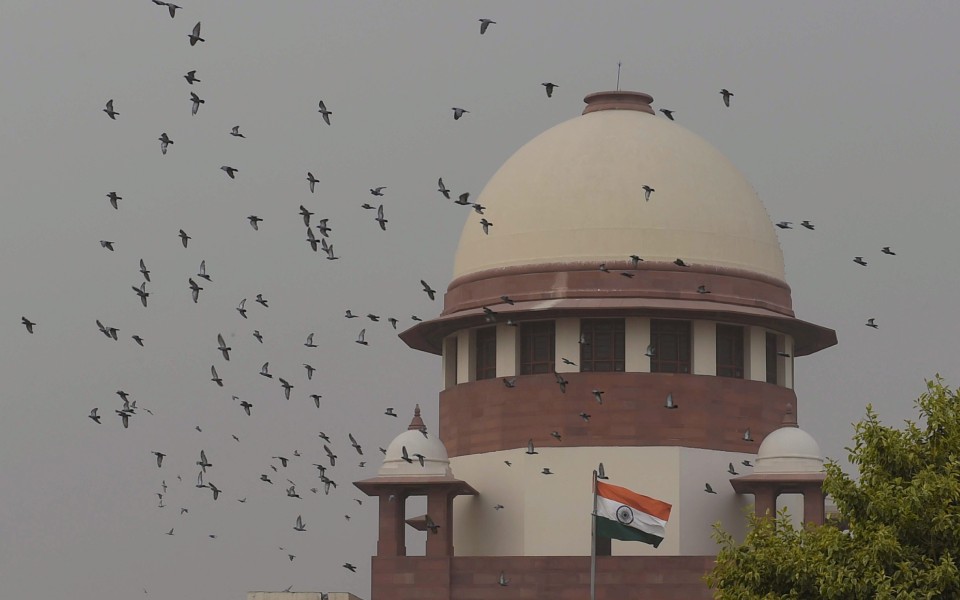
New Delhi, Dec 30: The Supreme Court collegium may consider an idea against the appointment of close kin of judges in high courts, sources said.
The proposal was said to be mooted by a senior judge, and if acted upon, could bring more inclusivity in such appointments and erase the perception of lineage outweighing merit in judicial appointments.
According to sources, the collegium could consider the idea of instructing high court collegiums to refrain from recommending candidates whose parents or close relatives were current or former Supreme Court or high court judges.
While this proposal may disqualify some deserving candidates, one of the sources believed it would open up opportunities for first-generation lawyers and broaden the representation of diverse communities in constitutional courts.
However, this may lead to unjust denial of judgeship to deserving people just because they are related to sitting or former judges of the higher judiciary, added the source.
The three-member collegium, which recommends names for the judgeship in the apex court at the moment, comprises Chief Justice of India Sanjiv Khanna and Justices B R Gavai and Surya Kant.
Justices Hrishikesh Roy and Abhay S Oka are also part of the larger five-member SC collegium that decides and recommends names for judgeship in high courts.
The apex court collegium recently started personal interactions with lawyers and judicial officers recommended for elevation in the high courts, marking a significant leap from the traditional biodata, written assessments and intelligence reports.
The SC collegium held its meetings on December 22 and recommended about six names to the Centre for appointment as judges in high courts at Rajasthan, Uttarakhand, Bombay and Allahabad.
The need to reintroduce personal interactions seems to have gathered steam after a recent controversy involving Justice Shekhar Kumar Yadav of the Allahabad High Court.
Justice Yadav’s contentious remarks at a VHP event in December, when he called for India to function according to the majority’s wishes, had sparked widespread criticism.
Justice Yadav appeared before the Supreme Court collegium on December 17 to put forth his version on the controversy.
The top court on December 10 took note of news reports over the statements and sought a report from the Allahabad High Court on the issue.
"The Supreme Court has taken note of newspaper reports of a speech given by Mr Justice Shekhar Kumar Yadav, a sitting judge of the High Court of Judicature at Allahabad. The details and particulars have been called from the high court and the matter is under consideration," an official statement said earlier.
According to the established norm, a judge, against whom a report is sought by the apex court collegium on any controversial issue from the high court concerned, is given opportunity to put forth his or her version before the top court collegium headed by the chief justice of India.
Let the Truth be known. If you read VB and like VB, please be a VB Supporter and Help us deliver the Truth to one and all.
Cristiano Ronaldo scores his 100th Saudi Pro League goal

Riyadh (AP): Cristiano Ronaldo scored his 100th Saudi Pro League goal as Al-Nassr beat Al-Shabab 4-2 to move five points clear at the top of the table.
The 41-year-old forward converted a Sadio Mané cross at the near post with 15 minutes remaining to record the 971st goal of his career on Thursday. It was also his 26th league goal of the season.
“Ronaldo is always dangerous going forward and we saw that again today,” Al-Nassr coach Jorge Jesus said.
João Félix, signed from Chelsea in July, scored three goals for the league leaders.
The win took Al-Nassr to 82 points from 32 games, five ahead of Al-Hilal, which has three matches, one more than Nassr, left to play. Al-Hilal meets Al-Kholood on Friday and faces Nassr on Tuesday in what could be a title decider against its Riyadh rival.
“Now we have a derby match against our rival, which is a difficult encounter,” Jesus said.
“We are fully aware of its importance, and we are dealing with it with complete focus as we know that small details could decide the result.”
Ronaldo, a five-time Ballon d'Or winner, has yet to secure a major trophy in Saudi Arabia since signing with Al-Nassr in December 2022.