Clubs, restro-bars to seek hard copies of age proof to stop violation of legal drinking age rule

New Delhi, Dec 10: The Delhi government has directed operators of the city's hotels, clubs and restaurants serving liquor to verify the age of their clients through hard copies of government-issued identity proofs after violations of the legal drinking age norm were detected.
In Delhi, liquor is served only to persons aged 25 years and above.
The excise department of the Delhi government, during routine inspections by its teams in recent days, found customers younger than 25 years having alcohol at bars, clubs and restaurants.
The inspections also revealed that some customers were consuming liquor pretending to have completed 25 years. Complaints were also received by the department that some excise licensees were serving liquor to underage persons, officials said.
Under the Delhi Excise Act, 2009, no person or licensed vendor or his employee or agent will sell or deliver liquor to any person apparently under the age of 25 years for personal or others' consumption.
The violations of the age restriction norms were reviewed by the department.
"All the licence holders of hotels, clubs, restaurants (HCR) are hereby directed to be more careful and to not serve liquor to any person under the age of 25 years without verifying the age through government-issued IDs," stated a circular issued by the department.
Further, the department has advised the HCR licensees to verify customers' age only with physical IDs instead of virtual ones saved by people on their mobile phones (excluding those in Digilocker portal) to minimise the use of fake or edited digital IDs.
The violation of the legal drinking age norm invites action under the Delhi Excise Act, 2009.
The legal drinking age was a lingering issue in Delhi as it was lower in the NCR cities of Nodia, Gurugram, Ghaziabad and Faridabad. Under the excise policy 2021-22, now scrapped, there was a plan to lower the legal drinking age to 21 years but it failed to materialise as the policy itself came under attack over allegations of corruption and violations of rules.
Further, in pursuance of a campaign launched recently by Delhi to make the city drug-free in the next three years, the excise department has directed the licensees to take e-pledge on its official website and conspicuously display the certificate at the hotels, clubs and restaurants.
The department has advised the licensees to create awareness among their staff and customers to cooperate in stopping drug abuse and stay away from its use to have a healthy life.
Let the Truth be known. If you read VB and like VB, please be a VB Supporter and Help us deliver the Truth to one and all.
Karnataka: GBA city corporation polls likely between June 14 and 24
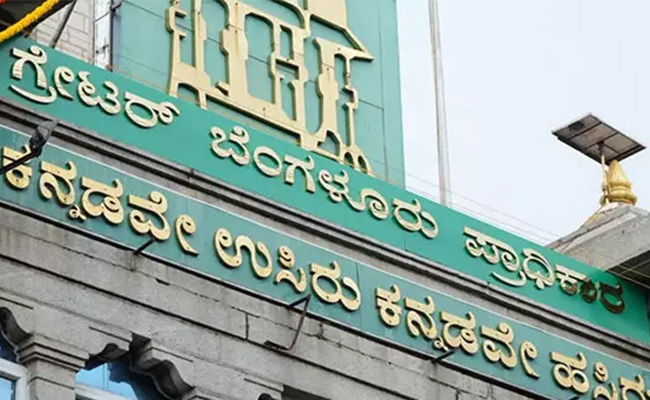
Bengaluru (PTI): Karnataka State Election Commissioner G S Sangreshi on Friday said elections to the five city corporations under the GBA will be held anytime between June 14 and June 24.
He said the exact date for the polls will be announced after a week, asserting that the power to postpone the elections, as requested by GBA authorities, lies with the Supreme Court.
The Supreme Court had directed the Karnataka government and the State Election Commission to conduct Bengaluru local body elections by June 30.
On Friday, the SEC held a consultation meeting with the GBA Chief Commissioner and commissioners of the five city corporations regarding the election schedule, as per the provisions of the GBA Act.
“During the meeting, I informed GBA officials that only the election date has to be fixed, as all other measures and formalities for conducting the polls have already been completed,” Sangreshi said.
“They requested the Commission to consider factors such as rains, exams, census work, SIR, and manpower shortages while fixing the date and sought additional time,” he added.
Speaking to reporters after the meeting, he said, “I told them this meeting was not for seeking time. Elections to the five corporations under the GBA must be held before June 30, as directed by the Supreme Court, and a compliance report must be submitted to the court. I do not have the power to postpone the elections as requested.”
The Supreme Court has already given a “final opportunity,” and both the SEC and the government must comply with its directions, the State Election Commissioner said.
He asked GBA officials to suggest suitable dates between June 14 and June 24.
“While stating that they are ready for elections, the officials highlighted operational challenges, including manpower shortages. However, I have informed them that the elections will have to be held between June 14 and June 24. After a week, I will announce the final date,” he said.
Reiterating that he does not have the power to postpone the elections, Sangreshi said the authority rests with the Supreme Court, and elections must be conducted as scheduled.
“We have consulted the GBA as per the rules. It is up to them to suggest a date within the given window. If they need more time, they must approach the court. Our responsibility is to fix the date and complete the polls before June 30,” he said.
The matter regarding manpower and other concerns raised by GBA officials is already before the Supreme Court, and the State Election Commission has also filed a petition in this regard. The case is yet to be heard.
“Since the matter has not come up for hearing, the earlier order remains binding. Therefore, preparations are underway,” he added.
The tenure of the previous elected body under the erstwhile Bruhat Bengaluru Mahanagara Palike (BBMP) ended on September 10, 2020, and since then, a government-appointed administrator has been managing its day-to-day affairs.
Bengaluru was divided into five municipal corporations—Central, East, West, North, and South—under the Greater Bengaluru Authority in September 2025, replacing the BBMP.
Sangreshi had earlier said that elections to the five corporations would be conducted using ballot papers instead of Electronic Voting Machines.
This follows the Congress government’s decision last September to recommend the use of ballot papers in all future panchayat and urban local body elections, citing concerns over declining public confidence in EVMs.
The state government subsequently enacted the Karnataka Gram Swaraj and Panchayat Raj (Amendment) Act, 2026, paving the way for the use of ballot papers in local body elections.