CM Rekha Gupta presents Delhi govt's Rs 1,03,700 crore budget for 2026-27
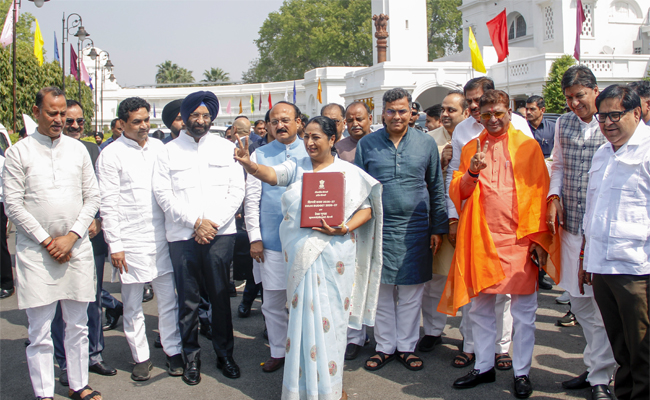
New Delhi (PTI): Delhi Chief Minister and Finance Minister Rekha Gupta on Tuesday presented the Budget for the 2026-27 financial year with a total outlay of about Rs 1,03,700 crore and said the national capital is progressing rapidly with "triple engine" government.
Describing it as a "green budget", the chief minister said the city is passing through a phase of transition and flagged that a "culture of freebies" had affected the growth rate, adding that the period between 2018 and 2020 saw a fall in revenue.
The budget estimates tax revenue of Rs 74,000 crore, while an allocation of Rs 11,666 crore has been made for the Municipal Corporation of Delhi (MCD). The chief minister also highlighted that Delhi's per capita income is the third highest in the country.
In the infrastructure sector, Rs 5,921 crore has been earmarked for public works department (PWD), while urban development and shelter projects have been allocated Rs 7,887 crore.
"Our aim is safe roads, climate corridors and flawless connectivity," Gupta said.
The government allocated Rs 3,942 crore for the power department. Gupta said the government is working on removal of overhead wiring and has separately allocated Rs 200 crore for this purpose.
The chief minister announced Rs 300 crore for the development of the trans-Yamuna area of the city, while the Delhi Gram Vikas Board has been allocated Rs 787 crore.
ALSO READ: EC organises cultural programmes, taps vlogger, para-cyclist to boost voter turnout in Assam
Gupta announced Rs 1,352 crore for developing dust-free roads, including end-to-end recarpeting of 750 km of roads across the city.
The budget also earmarks Rs 160 crore for industrial area development, marking the first such allocation for non-conforming areas, she added.
Around Rs 454 crore has been kept aside for the Najafgarh drain, while the budget also provides Rs 350 crore for the MLA Local Area Development Scheme.
Highlighting road infrastructure, Gupta said an allocation of Rs 1,352 crore has been allocated for developing dust-free roads, including end-to-end recarpeting of 750 km of roads across the city.
The budget also earmarked Rs 160 crore for industrial area development, marking the first such allocation for non-conforming areas, she added.
In addition, Rs 151 crore has been allocated in the current financial year for extending the Modi Mill flyover up to the Kalkaji and Savitri Cinema intersection, with the total project cost estimated at Rs 371 crore.
The city government will also build an integrated secretariat and residential complex for employees.
Citing the Palam fire incident, Gupta said narrow lanes and congested unauthorised colonies make it difficult to douse fires, adding that Delhi's firefighting infrastructure will be strengthened with an allocation of Rs 674 crore.
To tackle water-related issues, Gupta said new water pipeline projects are underway and Rs 9,000 crore has been allocated to the Delhi Jal Board for water and sewage management.
She said no resident has to hassle for water and stand in line for water tanker as Rs 475 crore has been allocated for the Chandrawal water treatment plant.
VIDEO | Delhi Budget: The Rekha Gupta government allocates Rs 7,887 crore for urban development dept, Rs 5,921 crore for PWD.
— Press Trust of India (@PTI_News) March 24, 2026
(Source: Third Party)
(Full video available on PTI Videos - https://t.co/n147TvrpG7)#Delhi #DelhiBudget pic.twitter.com/6NP6wUDvr2
Let the Truth be known. If you read VB and like VB, please be a VB Supporter and Help us deliver the Truth to one and all.
Lebanon appoints new representative for talks with Israel, rejects linkage to Iran
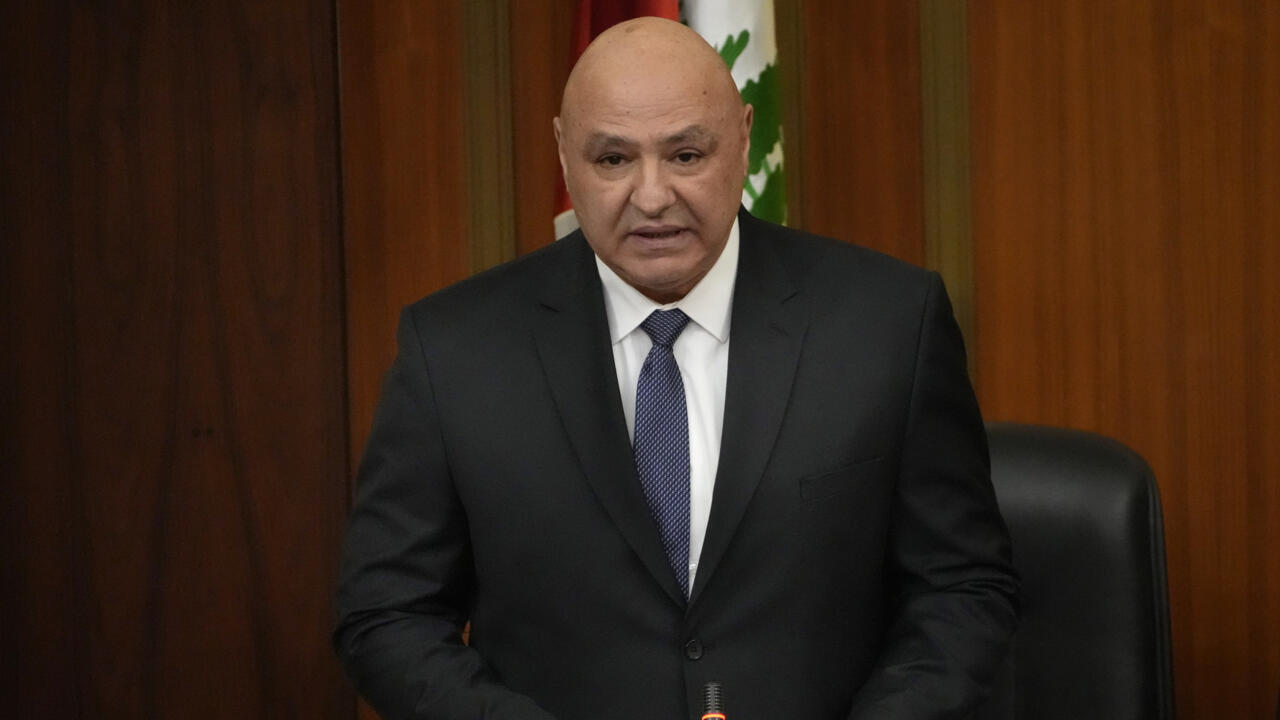
Beirut: Lebanon’s has moved to underline its independent position in ongoing regional developments, amid attempts to link the country to the broader conflict involving Iran, the United States and Israel.
President Joseph Aoun, while announcing the appointment of former US ambassador Simon Karam as Lebanon’s representative in talks with Israel, made it clear that Karam would be the sole representative for Lebanon and that there would be no substitute.
The move comes in response to what the Lebanese officials see as efforts by Iran to tie Lebanon’s situation to the wider regional conflict. Iran had indicated that there would be no ceasefire involving the US, Israel and Iran unless it also included a ceasefire in Lebanon.
Some groups, including Hezbollah and its supporters, had expressed support for linking the situations, citing concerns that the Lebanese government has limited leverage in negotiations with Israel. Lebanon is not formally a party to the conflict, and its army is considered weak.
However, others, including Prime Minister Nawaf Salam, have opposed this approach. They view Iran’s stance as an attempt to influence Lebanon’s internal affairs and see it as undermining the country’s sovereignty.
Officials backing the government’s position say the move is aimed at reaffirming Lebanon’s sovereignty and ensuring that decisions about peace and ceasefire within the country are not dictated externally.
They also see it as a safeguard, so that any breakdown in talks between the US, Israel and Iran does not automatically lead to renewed conflict in Lebanon.