Cold conditions prevail in north India; temperatures sub-zero in several parts of J-K
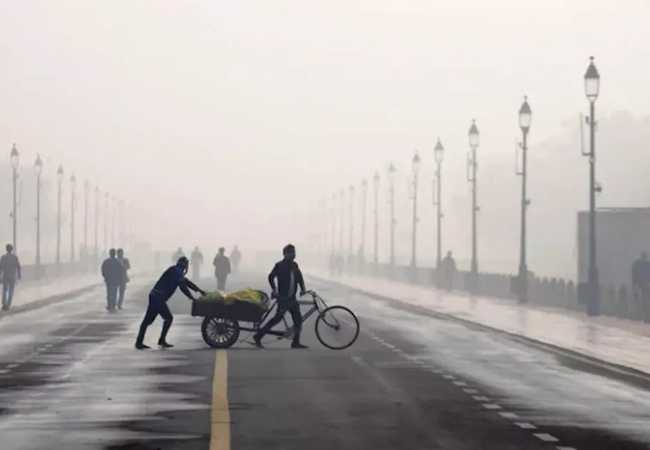
New Delhi (PTI): Cold conditions prevailed across north India on Sunday, with the Amarnath yatra base camp being the coldest recorded place in Jammu and Kashmir at minus 4.3 degrees Celsius and parts of Punjab, Haryana, and Rajasthan reporting minimum temperatures between three and seven degrees Celsius.
The India Meteorological Department (IMD) said cold wave conditions were "very likely" to prevail in isolated pockets over Madhya Pradesh, Vidarbha in Maharashtra, Chhattisgarh, and Odisha on Monday and Tuesday.
In Delhi, the minimum temperature was recorded at eight degrees, up from 6.8 degrees a day ago and yet 1.6 notches below normal.
The maximum temperature was 24.7 degrees Celsius, 0.1 notch below normal, while the relative humidity was 92 per cent in the morning.
For Monday, the weather department forecast a minimum of 10 degrees Celsius and a maximum of 25 degrees Celsius, with mist expected.
Pollution levels in Delhi remained in the "very poor" category on Sunday, prolonging the spell of toxic air that has hung over its residents for several weeks now. The city logged a 24-hour average AQI of 308.
According to the Central Pollution Control Board, an AQI between 0 and 50 is classified "good", 51 and 100 "satisfactory", 101 and 200 "moderate", 201 and 300 "poor", 301 and 400 "very poor" and 401 and 500 "severe".
Further in the north, the night temperatures in Kashmir rose by several degrees but stayed below the freezing point, officials said.
The Pahalgam resort in south Kashmir, which serves as the base camp for the annual Amarnath yatra, was the coldest recorded place in Jammu and Kashmir as the minimum settled at a low of minus 4.3 degrees Celsius.
The minimum temperature in Srinagar -- the summer capital of Jammu and Kashmir -- settled at minus 0.9 degrees Celsius, a rise of 3.2 degrees compared to the previous night.
The gateway town to the valley, Qazigund, recorded a low of minus one degree Celsius, while the minimum settled at minus 0.8 degree Celsius in north Kashmir's Kupwara, and 1.1 degrees Celsius in south Kashmir's Kokernag, according to officials.
The meteorological department said the weather would remain generally cloudy but dry on Sunday, and a brief spell of light snowfall at isolated places in the higher reaches of north and central Kashmir is likely on December 8.
In Himachal Pradesh, The IMD predicted dense fog in parts of the state until Wednesday.
A yellow alert for dense fog was also issued in parts of the reservoir area of the Bhakra dam in Bilaspur district and over some parts of the Balh valley in Mandi district during early morning till Monday.
In Punjab, Faridkot remained the coldest place, with the minimum temperature settling at 4.4 degrees Celsius, while in Haryana, Narnaul saw the lowest temperature at 4.6 degrees Celsius, according to the local meteorological department.
Chandigarh, the common capital of the two states, recorded a minimum temperature of 8.2 degrees Celsius.
In Punjab, Bathinda and Gurdaspur recorded a minimum temperature of 4.6 degrees Celsius, while Ferozepur recorded 6 degrees, Amritsar 6.1 degrees, Ludhiana 6.8 degrees, and Patiala 8.9 degrees.
In Haryana, Bhiwani recorded a low of six degrees, Hisar 6.2 degrees, Sirsa 6.6 degrees, Karnal seven degrees, Rohtak 7.8 degrees, and Ambala 9.8 degrees.
Rajasthan, similarly, reeled under intense cold, the Meteorological Centre here said.
Fatehpur in the Sikar district continued to record the lowest minimum temperature, albeit at 3.5 degrees Celsius, slightly up from 2.3 degrees a day ago.
According to the weather department, Lunkaransar (Bikaner) recorded a low of 5 degrees Celsius, followed by Dausa at 6 degrees, Churu at 6.3 degrees, Vanasthali (Tonk) at 6.4 degrees and Jhunjhunu at 7.2 degrees Celsius on Sunday morning.
The department said a fresh but weak western disturbance is likely to cause partly cloudy skies in some parts of the state over the next few days.
Under its influence, the minimum temperature is expected to rise by two to three degrees Celsius, providing relief from the cold wave, it said.
Meanwhile, in Jharkhand, eight districts recorded minimum temperatures below 10 degrees Celsius, the IMD said, noting a cold wave in parts of the state.
Gumla recorded the lowest temperature in the state at 3.5 degrees Celsius — up from three degrees Celsius — while Khunti logged five degrees Celsius, the IMD weather bulletin stated.
The minimum temperature in Jharkhand's capital, Ranchi, was 7.5 degrees Celsius, while Daltonganj recorded 6.5 degrees and Jamshedpur recorded 9.6 degrees Celsius.
Deputy Director of the Ranchi Meteorological Centre, Abhishek Anand, said, "North-westerly winds prevailing in the lower tropospheric levels over Jharkhand have caused the drop in mercury."
"Dry weather conditions are likely to prevail across the state over the next five days. The minimum temperature may rise by 2–3 degrees Celsius during the next 72 hours," he added.
In West Bengal, the mercury dipped below the 10-degree mark for the first time this winter in the state's plains with Sriniketan in Birbhum districts recording a minimum temperature of 9.8 degrees Celsius on Sunday, the IMD said.
Its forecast for West Bengal suggested dry weather across all districts of West Bengal for the next week, with shallow to moderate fog likely in the northern districts.
Darjeeling was the coldest in the hills at 6.2 degrees Celsius, while the other Himalayan tourist town of Kalimpong was warmer at 10.5 degrees Celsius.
The other places which recorded low night temperatures are Alipurduar (11 degrees), Kalyani (11.4 degrees), Purulia (11.4 degrees) and Panagarh (11.9 degrees).
Kolkata recorded a minimum temperature of 15.2 degrees Celsius, the IMD said, forecasting mist in the morning on Monday.
IMD further predicted dense fog conditions in isolated pockets of Assam, Meghalaya, Nagaland, Manipur, Mizoram, and Tripura between December 8 and 12.
It was also "very likely" in parts of west Madhya Pradesh on Monday and in Odisha until Tuesday.
In west India, a gradual fall by two to three degrees over the next three-four days is expected, and no significant change is anticipated thereafter, the IMD said.
Let the Truth be known. If you read VB and like VB, please be a VB Supporter and Help us deliver the Truth to one and all.
CM Siddaramaiah alleges ‘criminal conspiracy’ in Sringeri recount, vows legal action
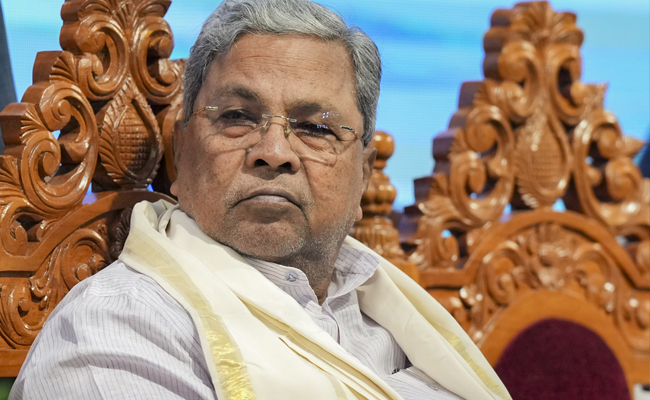
Bengaluru (PTI): Alleging a “criminal conspiracy” by BJP candidate D N Jeevaraj in the Sringeri Assembly poll recounting, Karnataka CM Siddaramaiah on Tuesday said the outcome was manipulated after valid postal ballot votes in favour of Congress leader T D Raje Gowda were tampered with during the recounting process.
Following a Karnataka High Court order on an election petition filed by Jeevaraj, challenging Raje Gowda’s election, the reverification and recounting were conducted on Saturday.
After the reverification and recount of postal ballots for the Sringeri Assembly constituency, votes polled in favour of Raje Gowda were reduced by 255, the returning officer said.
A report on the matter has been submitted to the Election Commission of India for further action, the officer added.
Congress leader Raje Gowda had won the 2023 Assembly polls from Sringeri by 201 votes, defeating his nearest rival Jeevaraj.
Addressing a press conference in Bengaluru, Siddaramaiah said the High Court had directed the recounting of postal ballots and that irregularities were noticed during the exercise conducted on May 2.
“This is a clear case of criminal conspiracy,” Siddaramaiah said, alleging that valid votes cast in favour of Raje Gowda were altered after being accepted by counting agents of all parties, including Congress, BJP, and JD(S).
He claimed that during the recounting of postal ballots, 255 votes were initially accepted as valid by all agents but were later tampered with by subordinate officials.
“There is a second mark on the votes polled in favour of Raje Gowda. They had accepted these as valid votes. Subsequently, another mark was made by officials. This is a clear case of criminal conspiracy,” he said.
When asked who was behind the alleged conspiracy, the CM replied, “It was hatched by Jeevaraj and others. It is planned.”
Siddaramaiah further alleged that the returning officer acted improperly by declaring the result despite the presence of an Election Commission observer during the recounting.
“Immediately after the counting, the returning officer announced the result. He should not have done so; this is against the law,” he said.
He pointed out that Raje Gowda had originally won by 201 votes, but after the recounting, the BJP candidate was declared the winner by 52 votes.
“The BJP has committed a criminal act of conspiracy. This is not vote chori but vote dacoity,” he alleged.
The CM said a police complaint had already been filed by Raje Gowda’s election agent, Sudhir Kumar, and emphasised the need for electoral integrity.
“We want transparency and free and fair elections. That is what our Constitution mandates,” he added.
Stating that the government would pursue legal remedies, Siddaramaiah said, “We are preparing an appeal challenging the returning officer’s announcement in a court of law.”
Responding to a separate query on elections in other states, the CM said there appeared to be an anti-incumbency factor in West Bengal, while results in Tamil Nadu were “surprising,” adding that Vijay’s party was emerging as the largest there.
Following the victory of party candidates in Bagalkote and Davanagere South, Siddaramaiah expressed confidence about future electoral prospects in Karnataka.
“Even in 2028, we will win the Assembly elections. We will come back,” the CM said.
Siddaramaiah added that he would order a forensic examination into the alleged tampering of postal ballots.